Are Supplements a Good Idea?
Recently Consumer Reports had a lengthy article regarding the supplement industry. Here is the main article and here is a list of supplements to avoid.. The main take-aways were:
- The supplement industry isn’t strictly regulated by the FDA, though most consumers assume that it is. That doesn’t mean that all supplements are a sham, but it does behoove the consumer to do the research. Groups like Consumer Labs provide information on content and safety of various brands.
- When it comes to choosing supplements- again, do your own research- utilizing resources like Examine.com can help you choose both safe and effective supplements. The folks at Examine.com synthesize the available scientific research on given supplements and ingredients and they do a pretty darn good job. A little bit of digging can save you a little bit of moolah.
- The “natural” label is on a bottle can literally mean nothing. Companies can slap that label on anything without any oversight from a governing body that defines what that term means (arsenic is “natural…).
- Companies are required to print the ingredients (mostly, there are loopholes like “proprietary blend” that muddy the water a bit) on their bottles, however they don’t necessarily have to put how much of each ingredient is in the supplement. For example, caffeine could constitute most of an “energy” supplement even though the consumer may think their getting B vitamins, gensing, and green tea extract.
- Consumer Reports, as an experiment, created their own supplement. They ordered the ingredients, the pill-making supplies (capsules and a machine that fills the capsules), bottles, and created labels all for about $190.00. Granted, any company that creates and sells supplements must have an FDA-approved facility (though, again, that doesn’t necessarily include the contents of said supplements) and I doubt bigger companies do such things, but it just goes to show that how easy it is for kinda anyone to make and market a supplement.

There can be a time and place for these guys, but make sure you have a solid diet first.
Quite frankly, eating a healthy diet with plenty of variety will go a long way to supplying what you need on a regular basis. I’ve written about it before, supplements can have their place within the context of a healthy diet- I’m certainly not anti-supplement- but they are to be treated as such, supplements not replacements. I simply urge everyone to be discerning consumers.
Common Deadlift Mistake: Hips Popping Up Too Quickly (aka: Beyonce Hips)
Here is a brief video of how to spot and correct a common deadlift mistake.
Main Points:
1. The hips should not pop up at the beginning of the lift; the shoulders and hips should rise at the same rate. If you or your trainee looks like Beyonce, then you're popping up too quickly.
2. When the hips pop it turns the deadlift into an RDL or stiff-legged deadlift which can a) place more strain on the lower back and b) doesn't tap into the awesome power of the glutes and hamstrings (and we all want some o' that!).
3. To fix: cue athlete to "pull chest to the back wall." It's akin to the "chest up" cue, but I like it better because it helps nail the shoulder-hip sequence more effectively than just cuing to pull the chest up. For me personally, it helps remind me to initiate with my glutes instead of my back and drive through my hips on the way up.
4. Deadlifting does magical things.
Everyone Loves A Great Core Exercise
Who doesn’t like to spice up the ab/core training routine a bit? The top 5 things I get asked by people regarding their programs are:
1. Can I get some more core exercises?
2. How about some more core exercises next time?
3. Can you put in some more core strengthening work?
4. I really want to work my core, can you give me more exercises for that?
5. Core?
Welcome to my life.
Clearly, folks understand the importance of a strong, stable core. If you are involved in any sort of athletics, or you know, any human movement, a strong midsection will absolutely be essential to prevent injuries and increase power output (aka, how fast, explosive, or strong you’re able to be).
Well, I’ve got just the thing for you core-crazy trainees:
Behold,
PUPP with Kettlebell Drag
Key points:
- Keep feet slightly wider than a normal PUPP (push-up position plank) stance to help control and stabilize the hips. Pretend there is a glass of water on your lower back and you don’t want to spill it.
- Speaking of your hips, keep those suckers as level as possible. Glenna does a pretty great job of it in the video (well done, Glenna!).
- Squeeze your butt and abs (do I even need to say that part?) as hard as humanly possible throughout the exercise.
- Start off with a lighter bell because just moving your hands around can be challenging. Once you can keep your hips stable, then move up in weight.
There you have it! Throw a few sets into your workout to get your midsection a power-transferring machine!
Coaching Vertical Jump with a Valgus Collapse
Ahhh, the knee cave, my old friend. This, by far, is the most common strength and movement pattern deficit I see in developing athletes. More officially known as a valgus position of the knee, it signifies not only a severe lack of specific and general strength, but also may be an indicator of poor body control overall (due to other common muscular strength deficits that generally come as part of the "package").
Ahhh, the knee cave, my old friend. This, by far, is the most common strength and movement pattern deficit I see in developing athletes. More officially known as a valgus position of the knee, it signifies not only a severe lack of specific and general strength, but also may be an indicator of poor body control overall (due to other common muscular strength deficits that generally come as part of the "package").
The valgus position, in my experience, is an oversized red flag waving high in the air. This red flag is warning of a looming knee ligament injury.
This is a very important topic, as most coaches, parents, and athletes have no idea how to correct the problem or even identify that it is a very big - and potentially dangerous - problem.
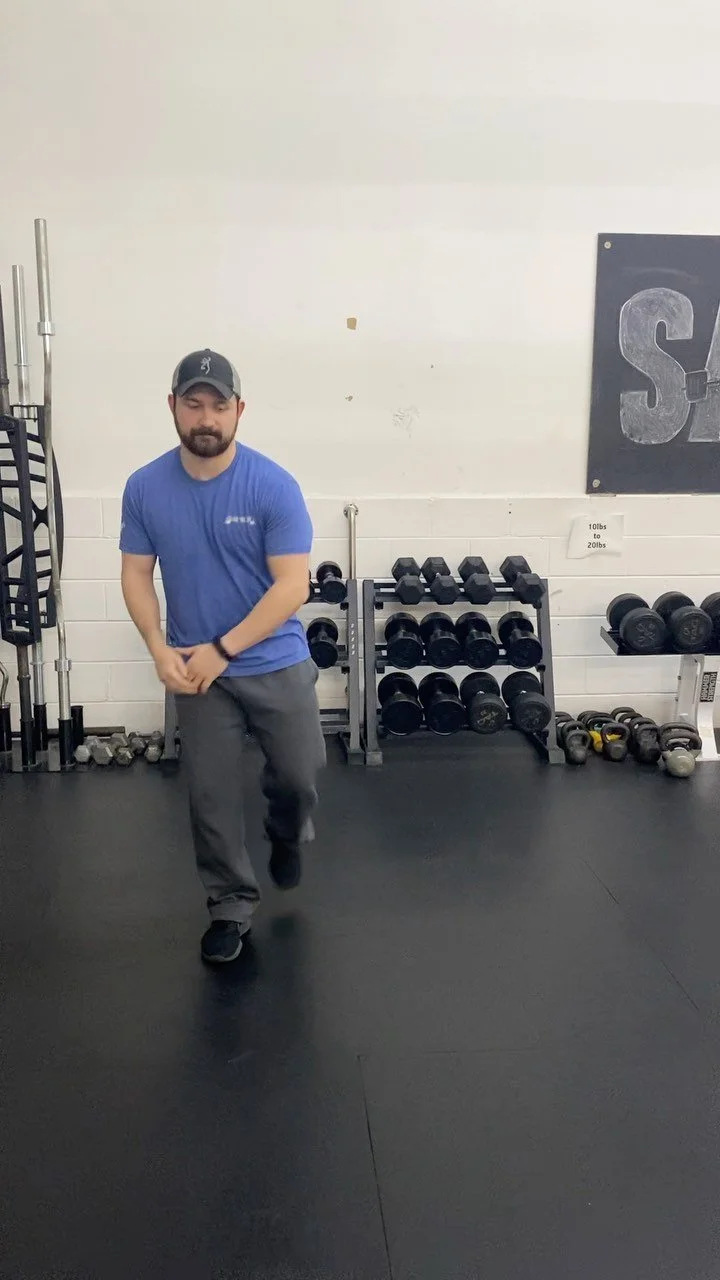
Check out the video where I break down film of an athlete in for training and discuss what I've found and how we're going to fix the problems:

Coaching the Forearm Wallslide
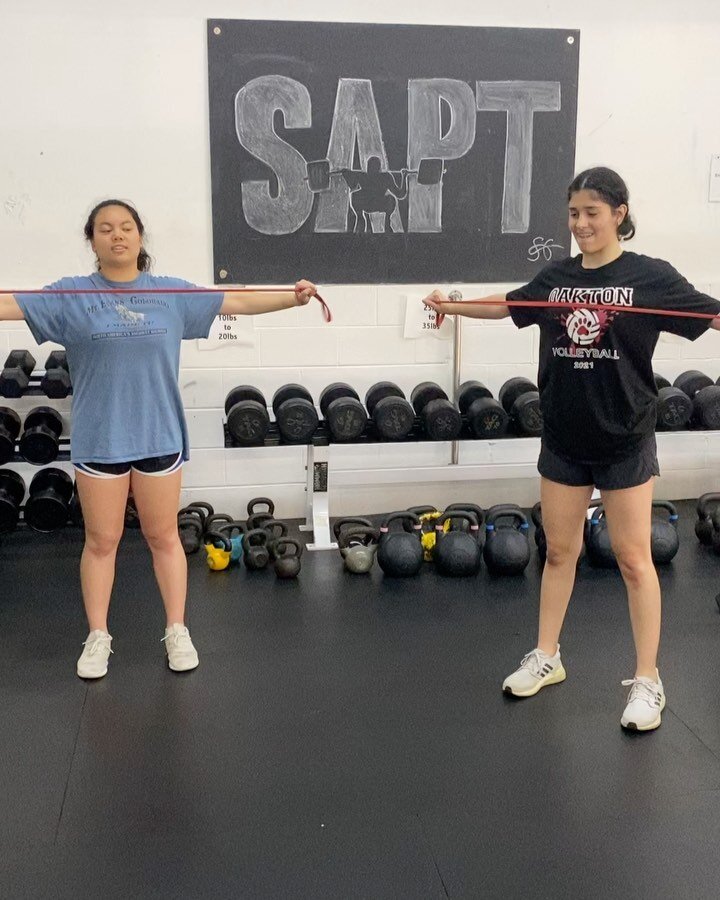
A deceptively simple exercise, the forearm wallslide delivers a huge ROI:
Deadlift Fine-tuning
The deadlift is arguably the most valuable exercise for sport performance (and life) improvement. It is extremely versatile and effective for pretty much everyone. But, not if you don't have excellent technique! This movement is a basic at SAPT and if you already lift with us you know you're getting the kind of very detailed fine-tuning shown in this video.