Why Don't Women Wear Shirts in Magazines? Women in the Media and How We Should Respond
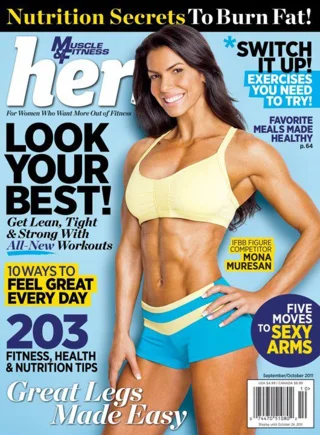
SAPT receives all kinds of magazines for free. I’m not really sure how we acquired such a privilege, but magazines grace our mailbox every week. We, unsurprisingly, receive magazines related to health, fitness, and (oddly) fashion. GQ, Men’s Health, Muscle and Fitness, Vogue, Glamor and that ilk show up at regular intervals. Last week, Muscle and Fitness for Her arrived.
I glanced through it for the sole purpose of finding the recipes that are hidden amidst the ads for various products I don’t need and articles that merely repackage the same information month after month. As I flipped through the pages, it dawned on me: 99.9% of the women in it were in a sports bra (no shirt) and booty shorts. (The only woman with a shirt on was the feature in an article about her sailing endeavor.)
The following rant is not directed at the women in the magazine. They look fantastic and I know they put in a LOT of work to achieve and maintain their physique.
The following rant is directed at the rest of us.
Why do we, as a society, continue to elevate a woman’s look over her accomplishments? Granted, I know that a fitness magazine will have the aesthetic slant, but really? 168 pages with only one shirted-woman???
I’ve written before about the movement “Strong is the New Skinny,” in relation to marketing to women. I applaud the thought to promote strength training and muscles over stick-like physiques and eschewing all exercise.
However, when you search images for the phrase “strong is the new skinny” most of the pictures are of muscular women, yes, but they’re also incredibly lean, long-legged, and (usually) well-endowed in their bosom region.
Ultimately, the pictures are still focused on how our bodies look not on what they can accomplish. Women are still portrayed as sex symbols.
To me, being strong is more than having 10% body fat and wearing sexy clothes so you can see my abdominals. Being strong, I think, is harder to portray than what we see in staged “fitness” poses.
The most obvious is physical strength- you can easily see this if you watch an Olympic weightlifting competition, a track and field meet, or a women’s rugby match (they are amazing athletes) to name but a few instances.
(listen for it… at the 52 second mark)
Speaking of physical strength, women grow, carry, and bring forth human beings for crying out loud! You don’t see any pictures portraying a pregnant woman touting “strong is the new skinny.” Better yet, a pregnant woman with her toddlers running around- that is strength. I am amazed at moms who care for their young children while carrying one inside.
Strength is also more than how many muscles we can see or how lean our waists are. Strength is showing up for practice or training even when you don’t feel like it. Strength is putting forth your best effort at work even when it goes unnoticed. Strength is getting up for the umpteenth time in the night to care for a crying child even when you're total sleep for the week is less than three hours. Strength is consoling your best friend for hours when her heart is broken even though you have a thousand other things vying for your attention.
Strong has always been the “new skinny.” As women, we are imbued with strength and ladies, we are so, so, SO much more than our physical appearance.
Believe me my compadres, it’s tempting to point the finger at the guys (and we can all instantly conjure up a dozen reasons why men are to blame for the state of women in society- blame shifting is easy). Unfortunately, as the saying goes, “sex sells,” and we can rage and protest all we want, but that won’t necessarily foster drastic change overnight.
But we can change our society incrementally. How?
We can change the way we respond.
Will we let the societal expectation to be a “sex symbol” the raison d’etre? Or, will we embrace the strength we’ve been given, build upon it through training, life experiences, and encouraging one another? (and maybe stop posting workout selfies that are provocative...? That's a whole 'nother can of worms!)
It’s our responsibility to teach our daughters, sisters, and nieces to embrace their abilities and pursue growth in them and not in their dress sizes. And we must teach our sons, brothers, and nephews to respect women and seek relationships based on the whole package- not just female anatomy.
We can rail against the media, we can blame men for our problems, we can fume and storm at the way women are viewed, but until we, women, change the way we respond and teach our children to do so, the cycle will continue. Therefore, my challenge to us is to start that change, today.
How To Eat for Injury Recovery
Quick post today because it's Friday.
The good folks over at Precision Nutrition produced a handy infographic of nutrition strategies for injury recovery. We've all heard about R.I.C.E (rest, ice, compression, elevation) and how to physically care for an injury, so why wouldn't there be a way to do so with nutrition?

I actually wrote a similar post two years go when I had jaw surgery. I was pleased to see I wasn't off-base!
Find the Infographic HERE.
Enjoy the weekend!
Regulations For Personal Trainers? Good or Bad Idea?D.C. Considers New Rules for Trainers
The Washington Post ran an article this week about proposed regulations- which will include licensure- for personal trainers/coaches in D.C. You can read the full article HERE.
They haven’t set anything in stone yet, but the regulations might become a model for the rest of the country to follow.
From my perspective, as a strength coach, this is what the fitness industry desperately needs. Our industry has no standard for certifications, no licensing procedure, and little to no standard regulations between gyms and their training staff.
Sure, there are definitely some certs that are more “respectable” than others, for example certifications from NSCA, ACSM, USAW, or RKC are widely recognized in the field as certifications that have a higher level of education (typically a four-year degree) and experience (i.e. RKC is a mentally and physically demanding course) required to pass. However, Joe Schmoe who’s looking for some training has no idea the difference between someone who has one of those certs vs. someone who took an online course of the weekend and can now call themselves a “trainer.” Those types of “certs” have a ridiculous low-barrier to entry (do you have a computer?) and since there is no governing body for the fitness industry, the quality of those certification’s information is on the same level as poop.
In part, regulations will protect the consumer from trainers who, really, have no true understanding of strength training and will more than likely wind up hurting people inadvertently. From the article:
“First and foremost, the purpose of the law is to enhance consumer protection for the residents of the District of Columbia,” he said. Melstrand said industry estimates show 40 percent of all trainers have no gym affiliation, meaning they are accountable to no one even though they are often in positions of authority with clients… “We all have heard anecdotal reports of injuries, sexual misconduct and misrepresentation of titles by persons claiming to be competent in that area,” Simpson testified before a D.C. Council committee. She called the lack of any registration or licensure of personal trainers “a nationwide failure.”
I could not agree more! The regulations can at least propose and uphold a standardized amount of knowledge and understanding in order to be a licensed trainer.
In contrast to those low-barrier certifications, the coaches at SAPT all have four-year degrees in exercise science, have undergone internships, and at least have 2-3 specialized certifications. The top names in our field (Eric Cressy and Co., Mike Robertson, Alwyn Cosgrove, Dan John, Bret Contreas, Jen Sinkler… the list can go on) all have degrees, numerous certifications, and hours upon hour upon HOURS working with people and honing their craft. There needs to be a way to identify those trainers who take an online, weekend course and those of us who truly own this profession and take pride in continuing our education.
The most outspoken opponents of these regulations: Greg Glassman, CEO of Crossfit (and I imagine many his affiliates).
Do NOT read the following statements as a “let’s bash Crossfit” fest; Crossfit has many positive attributes. However, the fact that they’re strongly opposing regulation sounds fishy to me. Why wouldn’t we want this industry regulated like physical therapy or doctors? We work with injured people, healthy people, we offer nutrition advice, and we evaluate and correct movement dysfunctions. When I see a physical therapist, I have the peace of mind knowing that they’ve had to pass a licensing exam and they at least have a basic working knowledge of the body. Why wouldn’t we want this for trainers too?

And we work with the little ones too!
suspect it comes down to money.
The tab for revamping CrossFit’s training courses could run into the tens of millions of dollars if the company is forced to do so nationwide, says its chief executive.
Hmmm. They don’t want to change their training course? I think that would, actually, be a stupendous idea.
Here’s an example: Crossfit utilizes olympic lifts in most of their workouts. O-lifts are extremely technical, take years to perform or coach well, and should NOT be programmed for the masses especially in the context of a WOD or AMRAP (as many reps as possible). Yet, Crossfit claims that their Level 1 coaches are fit enough to teach the O-lifts. I would beg to differ by the plethora of YouTube videos of athletes with atrocious form (while being cheered on by the coaches…).
Slightly unrelated note: I read an article by Dr. Adam Schulte and his review of the Crossfit Games and the appalling and dangerous treatment of their athletes during the Games. This definitely bolsters my confidence in Glassman’s “emphasis on safety” claim. (that was sarcasm)
Again, I’m not trying to bash Crossfit, but I think there NEEDS to be more regulation in the fitness industry. There NEEDS to be a standardized, minimum level of education for trainers.
Do I think that everyone needs a 4-year degree? No, in fact Eric Cressey wrote a good article about it HERE. However, if we can create a licensing procedure for trainers that requires pertinent educational courses (like anatomy, exercise physiology, kinesiology etc), number of hours interning under professional coaches, and a set amount of continuing education credits it will raise the bar of our industry. I’ll let Graham Melstrand sum it up:
Melstrand said the issue is bigger than concerns about CrossFit. It’s about finding ways for the profession of personal trainers to mature into more respected health-care roles.
“At the end of the day, all of the fitness organizations are looking for the respect of practitioners,” he said. “As our space is maturing, there have to be greater expectations around the people who are practicing our craft.”
I want to be taken seriously and I want my clients to know that I take my job seriously.
Training with Joint Laxity- Been There, Done That
Joint hypermobility or joint laxity (the terms are used interchangeably) is the ability of a joint to move beyond the usual range of motion. Typically this is because the ligaments are looser than “normal” the due to either genetics or injury....
I had the chance to write a post for Tony Gentilcore. Read the rest HERE.
Metamucil + Locked Out of Your Apartment = Not Good
My husband, Steve, and I are heading up north to visit my brother- and sister-in-law and our nephew. In lieu of anything informational, I thought I'd re-post a highly entertaining post Steve wrote back in February of 2012. (It actually ranked one of our most popular posts!)
For our newer readers who don't know Steve, he was coached here from 2010-2014 until he went to go work on Concentric Brain (also owned by Sarah Walls, SAPT's founder and president).
If you need a laugh today, and who doesn't on a Friday?, today's post will not disappoint!
---------
This past Wednesday was looking to be a particularly delightful morning for me. I was ahead of schedule with my SAPT-related tasks (something that occurs once in a blue moon), and, also, Wednesday holds my shortest workout of my weekly training schedule. As such, I had a bit of extra time at my disposal.
Given this, I thought it'd be a great opportunity to get a full night's rest, do the laundry (something really vexes me about having to do it during the weekend), write a few programs for the SAPT athletes, answer some emails, then top it off by heading to the local coffee shop to satisfy my palate with a delicious brew while writing my next article for an online publication. I'd then have plenty of time to get in my training session before the athletes showed up to SAPT for the afternoon appointments.
Sweet. It was going to be a solid morning.
I sleep in until 7:30am, and eventually head into the living room at 7:45, laundry basket in hand. However, upon entering the room, I immediately notice three things:
1) Sheik, our (indoor) cat, is nowhere to be seen. 2) The door to our apartment is ajar. 3) There's a faint meowing sound in the distance.
My wife left at 7:30 to handle the morning appointments at SAPT, so it was pretty clear what happened: The door didn't shut all the way, and Sheik, being a cat, wanted to see what lay out in the mysterious void beyond the apartment walls. She clearly became lost, and was now fearful and meowing like crazy.
My superhero instincts kick in.
Without thinking about anything else, I commando roll out of the apartment and dart down the stairwell to find poor Sheik huddled in a ball in the middle of the concrete floor looking around like a....well, like a frightened animal. I pick her up, comfort her and tell her that everything will be O.K., and head back up the stairs, thinking about how much I can't wait to tell my wife of how I saved the day by rescuing our precious little kitty.
That is, until I climb back up to the third story to find that our apartment door is locked.
Now, if the story stopped here, I wouldn't be wasting valuable cyberspace bandwidth to tell this story on the interwebz. After all, practically everyone has locked themselves out of their home at one point or another.
Not THAT big a deal, right?
Well, there are six additional details that make this situation particularly frustrating for me:
1. Remember how I told you that, "without thinking about anything else," I rolled out of our apartment to rescue our cat? Yeah, well, the clothes on my back was one of those things I forgot to consider. Or rather, the LACK of clothing on my back. Yes, I am locked outside my apartment in my little boy shorts that I slept in.
2. It's wintertime. So not only am I nearly naked in a public space, but it is 35 degrees outside.
3. Kelsey is gone. So there's no one inside to let me in.
4. My cell phone is inside the apartment. So calling for aid quickly gets crossed off the #1 spot on my list of options for survival.
5. I have an indoor cat stuck with me, outside. 'Nuff said there.
6. My bowels are screaming LIKE CRAZY to use a bathroom. Remember how I mentioned last week that my life has been radically altered for the better because of my recent supplementation with Metamucil? Yeah, well, one of the things about Metamucil is that it works. VERY WELL. Once that puppy kicks in your system, you better hope you have a bathroom nearby.I do not. The nearest restroom is at least a quarter mile away, in the middle of a shopping center.
Best. Morning. Ever.
Next I run through some other possible solutions. One of my neighbors can help me, right? Yes, sure they can. I tell Sheik to stay put by our door, and I begin to knock on neighboring doors to see if someone may have a phone - along with the number for maintenance - to help me out. Yes, I realize it's 7:45 in the morning, so I knock softly. Don't really want to piss anyone off, especially considering that if and when they open their door early in the morning, the first thing they'll find is a nearly naked man on their doorstop.
No one answers, which I'm not particular angry about (after all, how I am I supposed to explain things to them???). No luck there.
The leasing office of my apartment complex doesn't open until 9am, so it looks like I'm going to have to wait it out until I can go get a spare key. I slide down the brick wall, take a seat on the cold tile, and try to get into the most comfortable position one can only do when it's cold out and they don't have any clothes. As Sheik climbs into my lap, I tell her, "Okay, Sheik, here we are." Just seventy minutes to sit here and wait. And hope I don't explode."
Throughout the next seventy minutes I do two things:
1) I try to think of how, once 9:00am arrives, I can walk the quarter mile - shoeless and nearly clothless - over to the leasing office and explain the situation to them, hoping they'll grant me amnesty before a police officer tackles me and drags me off to prison for indecent exposure.
2) I do that weird and awkward wiggle-and-waddle-hunched-over walk people do when they're about to destroy the back of their pants. I wonder how long it's going to take before I run outside and experience, first hand, what the old adage "desperate times call for desperate measures" really means.
Another problem is, I have no watch on me. So I have to guess when it's 8:50am to begin my journey over to the office. I don't want to be out in the open any longer than I have to be.
So I continue to alternate between sitting and standing, replaying the Sliding Filament Theory (Note from Kelsey: this is how nerdy your strength coaches are.) in my head, doing my best to remember the reaction sequence of Glycolysis, and trying to recite Prilepin's Chart by memory. Or, maybe, I just sit there, attempting to warm the tile beneath me, counting the number of bricks on the walls. I can't remember which.
And don't worry, I'll spare you the details of that whole "Metamucil thing" I alluded to earlier. All I'll say is that it was not pleasant.
Here's where things get even more interesting.
At what I can only guess has been the 1-hour mark, I hear a chain jingle behind the door across from me. I immediately perk up, simultaneously filled with both excitement and anxiety as I don't know who's going to walk out from behind the door.
The door swings open, and out walks a professional-looking woman who must be in her low thirties, innocently on her way to work. Upon seeing me, she quickly gasps, widens here eyes, freezes still, and nearly drops her bags at the site of a strange, practically-naked man sitting in the cold abyss in front of her. Here's how the conversation goes down:
Me: (trying to explain as quickly as possible that I'm not some sort of Dionysian rapist) Hiii, umm, I know this looks really weird, but I locked myself out of my apartment over an hour ago trying to rescue my cat. *fervently pointing to cat*
Lady: ......
Me: I'm sorry, I know this looks really sketchy, and I hate to bug you as you leave for work, but is there ANY way I might be able to borrow a phone? *tries to hide under desk, but there's no desk to hide under*
Lady: Oh, sure....sorry, you startled me, that's all. Yeah, here you go. *sets bags down and stands as far from me as possible as she hands me her phone*
Me: Thank you SO much, I really do appreciate it. You don't happen to have the number for maintenance, do you?
Lady: Yeah, I do actually. They don't open until 9:00 though (it's 8:45 at this point), but you can leave them a message.
Me: *begins dialing*
Lady: Hey, uh, I need to get to work, but can I get you a blanket or anything?
Me: Oh, wow, thanks so much, but I'll be okay I think. I don't really want to bother you any more than I already have.
Lady: No really, it's not a problem, it's pretty cold outside, after all. *Begins rummaging through her purse to get her keys*
Lady:.........
............................
Lady: OMG. My......my keys.......what the.....my keys. *hands move faster and she begins to breathe rapidly*
My keys aren't here. I locked them INSIDE MY APARTMENT!!!!
Yep....talk about the odds.
So now we have a business woman, a man in his boy shorts sitting on the tile against a brick wall, and a cat. All locked outside their apartments during a winter morning.
I wish someone had been there to take a photo.
Anyway, I'll wrap all this up. After a while (and some awkward conversation) she eventually wandered off to the maintenance office alone (I didn't have to convince her that I shouldn't go with her) and we made it back inside our respective homes. The bright side of all this is when I eventually made it to the coffee shop, the barista offered to give me a drink on the house after inquiring as to why I was going outside my usual order and requesting the "black eye."
If you somehow made it this far, I give you an internet high five. Nice job! Be back on Monday with the usual content.
How To Perform Warm-Up Sets for Barbell Lifts
The number of times I've seen someone walk up to a bar (in a commercial gym) and just throw on some plates and start benching/squatting/deadlift without any sort of warm-up is more than the number of times Sam and Frodo share a "significant" look during the Lord of the Rings trilogy.
I cringe inside every time (because of the lack of warm-up and the significant looks).
I've written before on how to perform a dynamic warm-up before you even touch the bar (HERE and HERE), today we'll clear up how to do so with the bar.
First thing- know your first working weight. You don't set out on a road trip without a destination in mind, same thing with warming-up: have a destination in mind. The first working weight will also determine, roughly, how many warm-up sets you should have; obviously, the higher the starting weight, the more warm-ups are required.
Next- always do 5-10 reps with just the bar. This coordinates your brain and muscles to prepare to perform the movement, pump the blood around, and grease the groove of the movement. If the 1,000lb squatters start with the bar, so can you. The deadlift might be the only exception: I personally like to have my first warm-up weighted and pulling from the normal start position.
Now you can start loading plates. Let's take a fairly simple working weight of 200 pounds. Here's what a warm-up sequence could look like:
135 x 5
165 x 3
185 x 2
First work set
Let's say you're heading a bit higher- 300 pounds:
135 x 5
185 x 3
225 x 2
245 x 2
265 x 1
285 x 1
First work set
Those are just a few samples. There are a few rules to keep in mind that are helpful when deciding your warm-ups:
1. I've seen some people do 1 rep per warm-up and I've also seen folks rep out 10 reps every set. Neither are ideal. Earlier warm-up sets should have more reps 3-5; the last 2-3 sets (if you have that many) should be single reps.
2. Avoid enormous jumps in weight- the exception would be if it's only the second warm-up set- 50 lbs is probably the biggest jump I'd make at once. Unless you deadlift 500 lbs+, you have no business jumping from 135 to 225.
3. Speaking of jumps, you should make successively smaller jumps in weight as you approach your first work set. For example, don't make 10 pound jump followed by a 30 pound jump, that's just silly.
4. Use your warm-up sets to "take your temperature," so to speak. If the warm-up sets are feeling heavy and slow, it's probably a good idea to drop your first working set a bit and/or lower the intensity. On the flip side, if your warm-ups feel like their rocket-propelled, then think about increasing your working weight or the intensity of the lift.
Don't be a fool and skip your warm-up! Choose your warm-up weights based on your first working weight. Aim for at least 2-5 warm-ups, depending on how heavy you're working up to. Avoid large jumps in weight and performing too many reps each warm up set.
Let's party!