
A Little Deadlift Troubleshooting
Something I find myself frequently discussing with the athletes and adults at SAPT (as well as with Sarah, Chris, and Ryan) is that there is ALWAYS room for improvement in the lifting and performance realm. More specifically, there is always room for improvement with regards to form. One can always make his or her form just a little better, even if he or she has been training for years on end. Case in point: I recently stumbled across an old video on my computer that Kelsey (my lovely fiancee) had filmed for me when I was around the 15-month mark of learning the deadlift. During this particular deadlift session, I was pulling 285lbs for as many reps as I could without technical breakdown (i.e. rounding of the back, hips shooting up ahead of the shoulders, etc.). Given that I'd severely injured my low back due to improper deadlift form in high school, I wanted to be sure my form was spot-on, so that I could continue to progress accordingly.
A couple years ago, when I initially watched the video, I gave myself a small pat on the back. Not because I was lifting a lot of weight (I wasn't, and I readily admit my deadlift is far from world-class), but because, at the time, I thought my form looked pretty good. At least, it appeared angelic compared to the form you see in people like THIS deadlifting across America (Warning: don't watch the video unless you want to crawl into the fetal position under your desk).
HOWEVER, as I re-watched my deadlift video the other day, I chuckled a bit because I realized that my form was far from perfect, although I didn't realize it at the time. Were there a lot of good things going on? Sure. But, there are also a few tweaks that "2011 Stevo" would make if he were coaching this.
Here are three coaching cues I would give to correct some of the errors in the video:
- "Pack the Neck"
- Reset the bar between each rep (i.e. don't bounce it off the floor)
- Finish "tall" at the top
Let's quickly go over each one....
1. Pack the Neck
In the video, I'm looking straight ahead, thus hyperextending my neck/cervical spine at the start. This can put significant undue pressure along the cervical spine, negatively affect mechanics further down your back (at the thoracic and lumbar vertebrae), and actually compromise your breathing patterns, too.
So, I would cue to "pack the neck," or, make a "double chin" by looking down and pulling the chin in.
This may be very difficult for those of you who have been deadlifting for a long time with eyes looking straight ahead, and I won't deny that there are many elite deadlifters that lift this way. However, I do think it would be wise to at least begin practicing neck packing during your warm-ups, and gradually work towards keeping sound spinal mechanics up through max attempts. Also, I CERTAINLY recommend teaching it to beginners so that they can develop good habits right from the start.
2. Reset the Bar Between Each Repetition
As you can see, I transition, quite quickly, from the lowering to the lifting phase of the movement. I'm not "bouncing" it, per se, but I'm certainly not letting the bar settle completely, either.
The reason I recommend pulling every rep from a dead stop is this takes out the stretch reflex. Deadlifting seventeen reps without pausing (as in the video) is much easier than pulling seventeen reps with a pause between each rep. This is of special importance for those that are training for a max deadlift attempt, as well as those working on their starting strength. When you go for a max deadlift, you don't get to set the bar down and utilize the stretch reflex. Instead. you have to pull it from a dead stop. Be warned, lest Newton's first law (inertia) reign victorious over you.
Now, for those of you seeking a little bit more volume, I could see an argument for a "controlled bounce" betwixt each rep, but that is a different story. In general, I recommend that most trainees reset the bar in order to ensure safety and form are in check.
3. Finish the Pull "Tall"
If you look carefully, there are a number of reps where I don't stand completely vertical at the top. I'm slightly hinging forward from the trunk up. It's important to finish the rep by standing TALL, completely pulling the shoulder blades "down and back." This will ensure you're getting the hips all the way through (using your glutes and hamstrings and minimizing anterior pelvic tilt), strengthening the thoracic erectors, and pulling the scapulae into full retraction and depression.
So, essentially, as I'm coming up to the top, 2011 Stevo would tell pre-B.C. Stevo to:
- Hump the bar
- Stand tall with the chest out, as if you're strutting your stuff at the beach.
So, what does it all look like? Here's a demo:
Granted, there is still room for improvement (as I said in the beginning, there ALWAYS is...), but there are many more good things happening here than in the first video.
Tips on Training for a Hike
Irony of all ironies, I had planned on writing a post about hiking for today (I’ve been getting requests) and what did Steve do yesterday?!? A hiking post… unbelievable! Maybe this week will be SAPT's unofficial training for a hike week or something. So, I'm sticking with my post for today and felt is was appropriate to post a picture of one of the hikes I went on last week - this one is in Red Rock State Park. Tips on Training for a Hike
- Single Leg Strength Work is Essential! A large percentage of training should be dedicated to Step-up and Step-down variations. This is pretty much what a hike is after all. The step-up will help you get up to the peak, but what about when you’re on your return trip and your legs are fried? That’s when the step-downs will become crucial. Having exceptional eccentric strength in a fatigued state will not only allow you to return safely, but more quickly, too! I’m afraid I may sound like I’m hopping on Mike Boyle’s anti-bilateral movement crusade with this, but I think ditching the squats and deads may be a great move for a focused time leading up to an important hike.
- Bracing Variations. As Steve pointed out in his post yesterday, hikers will usually be loaded up with all kinds of gear (think added weight) and they need to be able to easily brace and stabilize to carry the loads without undue fatigue. How can you train this in the gym? Give BB Squat Hold Variations, Mis-Loaded BB Hold Variations, Plank Hold Variations, and Band Swing Hold Variations a try. Notice the theme word for these exercises is “hold” a.k.a. isometric – a hiker needs to have an extremely strong “core” (gasp, I can’t believe I just used that word) to ensure the muscle groups that should be doing the bracing do their jobs.
- Mobility Work. This will be critical for the entire body. Especially considering that hikers often stay in a fairly upright position, so when they need to call on some extreme hip mobility to traverse certain terrain you want that mobility to be present. Otherwise, injuries will pop up.
- Lastly, if I seriously wanted to show my hiking prowess off, I would implement Steve’s HICT training. Add this in twice a week plus a long hike on the weekend.
***I'm going to get some videos up this evening, so please check back if you want to see some of the variations I mentioned!
Don't forget, if you're out of the DC/NoVA area, we can still get you prepared to destroy your next competition, event, or just life. Find out more by requesting information on our distance coaching program!
Time For Some Basic Body Maintenance
When you were a baby, you were able to stick your foot in your mouth. Think about that. Sticking your foot in your mouth. Try to do that now, and every 49 out of 50 of you will most likely find this to be laughable.
Why does this even matter? Well, an extremely simplified way of putting it is that if you're unable to draw ROM (range of motion) from a joint that is supposed to be able to provide it, then you're going to compensate at a joint that is not supposed to move. A quick example of this is that many people with low back pain tend to have stiff hips (their back is moving to pick up the slack, due to lack of mobility at the hips).
- If you’re a weightlifter, better mobility will improve your positioning during the set-up, thus giving you a greater mechanical advantage. This will allow you to move even heavier weight, and, more importantly, do it safely.
- If you’re an athlete, greater mobility is going to help you produce more force (a quick example being that improved dorsiflexion ROM at the ankle will prevent you from prematurely drifting on to the ball of the foot, thus allowing more force to come from the powerful posterior chain).
- Heck, even if all you care about is tending your garden well into your years, you’re be at reduced risk of back pain due to the fact you can sit into a deep squat without significant rounding of your lumbar spine.

I recently came across an old picture of myself getting ready to face-off, back in my competitive lacrosse days, that brought home the very point I addressed above (I'm in the red/black on the left): As you can see, I'm as low to the ground as possible. When getting into position for a face-off in lacrosse, it's generally accepted that one of the keys to gaining an immediate advantage over your opponent is to be lower than they are.
When looking at this picture, I was promptly struck by the fact that it was much easier for me to get into this position back in high school than it would be for me today. I didn't know it at the time, but I was asking my body to provide quite a bit of ROM at my ankle and hip joints, and also throughout my entire thoracic spine. This, in turn, would put me in better position to utterly destroy him win the face-off.
Anyway, this picture gave me a pretty large "pillow womp" to the face. I realized that, while I do perform about 10 minutes of mobility drills before my lifting sessions, it's not even close to the quantity I need to undue the hours of sitting (in my car, in coffee shops, at my desk, etc.) each week. Gradually, over time, I have lost mobility and created more positional problems for myself. I decided to make a greater effort in prioritizing my movement quality via some quality drills (which I show below).
Given that most of you spend 40+ hours per week (and this is probably giving you more than deserved credit), you'd be wise to listen up. This past Sunday I spent a good deal of time fixing up all the sticky junk restricting my motion. I took some pictures of some of the drills I've found to be the "best" in hopes that you can benefit, too.
Spend two minutes per side for most of these drills. Remember, doing some quick bodyweight squats before your lifting session isn't enough to undue the abuse you give your body from sitting (aka "the slow death position") 160 hours a month.
Before I begin, I can thank Kelly Starrett of the Mobility Project for a few of these drills. He's doing a great thing over there (to put it mildly) by encouraging people to daily work on their grody joint mobility.
For the first three, you can use any table or bench. The last picture shows a variation I'll use in coffee shops (not kidding), as it keeps my foot off the table. Think "chest tall" for all of these. You'll cover hip flexion+external rotation, throracic spine extension, and get in a bit of adductor work, too (in the first photo).


Next, we'll receive a bit of improved dorsiflexion ROM (in the top left photo), as well as some much-needed work on the iliopsoas and rectus femoris (a few of the hip flexors) in the right and bottom photos. You can use any wall or elevated surface for ankle drill, and can use a couch, chair, etc. for the right one. You'll need a sturdy resistance band for the bottom mob shown.


And, lastly, enjoy some extension of the thoracic spine (and perhaps a bit of stretching in the lats), by propping your elbows up on a bench:

For all of these drills, think "contract....then relax." Hold the stretch for about ten seconds, relax, and then repeat for two minutes or so.
You'll feel like a million bucks when you're done, not kidding.
W, T, Y, and I your way to a stronger serve, pitch, or bench press…
Initially, the vast majority of our clientele exhibit less than optimal upper-back strength/stability, and a drastic imbalance between the upper traps and mid/low traps (the upper traps proving to be dominant in this relationship). Considering a large portion of our clientele are overhead athletes, the scenario above provides a perfect recipe for shoulder dysfunction. Desk jockeys and bench press “specialists,” keep reading because you can benefit from the information below as well. One of the many drills we incorporate into our clienteles programming to increase strength and reduce asymmetries in the stabilizing muscles surrounding the shoulder blades is W, T, Y, and I. The clip below was taken from our online database of exercises that we use to coach our distance coaching clientele. Without further ado, I give you the W, T, Y, and I drill:
The drill’s benefit lies in the execution of the movement (what else is new, right?). A couple important coaching cues to note are as follows:
-Perform these drills on a flat-solid surface where one is parallel to the ground. This will ensure the delts and upper traps don’t take over the movement. My preferred surfaces are a bench, or treatment table. You’ll see these drills sometimes performed on stability balls or other unstable surfaces. I’d advise not doing them on these surfaces as it’ll detract from force output and subsequently the conditioning of the upper-back musculature.
-Avoid hyperextension of the lumbar spine (lower back) as this will again limit the effectiveness of the drill.
-Be sure to squeeze the middle of the back (lower and mid trap activation!) when performing these movements. If you feel like you’re shrugging to raise the arms, that’s a sign your upper traps are taking over and you’re now just compounding problems…
-If you’re having a difficult time performing them bilaterally (both arms simultaneously), try performing them one arm at a time.
-Try to relax the neck as much as possible; stare at the ground NOT the wall in front of you.
If you’re an overhead athlete it’s imperative that you address your upper-back through drills such as these. Honestly, your pitching career probably depends on it.
For our bench press “specialists” in the crowd, if you think addressing the retractors and depressors is a waste of your time, enjoy benching 185 the rest of your life…if you’re lucky enough to bench the rest of your life.
And for the desk jockey whose neck and shoulders kill him after a day at work, or weekend golf/tennis match, come see SAPT and we’ll get you right.
To improve your fastball, serve, bench press or just quality of life, give me a clicksee right HERE…
A pocket full of M80’s and Roman Candles…who’s coming with me…
Chris AKA Romo AKA "Put your dishes in the dishwasher, please"
4-Weeks to a Stronger Total Body
That’s a short amount of time to make some big gains, I’ll admit. But for much of the population adding a grip strength specialization routine to their regular training program can result in significant gains on all of their lifts. Why is improving grip strength so effective? Basically, grip strength tends to be the “weak link” for recreational lifters and athletes alike and, thus, a lot of extra neural activity is wasted in the direction of controlling the grip musculature that can be more effectively directed towards the large muscle groups (think about the deadlift… what fatigues first? Your legs, your back, or your grip? The last thing you should notice fatiguing is your grip). So, spend a handful of weeks crushing your grip and you should quickly notice the following benefits:
1. For most men, another 3-5 reps squeezed out on pulling movements like body weight pull-ups and for most women, another 1-2 reps. 2. The perception of easier deadlifting and – gasp – even squatting! You heard it hear first, folks, a stronger grip will give you a bigger squat, too! 3. A slight bench press PR… it might show up in the form of a repetition PR or a max PR, I’m not sure. But you’ll get a PR, I promise. Want to test this one out? Set up a bench press with just the bar, for the first 5 repetitions lightly grasp the bar and notice how it feels. Then reset and this time squeeze the bar as if your life depends on it. What do you notice now? Something you already though was easy is now way easier and those nagging issues with shoulders and wrists often clear up like magic.
You’ll even get injury prevention benefits for the elbow and shoulder directly from increased and focused grip training. Plus, if you want to include the numerous injury prevention benefits that will come from increasing load and proficiency on the lifts I noted above, you only have to ask yourself… “How fast can I get some heavy fat bar holds going on?!?”
 At SAPT, grip training is a regular portion of our programs and can be found in forms both direct and indirect. Here are a few examples of some of our favorite direct grip exercises:
• Farmer’s Walk variations with a towel hold. • Kettlebell or plate pinch (squeeze as if you’re trying to ring water from the iron). • Sledge Leveraging. • Sledge Finger Walks (not for the faint of heart). • Barbell Holds – one of my personal favorites for the rowing team at Mason – just load up a barbell and hold with perfect posture for time.
Consider spicing up your routine and your fast tracking your strength gains by adding in some direct grip work – and for goodness sake, if you know what “straps” are, throw them away!
Suspended Pushup (with a twist) for an Added Challenge + Improved Shoulder Stability
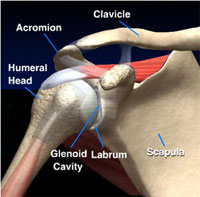 The primary function of the rotator cuff (which many people often miss) is to center the humeral head in the glenoid fossa. In order to accomplish this, the dynamic stabilizers of the shoulder need to be on their "A" game. This is of special consideration when dealing with athletes, as the nature of competition is frequently an "open loop" scenario.
See the video below for a pushup variation that incorporates some dynamic stabilization of the shoulder girdle. We named it "Suspended Pushup ISO Hold (with perturbations) into Repetitions."
The primary function of the rotator cuff (which many people often miss) is to center the humeral head in the glenoid fossa. In order to accomplish this, the dynamic stabilizers of the shoulder need to be on their "A" game. This is of special consideration when dealing with athletes, as the nature of competition is frequently an "open loop" scenario.
See the video below for a pushup variation that incorporates some dynamic stabilization of the shoulder girdle. We named it "Suspended Pushup ISO Hold (with perturbations) into Repetitions."
A couple notes:
- Having a studly powerlifter give you perturbations during the ISO hold is optional, as the suspension straps inherently provide a stability challenge on their own.
- This exercise hits multiple birds with one stone. It will give you a tremendous challenge for your core (you're essentially holding a plank position for the entire time), give you a nice stretch for the pecs in the bottom, improve the ability of your rotator cuff to stabilize the humeral head (where your upper arm bone attaches to the shoulder joint), and develop your upper body strength. Sounds like a winner to me.
- As shown in the video, hold at the bottom for 10-20 seconds, and then move into the desired number of repetitions. Stay TIGHT in the bottom. Everything should be braced. Everything....
- Using the suspension straps is actually a fairly advanced progression of a pushup (especially if your feet are elevated, as shown). Be sure you master the ground-based pushups first.
- (Piggybacking off of #2) If you don't have access to suspension straps (or a partner), no problem! Holding a tight isometric at the bottom of a pushup (on the floor), and then moving into repetitions, can make a great way of taking on a new challenge if standard pushups have become a bit easy for you.
- You increase testosterone levels by 50% if you wear a "Do Work" shirt while performing these.
Just don't tear your shoulder in two....Stevo