"Sort of Maxes": The Key to Dominating Competition and Longevity in Training
Just last week I posted a video of SAPT client, Lisa, nailing a 240lb deadlift on her "Test Day." Within a mere twenty-four hours of posting the video on my YouTube channel, someone commented the following: "good bar speed. i know your not powerlifiting but theres a few more pounds on the table so to speak. great strength and keep up the good work."
For those of you who haven't seen the video and don't know what he is talking about, here is the deadlift below:
As you can see, the YouTube commentator is exactly right! There are a few more pounds on the table. In fact, I'm willing to bet that Lisa could have pulled 260-265lbs (and perhaps a bit more) had she decided to "grind out" another max attempt. The 240lbs she pulled in the video was certainly not her true max, even though this was a freaking TESTING DAY for her.
And that is precisely the point.
I heard some advice from Dan John that couldn't have put into words a better description for what we do with our athletes and clients on a daily basis at SAPT, in order to facilitate continued strength and power development and reduce their risk of injury. In fact, it is something that everyone should do if they desire any hope of continuing to set PRs in the weight room and dominate the playing field:
"Go for a PR, single or rep, when you are feeling exceptionally strong, but stop short of an all-out max. Set a "sort of max."
This is the type of max you need to drive up. The "sort of max." Not your actual max. This is the key to safeguarding your body to remain fresh, injury free, and efficiently managing its stressors to continue to do what most of you reading are after: moving onward and upward, both in the gym and on the playing field.
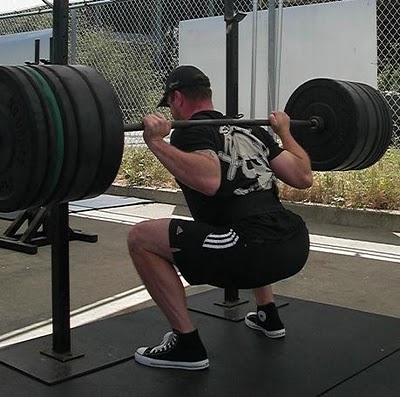 And yet, this is something that many seem to miss once we get all riled up in the weight room.
It's as if we lose all sense and wisdom once we get under that bar, in an effort to satisfy our ego more than the health of our spine.
In fact, this relates closely to what I personally believe sets the wise apart from the fool in this world: The degree of one's capacity to defer immediate satisfaction for the sake of a greater future reward.
This applies to all spheres of life, but, keeping within the context of strength training, the immediate satisfaction would be an extra 5-15lbs on a squat, bench, deadlift, or snatch attempt (the consequence often being stalling your progress, burning out, becoming injured, or feeling exhausted on game day). The greater future reward (in resisting urge the throw more weight on the bar) would be a healthy body, high performance levels, and continued PRs in the weight room.
It is telling that the great sprint coach, Charlie Francis, said the following as he was preparing Olympic sprinter Ben Johnson:
If there is any degradation in training, stop. If there is any doubt about one more rep or run, don't do it. If you are trying to learn with reps, you won't get it later if you haven't already. Leave it and come back to it.
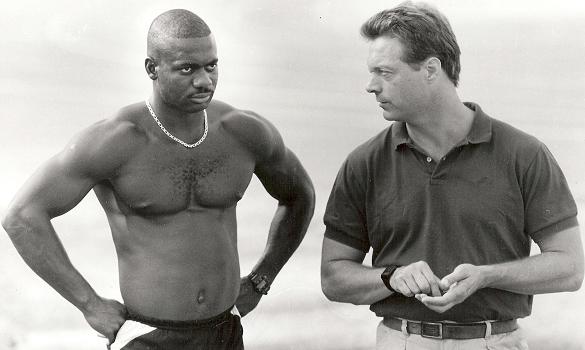 This is ESPECIALLY true when it comes to training athletes. It makes me sick to my stomach when I (frequently) hear of high school and college strength and conditioning coaches pushing the limits of their kids during each and every training session! It continues to blow my mind how many coaches don't have the most basic understanding of physiology and demands of the sport at hand in order to coach their athletes properly.
I conclude with two of Rif's famous corollaries:
- The next step off a peak is always down.
- One should step down rather than fall off.
Continue to push up your "sort of max" in the weight room. It's the best way to ensure continued growth and longevity in training. You'll thank me (and Dan John) later.


Emphasize Individual Pathways to Sport Expertise
Research on expertise, talent identification and development has tended to be mono-disciplinary, typically adopting genocentric or environmentalist positions, with an overriding focus on operational issues. In this paper, the validity of dualist positions on sport expertise is evaluated. It is argued that, to advance understanding of expertise and talent development, a shift towards a multidisciplinary and integrative science focus is necessary, along with the development of a comprehensive multidisciplinary theoretical rationale. Here we elucidate dynamical systems theory as a multidisciplinary theoretical rationale for capturing how multiple interacting constraints can shape the development of expert performers. This approach suggests that talent development programmes should eschew the notion of common optimal performance models, emphasize the individual nature of pathways to expertise, and identify the range of interacting constraints that impinge on performance potential of individual athletes, rather than evaluating current performance on physical tests referenced to group norms.
Did you grab the essence of that abstract? I'll wait while you read it once more and let everything sink in...
Fascinating. Often in team sport the coaches and, thus, the athletes become focused on everyone on the team achieving the same physical performance norms. For example: everyone on a soccer team must achieve or exceed 11-minutes on the Beep Test, every front row player on a women's volleyball team must touch at least 10'0", or every 100m sprinter must perform at least 75 continuous push-ups.
But what if EVERY athlete simply can not achieve these norms? As a coach, what is the message you send? Is it one of insistence upon achieving the norm at the detriment to development of more important skill sets? Or to the detriment of continuing to develop a well-rounded athlete that in the long-run may, in fact, exceed these norms?
The message in this abstract ("Expert performance in sport and the dynamics of talent development."
Sports Medicine
2010.) is the same message we send to parents, athletes, and coaches alike at SAPT. We constantly emphasize individual successes and performance over and above any comparative norms. And this is the ROOT of why we provide unique and individual programming for every single one of our clients. Why would you train exactly like someone else? You're unique, right? I know I am. My strengths are different than yours. And my weaknesses will be just as unique to me.
Do yourself or your kid a favor when looking for performance training options (be it physical preparation, technical skill development, or mental performance) and seek out the sources that provide an individually focused approach. Yes, it will cost a few dollars more than, say, an enormous "speed camp" cattle call, but in the end it will be well worth it to foster true performance development in your athlete.
Strength Training In-Season & Cirque Video
For most of our readers this is a "preaching to the choir" study I found: "Effects of complex training on explosive strength in adolescent male basketball players." But, I thought it was worth posting for those few of our readers who may not be fully sold on in-season training:
The purpose of this study was to evaluate the effects of a complex training program, a combined practice of weighttraining and plyometrics, on explosive strength development of young basketball players. Twenty-five young male athletes, aged 14-15 years old, were assessed using squat jump (SJ), countermovement jump (CMJ), Abalakov test (ABA), depth jump (DJ), mechanical power (MP), and medicine ball throw (MBT), before and after a 10-week in-season training program. Both the control group (CG; n = 10) and the experimental group (EG; n = 15) kept up their regular sports practice; additionally, the EG performed 2 sessions per week of a complex training program. The EG significantly improved in the SJ, CMJ, ABA, and MBT values (p < 0.05). The CG significantly decreased the values (p < 0.05) of CMJ, ABA, and MP, while significantly increasing the MBT values (p < 0.05). Our results support the use of complex training to improve the upper and lower body explosivity levels in young basketball players. In conclusion, this study showed that more strength conditioning is needed during the sport practice season. Furthermore, we also conclude that complex training is a useful working tool for coaches, innovative in this strength-training domain, equally contributing to a better time-efficient training.
As a college strength and conditioning coach and the owner of SAPT, I've seen countless times how important strength training is for athletes to remain strong, fast, and free of injury during the practice and in-season time frame. I always get a chuckle out of athletes (or their parents) who only "need" 4-6 weeks of preparation before their respective tryouts begin.
Check out this nonsense someone sent to me (and by nonsense, I mean this is absolutely so amazing that it is ridiculous):
Lastly, Ryan and I are expecting a new bambino or bambina at the end of May! Have you ever heard the term "Irish twins?" I hadn't... apparently, it refers to siblings born in close succession. It originated in the 1800's and was a derogatory term used to describe the reproductive tendencies of Irish immigrants. Someone suggested yesterday I will have Irish twins with baby #2. Technically, I think they would need to be born closer to 12 months apart... our kids will be 23 months apart, thank you very much.
30 Things I Want to Share
I started this post back in September when I noticed that I was exactly 30 years and 30 weeks old, thus, the 30 points I want to share. I hope you enjoy this one... going back and rereading what I had written, I realized this post was better than I originally gave it credit for. Lots of things I've learned about training, coaching, and life throughout!
- I’ve discovered that with every moment older I get, the less and less interested in material objects I become. I guess this is how real adults are able to buy things like vacation homes and afford retirement.
- Weight training does not make women gain weight, unless they are eating like they want to gain weight.
- Considering the cost of gas consumption when purchasing a car is one of the greatest financial lessons my parents ever taught me. It is also the reason why we own a Prius.
- Imposing a strict tempo is probably the most important change I’ve made in my programming over the last 4 years. Prior to that I really had very little appreciation for how powerful training the eccentric and isometric portions of every movement can be.
- Knowing you can provide well for you children is hugely satisfying.
- I frequently feel that only a handful of trainers/coaches in the world actually know how to teach a squat correctly.
- A professor I had in undergrad once told me "a Bachelor’s degree simply shows you have the ability to commit to something and finish it over a long period of time. The people at your first job will still have to teach you what you really need to know." It’s all about experience.
- Certifications mean very little. It’s, again, all about experience.
- Everyone who lives in and around DC should check out the National Arboretum. It’s a beautiful and relaxing place to unwind.
- I recently read a running book that did a much greater job explaining the importance of working at your current pacing level (i.e. % of 1RM for weights) than any weight-training book I’ve ever read. The book is Daniel’s Running Formula.
- Every trained female should be able to perform at least 3 pull-ups. I used to make excuses for myself about why I would never be able to do them… then I smartened up and figured out a great pull-up progression (see #9). After a bit of time, I found myself doing sets of 10 dead-hang pull-ups.
- Mel Siff’s Supertraining is still the most comprehensive book about anything ever written. My mind is blown every time I crack that book open. How someone produces a work like that is beyond my understanding.
- You can tell a great deal about how parents raise their children by how their kids act in the face of a challenge.
- “If you want to be fast, you have to move fast.” This is referring to bar speed in the weight room.
- “You will pass out before you die.” Another great weight room quote from a mentor of mine.
- If you’re unsure about set/rep schemes as they relate to percentage of 1RM. You MUST read Tim Kontos’ article on Prilepin’s Chart. I continue to reference this when I need solid guidance on final decisions in volume and intensity.
- Working to become less egocentric is an important endeavor to improve overall satisfaction with your life. For example, women who avoid the free weight area of a gym because “all the guys stare at me.” No they don’t. Get over yourself.
- Coaches (strength or sport) who become frustrated at athletes easily are not well equipped to be teaching in the first place. We’re teaching more than how to set a screen or do a pushup, we’re teaching life skills.
- Not having spent any time around babies before having one, I never really knew what the big-deal was… I get it now!
- Everyone should consider wearing shoes that have a zero drop or a very low drop. I don’t like the term “barefoot” shoes because you’re not barefoot. You still have shoes on they just don’t have any elevation change from heel to toe.
- You will be better off if you make an effort to go to sleep and wake up at around the same time every day (yes, weekend days are still days, so they count towards this).
- You don’t have to yell at athletes and put on a big show to get them motivated to perform. Just treat them calmly and with respect. Get excited when appropriate.
- Television is such a massive waste of time.
- Work on soft-tissue quality regularly.
- I fully believe in the idea and pursuit of the American Dream.
What is Your Secret?
Many of you may be familiar with Ross, who, I personally believe, is the only human being alive who seems to possess outstanding development of all three of his energy systems. I mean, how many people do you know that can - on any given day of the week, mind you - perform a true 1-arm pullup, deadlift over 550lbs, do 1-arm standing rollouts (with a weight vest), jump rope like he's in fast forward, and slay dragons? Below are two awesome clips that many of you have probably already seen, but I post them for those that haven't (or for those that can't get enough of this stuff):
'Nuff said.
He has accomplished what many people strive for in multiple sectors (strength, endurance, body composition, etc.). And he has done this primarily by training with minimal equipment either in his home garage or outside.
One of the things I like most about Ross is he has a great way of boiling complex topics down and communicating them in a way that makes it easy for his followers to understand. Not too long ago, I was reading some of the forums on his site, and someone asked him,
"Ross, what did you do to accomplish what you did?"
They were, of course, referring to some particular piece of equipment, or maybe a secret training methodology they hadn't heard of/tried before. The point is, they wanted to know what his "secret" was.
Ross responded with a simple yet profound piece of training advice:
Years and years of hard work.
That was it. That was all he said. I chuckled to myself at my desk, as I knew the person asking the question may have been slightly miffed and probably felt like Ross was short-changing him by not giving him a complete answer. The reality was that couldn't have been further from the truth; Ross was giving the young person probably the best thing he/she could have heard.
This got me thinking about how important the virtue of patience really is. There are countless athletes that will never see their full potential come to fruition because of impatience. Or someone whose goals lie strictly in the aesthetic realm may never succeed because it's always an "I want it now" approach.
Leo Tolstoy, the famous author of War and Peace, wrote in that very novel:
"The two most powerful warriors are patience and time."
So true. And, carrying that quote over to the exercise science realm: a program written by an expert coach who perfectly manipulates intensity, frequency, exercise selection, and volume, will do nothing for someone who lacks patience. Impatience will dissolve any potential positive outcome that could be attained by intelligent program design.
Athletes and non-athletes alike will never get to where they want to be unless they're willing to fight tooth and nail, every single day, for years and years on end. If a client/athlete approaches me and is too impatient to be willing to progress through one step at a time, then I honestly can't really help them. I can't be the coach they need to take them from Point A to Point B unless they can actually understand that there is no magic pill.
I receive countless questions on a monthly basis through email, Facebook, and in-person meetings on "how can I lose this weight" or "how can I increase my vertical ten inches over the next month" or, my favorite, the good ol' "what is the best exercise I can do to make my pecs bigger?"
I've honestly boiled down my answer to:
"Eat whole, unprocessed foods. Pick up heavy things. Repeat this for years on end."
Sometimes this irritates people, but it's the truth. In fact, it makes training all the more enjoyable when you're expectations are realistic.
That's all for now...I don't think I really have a closing point, but I hope Ross's lesson to the young padawan in the beginning hits home for some of you. Years and years of hard work....well, let's all keep goin' then.