SAPT Exercise of the Week: One Arm Pushup, Band-Assisted
I'm pretty crunched for time this morning as Kelsey and I need to head to a doctor's appointment in a minute, so I need to make this brief. Strength coach Shon Grosse recently came up with a pretty brilliant way to do the one-arm pushup. I'll admit, when I first saw it I thought it was a little "foo-foo," but after trying it a few times myself, I'm sold.
 It's much safer on the shoulders than the traditional one-arm pushup, and it's a tremendous challenge for the chest, shoulders, triceps, and core. This is a great option stronger individuals that train with minimal equipment (ex. at home), and/or have exhausted most other pushup variations and are looking for a new challenge:
You can raise/lower the difficulty by adjusting how high the band sits, and by toying with how you hang the band (ex. just one end or both ends hanging from an attachment). For those of you who train at home and have an Iron Gym, that's a perfect place to put the band. Here's mine at home, using a "micro" band from EliteFTS:
 Shon gives a fantastic write-up on the entire exercise HERE, so I encourage you to read it if you're looking to give this a shot.
Hope you enjoy!
Runner's High Measured in Humans, Dogs, & Ferrets
Here is some pretty cool research highlighted by SweatScience. I don't so much care about the ferrets, but the measured "high" in humans and dogs is fascinating!
Aerobic Hill Sprints
 Yesterday, my wife and I headed outside to a local hill to complete our first (of many) hill sprint sessions for the Spring/Summer. There is a perfect hill near our place that is very steep and will literally own you unless you are giving full effort up the entire hill.
(Note: If you're wondering what the 3 primary constituents of hill sprints are that make them so awesome - and why you'd be a fool not to do them - then read THIS POST by Chris Romanow.)
Yesterday, my wife and I headed outside to a local hill to complete our first (of many) hill sprint sessions for the Spring/Summer. There is a perfect hill near our place that is very steep and will literally own you unless you are giving full effort up the entire hill.
(Note: If you're wondering what the 3 primary constituents of hill sprints are that make them so awesome - and why you'd be a fool not to do them - then read THIS POST by Chris Romanow.)
Given that it was our first time sprinting (outside) since 2011, we were definitely tempted to run until our legs and hearts couldn't take it any longer, as there's something incredibly freeing and "human" about sprinting full speed outside. However, we managed to hold ourselves accountable, ensuring not to overdo it, as steep hill sprints can wreak havoc on the achilles/calves if you go too much+too soon and don't warm-up properly beforehand.
Anyway, this got me thinking: when the majority of us go out for a conditioning session, there is really no rhyme or reason to what we do. We hear that circuit training is good, so we perform a Spartan, "300-esk" circuit until we shoot our spleen out the back of our pants as we writhe around on the floor. Or, we hear that running 400m repeats will help our marathon time, so we run them until our our glutes bleed and our hamstrings no longer recognize friend from foe.
Now, let me be clear: For the average person who simply enjoys the feeling of their lungs burning and the sensation of pushing the limits of their mental+physical faculties, this is fine. I am all for having fun and sometimes we get too complex with things simply for the sake of complexity.
However, for the competing athlete, haphazardly running through conditioning drills can be the difference between a big W and getting crushed by your opponent.
It is beyond the scope of this post to go into all the different means and methods of conditioning (and which methods are best for each sport), but I'd like to touch briefly on the concept of aerobic hill sprints.
What?? How can you be aerobic if your SPRINTING? Doesn't "aerobic" imply long, slow running reserved for weaklings?
No, sir.
Aerobic Hill Sprints
With aerobic hill sprints, as long as you monitor your heart rate accordingly, you can accomplish a very "neat" training effect: you can improve the aerobic abilities of the fast twitch fibers. In essence, this will train your body to produce high levels of power over a longer period of time.
And who doesn't want that??
The aerobic system has gotten a bad rep in the industry over the past ten years or so (I'll admit, I used to shun it), when the reality is the aerobic system is probably the most important of all of them.
How to Do Them
Strength coach Joel Jamieson refers to this method as High Resistance Intervals. The work duration is short, and the resistance is high. In the case of hill sprints, our "resistance" equals the grade of the hill (hint: you want a REALLY steep one). Here's the protocol:
- Each "rep" (or run up the hill) should last 10-12 seconds. No more, no less.
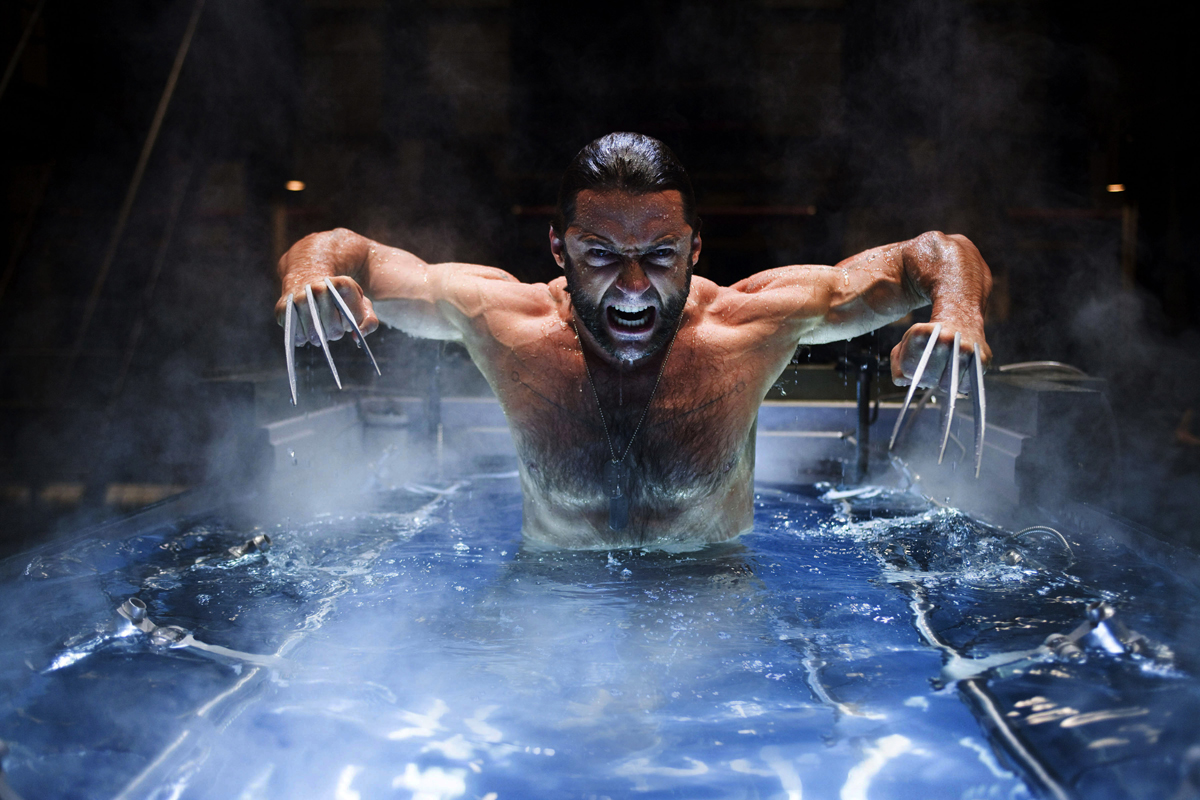
- Every rep is MAXIMAL intensity. I'm not kidding, drive those knees up and elbows back as if your life depended upon it.For me personally, I pretended I was Wolverine right after adamantium was shot into my skeleton and, filled with rage, was breaking out of my container to exact revenge on those responsible for murdering Kayla.
- Rest to a heart rate of 130-140 beats per minute. This is critical to ensure you're actually able to give a true maximal effort on each sprint and not deplete yourself too quickly. Most importantly, this will ensure the intended adaptations of the session are actually taking place.
- Heart rate should be below anaerobic threshold. Again, this is critical. This is not the time for a vomit fest and it's key that you don't go glycolytic on these. (Yes, I have read the Tabata study, and yes, it is one of the most misunderstood and ill-applied studies in performance training history I believe).
- If you haven't sprinted in a while, start with 7-10 reps. Once you get in the swing of things, 15-20 reps should comprise an average "high resistance interval" workout.
Football and rugby athletes are an obvious group I would have do this (heck, pretty much all field athletes), on top of those in the fighting arts and military. Not to mention, aerobic hill sprints would be a staple to place in the preliminary phases of training for a triathlon or long-distance race.
And last, but not least, these are a fantastic option for those that simply love training and want to ensure they're being the most efficient with their time when they go out for conditioning. The hills are a perfect place to start, too, due to the minimal joint stress received, on top of the fact that poor running form (something I'm still working on) won't have as much as a negative impact as it would on a 5-mile run.
One of my favorite quotes by Jim Wendler is "My training plan is simple. It's three things per training session, usually done 3-4 times/week.
- Stretch
- Lift
- Sprint
That's it, and that's all you need. If you stretch hard, lift heavy, and run fast, everything else seems to take care of itself."
Couldn't have said it better myself. Now go get after it.
Friday Musings 3/23/12: Hunger Games, Stuffed Peppers, Powerlifting, Introverts
1. I went to go see the the opening night showing of The Hunger Games last night, and, needless to say, I'm really looking forward to it.
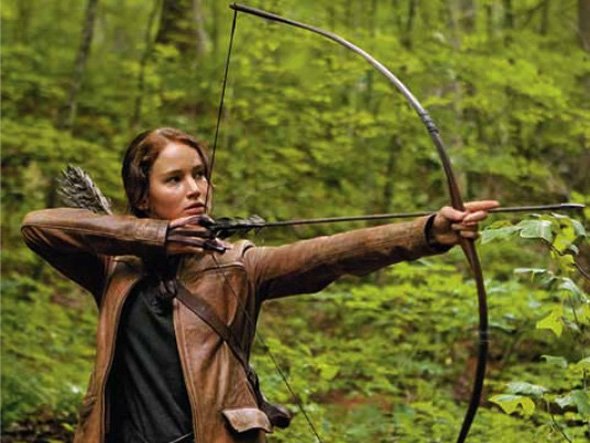
"Wait just a minute there Stevo, didn't you just use both the past and present tense in that sentence of yours?" some of you may be asking.
First of all, don't chastise me in a condescending tone like that. Second, I'm actually writing this post on Thursday, due to the fact that I won't be getting home till past 3AM and certainly won't be up for throwing together a blog post before the Friday morning appointments at SAPT. So I thought the best way to tell you about my little jaunt over to the opening showing of Hunger Games would be to both discuss it in the past AND present tense. Did I just blow your mind?
 Anyway (talking from Thursday right now), I'm realllyyyy looking forward to it. It may not hold a candle to Braveheart or Gladiator on a manliness scale, but it's going to be a fun change of pace nonetheless. I haven't gone to an opening night showing of any movie since college, so I thought The Hunger Games would be an appropriate movie to end that streak with, especially given that this was a photo I took last Fall, essentially representative of all of my Saturday mornings in November:
 For those of you who haven't read it. I HIGHLY recommend it, if anything for the fact that it's "easy reading" material, and I've found that nearly every age group, and both males and females, tend to enjoy the read.
I'll keep you all posted on the movie!
2. My wife is a really good cook. Not only that, but she continually keeps me guessing with what she prepares for dinner each evening. This past Tuesday's meal was so incredible (and cool) that I wanted to share it with you all.
Enter the Stuffed Peppers:
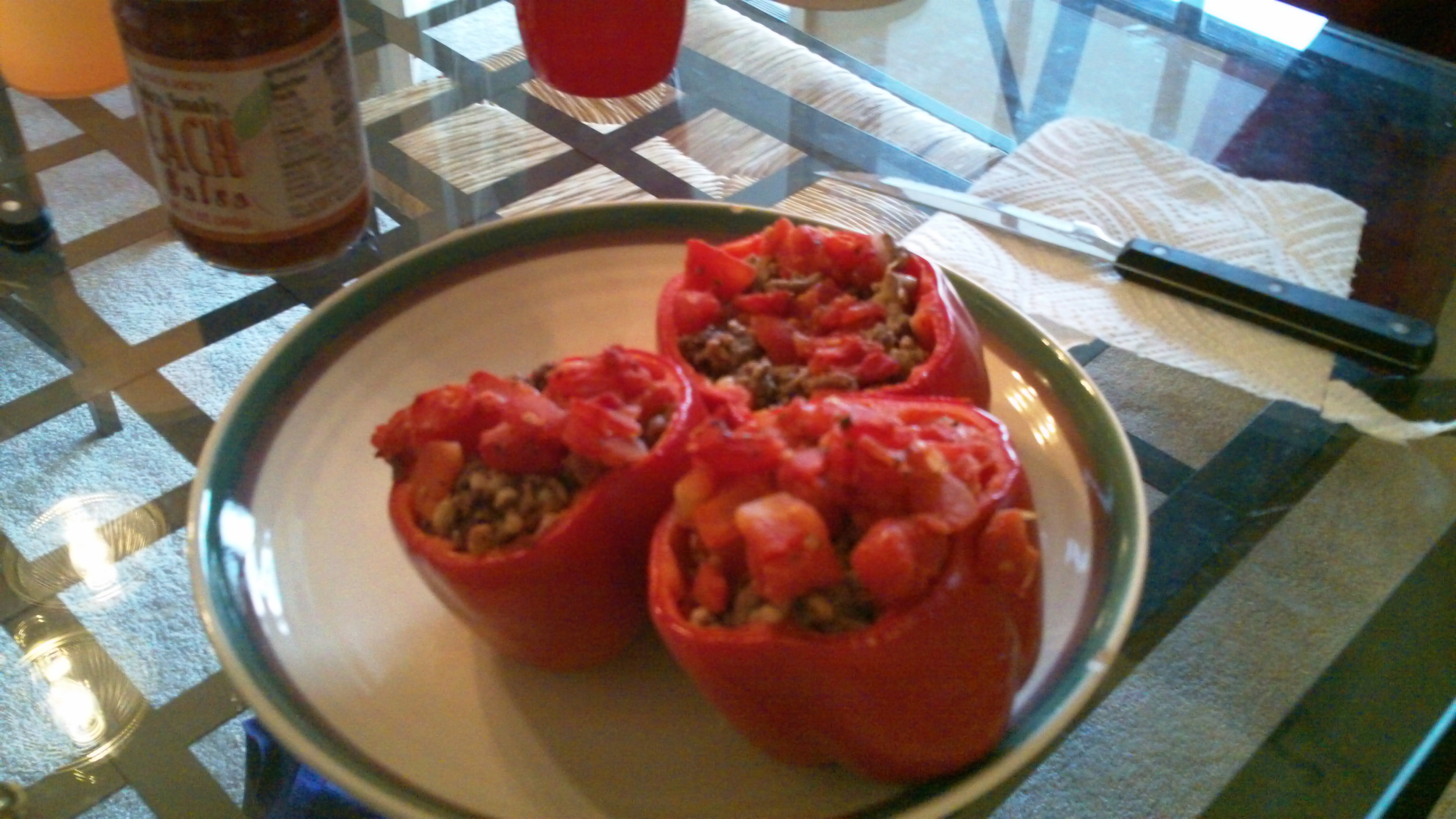 Don't they look awesome?!? You see the recipe HERE, where Kelsey goes into detail on how to prepare them.
To you ladies and gents the crowd: You're guaranteed to woo the man or woman of your dreams by inviting them over to your place and preparing these babies. They'll be impressed by your culinary skills, I promise. AND, I'll even give you permission to take credit for the dish.
3. Jeremy Frey is one of my new favorite powerlifters. I just love how deliberate he is with everything from start to finish with his lifts. And, if there was a such thing as perfect form in powerlifting, I think Jeremy is pretty darn close.
**Check out the video for some pre-lifting inspiration (I apologize for the language in the song....I'd turn the volume down if you're at work or don't like to listen to such things)
4. At heart, I'm as introverted as they come. My wife can attest to this, as the first thing I want to do on a Friday evening - after spending the entire week surrounded by blaring music, weights crashing, and remaining the target of the myriad questions of the SAPT athletes+clients - is head to the local coffee shop (alone) and spend some time with me, myself, and Stevo, and a good book.
In fact, when I first hopped on board the "SAPT ship," Sarah and Chris (the only SAPT staff at the time) chuckled when it came up in conversation that I'm an introvert. They laughed because they, too, are introverted, and they responded with: "Wow, just what we need.....3 out of 3 staff members with introverted personalities in a business that requires 8+ hours a day with constant human interaction!"
Not to long ago, I was discussing the concept of introversion vs. extroversion with Jason, a good friend of mine, and we were musing how, contrary to popular belief, being "good with people skills" doesn't equate to extroversion and introversion. While there are many definitions of the two personality types Jason (who is an extrovert) came up with one that I thought was pretty good:
"When you have a choice to either:
A) Be around people B) Be alone
and, more often than not, you would choose to spend time alone, you're probably introverted."
Other people have said "Depending on whether you recharge by spending time with people or spending time alone determines your personality type." I think this works in most cases, too.
Anyway, my friend (and fellow introvert), Tony Gentilcore, recently shared an awesome video on his blog by Susan Cain titled The Power of Introverts, and I thought I'd share it here for those who haven't seen it yet.
Whether you're introverted or extroverted, it will be twenty minutes well spent:
Susan is the author of a book out titled Quiet: The Power of Introverts, that I'm heavily considering picking up.
That's all, hope you all have a great weekend.
**Note: Just saw that Ryan posted a video of Jeremy Frey in his post yesterday on deadlifting. Jerk! Ah well, I guess great minds think.
A Tool for the Toolbox
An awesome aspect about being a strength coach is you get to watch great coaches do what they do best and at the same time be taught by them yourself. You have the pleasure of learning and then applying this knowledge gained to your athletes and you alike. The following deadlift refinement technique is not something I made up; again it’s something that I learned from the awesome coaches I’ve worked with and something I’ve been able to utilize with the athletes and my own training. Try this to fix up your deadlift technique… The volume is a little low for some reason (my apologies); better than last time though…
[vsw id="E44ocLkSOu0&list=UUKSYQ75Buogznl62rdbks2Q&index=1&feature=plcp" source="youtube" width="425" height="344" autoplay="no"]
A few supplementary notes…
- This is not something to go super heavy on. This is a tool to refine your deadlift technique.
- Keep the bar weight light but use bumper plates; as I mentioned in the video it was only 95lbs of bar weight.
- As far as band tension goes you shouldn’t be using anything more than a mini band.
- Use this during your warm-up or during your off days as a way to improve your form.
Also the below video is definitely worth checking out if you’re looking for some motivation before going to train. The video is of Jeremy Frey, a strength coach and powerlifter from EliteFTS. This guy is ridiculously smart when it comes to training and STRONG!
[vsw id="4WAkvOnZv7w&feature=player_embedded" source="youtube" width="425" height="344" autoplay="no"]

Straight Bar vs. Trap Bar Deadlifts, Part 1
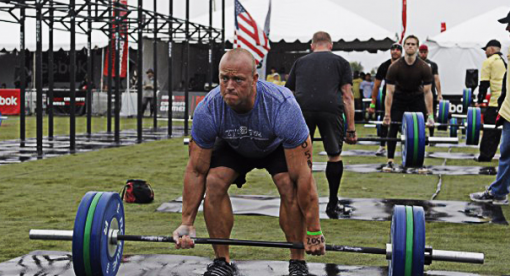 Which bar is more appropriate for your deadlift training goals?
“What’s your thought/preference on straight bar deadlifts vs. trap bar deadlifts?”
Which bar is more appropriate for your deadlift training goals?
“What’s your thought/preference on straight bar deadlifts vs. trap bar deadlifts?”
I hear this question constantly, but because both lifts closely resemble one another, and because both lifts are used so often, I can understand why it can be a confusing topic.
So, what exactly are the differences? Which of the two bars is easier to learn? Which variation will add more muscle mass? Which option will be place less stress on the low back? Which variation will provide a greater stimulus for the hips? Which bar would Wolverine and Batman choose, respectively? Hang tight, as I’m about to answer those questions and then some.
Continue Reading....
(Note: The above link takes you to my most recent OneResult article)
(Note to guy in above picture: Pack your neck FOR THE LOVE!!!)