Overtraining Part 2: Correct and Avoid It
In the last post, we went over some symptoms of overtraining. If you found yourself nodding along in agreement, then today’s post is certainly for you. If not, well, it’s still beneficial to read this to ensure you don’t end up nodding in agreement in the future.
To clarify, overtraining is, loosely, defined as an accumulation of stress (both training and non-training) that leads to decreases in performance as well as mental and physical symptoms that can take months to recover from. Read that last bit again: M.O.N.T.H.S. Just because you took a couple days off does NOT mean your body is ready to go again. The time it takes to recover from and return to normal performance will depend on how far into the realm of overtraining you’ve managed to push yourself.
Let's delve into recovery strategies. Of the many symptoms that can appear, chronic inflammation is a biggie. Whether that’s inflammation of the joints, ligaments, tendons, or muscles, it doesn’t matter; too much inflammation compromises their ability to function. (A little inflammation is ok as it jumpstarts the recovery process.) Just as you created a training plan, so to must you create a recovery plan for healing after overtraining.
Step 1: Seek to reduce inflammation.
How?
- Adequate sleep is imperative! As in, go to bed BEFORE 11 or 12 PM teenagers-that-must-awaken-at-6AM-for-school. (Subtleness is not my strong suit.) Conveniently for us, our bodies restores themselves during the night. They release anabolic hormones (building hormones) such as growth hormone (clever name) and sleep helps reduce the amount of catabolic (breaking down) hormones such as cortisol. Since increased levels of coritsol are part of the overtrained symptom list, it would be a good thing to get those levels under control!
- Eat whole foods. Particularly load up on vegetables (such as kale) and fruits (like berries) that are rich in antioxidants and anti-inflammatory compounds. Apparently Gold Milk has those, too and, according to Jarrett, helps him sleep. Bonus! Lean protein sources like fatty fish, chicken breast, and leaner beef (grass-fed if you can get it) will not only help provide the much-needed protein for muscle rebuilding but also will supply healthy fats that also help reduce inflammation.
- Drink lots of water. Water helps the body flush toxins and damaged tissues/cells out and keeps the body’s systems running smoothly. Water also lubricates your joints, which if they’re beat up already, the extra hydration will help them feel better and repair more quickly. A good goal is half your body weight in ounces of water guzzled.
Step 2: Take a week off
You’re muscles are not going shrivel up, lose your skill/speed, nor will your body swell up with fat. Take 5-7 days and rejuvenate. Go for a couple walks, do mobility circuits, play a pick-up basketball game… do something that’s NOT your normal training routine and just let your body rest. Remember, the further you wade into the murky waters of overtraining, the longer it will take to slog your way out.
Step 3: Learn from your mistakes.
While you’re taking your break, examine what pushed you over the edge. Was it too high of a volume and/or intensity? Was it too many days without rest? Was your mileage too high? Are there external factors you’re missing? Were you were stressed out at work/school, not sleeping enough, or maybe you weren’t eating enough or the right foods to support your activity. I’ve learned that I need 2 days of rest per week, any less than that and my performance tanks.
Step 4: Recalculate and execute.
When you’re ready to come back, don’t be a ninny and do exactly what you were doing that got you into this mess in the first place. Hopefully, you learned from your mistake(s) and gained the wisdom to make the necessary changes to avoid overtraining in the first place. Here, let’s learn from my mistake:
I overtrained; and I mean, I really overtrained. I had all the symptoms (mental and physical) for months and months. I was a walking ball of inflammation, every joint hurt, I was exhausted mentally and physically (and, decided to make up for my exhaustion by pushing myself even harder.) I ignored all the warning signs. This intentional stupidity led to my now permanent injuries (torn labrums in both hips, one collapsed disc in my spine, and two bulging discs). The body is pretty resilient, but it can only take so much. I ended up taking four months off, completely, from any activity beyond long walks. (That was terrible by the way. I hated every minute but knew it was necessary.) When I did come back, I had to ease into it. Very. Very. Slowly. Even then, I think I pushed it a bit too much. It took me almost 2 years to return to my normal physical and mental state. (Well, outside of the permanent injuries. Those I just work around now.) Learn from my mistake.
So how can we avoid overtraining? Here are simple strategies:
1. Eat enough and the right foods to support your activities.
2. Take rest days. Listen to your body. If you need to rest, rest. If you need to scale back your workout, do so.
3. Keep workouts on the shorter side. Avoid marathon weight lifting sessions (trust me). Keep it to 1-1.5 hours. Max. Sprint sessions shouldn’t exceed 15-20 minutes.
4. Sleep. High quality sleep should be a priority in your life. If it isn’t, you need to change that.
5. Stay on top of your SMR and mobility work. I wrote about SMR here and here.
6. Train towards specific goals. You can’t be a marathon runner and a power lifter. Pick one to three goals (that don’t conflict with each other) and train towards them. You can’t do everything at once.
Armed with the knowledge of overtraining prevention, rest, recover, and continue in greatness!
The Benefits of Strength Training for the Endurance Athlete
Wednesday, Coach Mike posted on the SAPT blog discussing the downfalls of early sport specialization (Read it here). He made a lot of great points. This insistence on specialization can thrash your body and the coaches at SAPT see the effects on our athletes every day.
As much as we’d like to encourage participation in a broad range of sports and activities, sometimes that just isn’t possible. This is often the case with the college athlete, or the adult looking to maintain their health. Time constraints make the transition to endurance sport seem natural for the latter. The adult knows the # killer of both men and women in the US is heart disease, and they know that cardiovascular activity is the best medicine there is. They wind up running 5Ks with their families, and maaaybe the occasional 10k. They end up joining a cycling club, or a masters swim team. In these instances, it’s important for the athlete to maintain a proper strength-training program and not forget about the multitude of benefits that accompany frequenting the weight room.
Endurance athletes (distance swimmers, runners, triathletes, cyclists) are a group who tend to over-specialize. The common misconception in the endurance world is that strength training will be completely detrimental to performance, but consider the effects of hours and hours of repetitive cardiovascular activity week in and week out? For example, let’s look at someone who runs 5x/week, with an average between 20-50 miles a week. That’s a lot of running. That’s a
lot of sagittal plane (think straight forward) movement. That’s a lot of time spent utilizing a partial range of motion at the hips, knees, and ankles; demanding repeated high velocity eccentric braking of the quads and calves and maintaining a slight forward lean. In addition, modern society has evolved so that many of us are stuck working desk jobs huddled in front of computers, and books, and television, driving this shoulders-forward kyphotic caveman-like posture further. On top of that, think about what happens when you throw in a couple hours a week cycling. We wind up with incredibly tight quads and hip flexors, weak hamstrings and glutes, a nasty anterior pelvic tilt and an upper body stuck in kyphosis. These imbalances need to be accounted for, and this is what makes the weight room such an asset for the endurance athlete.
By programming a walking Single Leg RDL, we select an exercise that targets the weak posterior chain (glutes & hammys) of our endurance athlete. We’re training the muscles through a large range of motion and preparing them to adequately handle the stress of their training. Progress the exercise by using a load (ex: dumbbells in both hands) and it becomes much more difficult to keep a neutral spine throughout the motion. We can take it a step further and offset the load. Use the Single Leg Single Arm RDL variation and the athlete is being pulled into rotation and they must resist. Not only will these exercises target muscles groups that may be neglected during our athlete’s sport training, but also the fact that they’re performed on one leg at a time adds another dimension of sport-specificity. Check out videos of the exercises below.
https://www.youtube.com/watch?v=U-nRt31Ynk4
https://www.youtube.com/watch?v=NrXcZck4URM
https://www.youtube.com/watch?v=VdsYonXpEfk
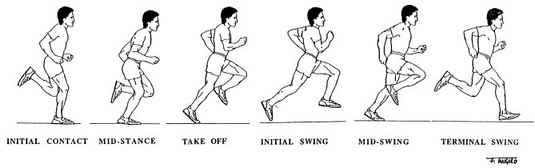
It’s clear that strength training can provide major benefits when it comes to decreasing our risk of injury, but are those the only benefits available to the endurance athlete? Absolutely not. What about power production? Running is essentially a ballistic sport, where you launch yourself from foot to foot. It’s imperative for marathoners to master the ability to decelerate their body weight during the initial phase of the foot-strike and then quickly accelerate and propel themselves forward. To do so requires the ability to properly absorb force and redirect it. We can teach and develop these skills in the weight room, first by teaching jumping and landing mechanics (single and double leg), then layering on a variety of reactive hops, and finally depth jumps for more advanced athletes. This is obviously a simplistic approach, but the point is clear. Not only will this method help our athletes increase their power production and decrease the energy needed to perform their activity, but their bodies will be better equipped to handle the stresses of endurance training and will hold up much stronger in the long run.
Hopefully by now it’s evident to you how important it is to maintain a proper concurrent strength-training program, especially if you're an endurance athlete. The benefits are vast and the carryover to your performance and longevity as an athlete will be evident. These advantages are not reserved for the youth, or for athletes who play team sports. They can be tremendously effective for endurance athletes as well, and frankly, you’re not reaching your full potential as an athlete without a comprehensive strength and conditioning program.
Golden Milk: Trust Me, It's Much Better Than It Sounds
With cold and flu season knocking at our back door, supplement companies are ramping up their marketing campaigns to flood the internet with biased information on what you should shove down your gullet to keep the sniffels away. Now I love my supplements as much as the next guy, but the idea of having to take a daily lemon-pledge-flavored shot of vita-chemicals to fight off illness makes me and my wallet both feel uneasy.
Enter Gold Milk:
I first noticed gold milk on my facebook feed. A colleague had posted an article on tumeric and the ridiculous amount of benefits that this spice has and there was a list of ways to add it to your diet without doing a yellow version of the cinnamon challenge.

I will be the first to admit that I spend the least amount of time possible on prepping my food. veggies, meat, fruit, done. I keep things as quick and easy as possible due to the fact that I'm out of the house 12 hours a day during the week. So most of my food prep is on the weekends and anything I make during the week usually doesn't surpass the complexity of a protein shake or PB&J. For this reason alone, most of the list seemed too fancy and too easy for me to screw up. Then I read, "gold milk" and my curiosity was peaked.
Since then, I've been drinking it every night and it adds a nice relaxing way to end the day. The flavor is almost similar to a chai tea, but it has the added benefits of freaking you roomates out as you sip on what appears to be raw eggs... They think I'm on a Rocky kick. The recipe is pretty easy, admittedly, the hardest part is getting the yellow stain of off whatever the tumeric comes into contact with. My spatula still looks like it was used to assault the yellow teletubby.
The recipe is super simple and is a two part process of making the paste then the the milk. I actually added a couple of ingredients to give it some healthy fats and more flavor. You'll see those as optional.
Ingredients:
1/4 C Tumeric
1 tsp Cinnamon(optional)
1 tsp coconut oil (optional)
1/2 C Water
1 C Fat Free or Almond Milk
A bit of honey
How to Make the Paste:
Step 1: In a small sauce pan, mix and heat the tumeric, cinnamon, water and coconut oil.
Step 2: Heat and continually stir the ingredients for about 7 minutes, until it becomes paste-like. If it seems too dry, feel free to add water as needed.
Step 3: Put the paste in a small storage container and refrigerate for when you want to make your single servings of golden milk. (I recommend a dark container that will not pick up the yellow stain.)
How to Make the Gold Milk:
Step 1: Nuke a cup of milk in a microwavable safe mug for 1-2 minutes.
Step 2: Add 3/4-1 tsp of the paste.
Step 3: Add honey for desired level of sweetness
Step 4: Drink and enjoy your yellow milk mustache.
Developing The Overall Athlete
Over the past 15 years a large number of parents and athletes have bought into the idea that in order to earn a scholarship athletes have to play travel ball and specialize in one sport. Sports specialization, defined as limiting sports participation to one sport where students train and compete solely in that sport year round, has fortunately worked out well for a small number of people like tennis greats Venus and Serena Williams and Tiger Woods. Unfortunately, this erroneous thought process has led to an ever-increasing number of athletes who have become little league and middle school studs who tapped out in high school either by nagging overuse injuries or by simply being burned out from playing too much.
Many of the greatest athletes took the opposite approach and played a variety of sports on their way to greatness. This list is long, but let’s name Lebron James and Bo Jackson as examples. They are both outstanding athletes to say the least. So what’s the point of playing multiple sports? The fundamental reason to play multiple sports is that you build a better athlete overall. The defensive slide used in basketball is the same movement a shortstop would use to intercept a ground ball in baseball, which is the same movement that an offensive lineman would use during pass protection in football.
There are also a number of additional health and wellness benefits associated with varied sports or physical activities including:
- Reduced risk of overuse injuries and stress from burnout
- Improved performance
- Leadership development by not always playing with the same group of girls or guys
- Athletes won’t shine at every sport they try, which teaches humility and keeps egos in check
- Kids have the opportunity to learn from different coaching styles and personalities
- IT’S FUN
If you are still hung up about the scholarship thing, Lax Magazine recently interviewed a number of top level college lacrosse coaches about their thoughts on recruiting multi-sport athletes. Click here to read that article.
All and all, I feel that in today’s social media-filled world where the best coaches are only 140 characters (Find us on Twitter @SAPTstrength) or a YouTube click away, if you can play someone will find you.
Overtraining Part 1
For the next month we'll have posts regarding the total athletic picture ranging from specific training techniques to what athletes can do outside of training to improve performance. Today we'll kick it off with a post about over training. Wha?? What does THAT have to do with athletic performance? Well, my friends, we live in an era where the attitude I'm-so-tired-I-can-barely-move mentality constitutes a "good workout"; an era where the adage "pain is weakness leaving the body," is plastered on every high school athletic t-shirt and perpetuates the notion that only utter exhaustion means "progress." This is not to say that no pain is warranted, but that excessive, persistent joint and muscle pain is NOT. We can be honest, who doesn’t enjoy a hardy work out? Who doesn’t like to train hard, pwn some weight (or mileage if you’re a distance person), and conquer the physical goals you’ve set for yourself?
I know I do.
However, sadly, there can be too much of a good thing. We may be superheroes in our minds, but sometimes our bodies see it differently. Outside of the genetic freaks who can hit their training hard day after day (I’m a bit envious…), most of us will reach the realm of overtraining. I should note, that for many competitive athletes (college, elite, and professional levels) there is a constant state of overtraining, but it’s closely monitored. But, this post is designed for the rest of us, including middle school and high school athletes (all of whom think they are invincible).
Hopefully, after today’s post, you’ll be able to recognize the symptoms and thus stop the process. Next post, we’ll talk about strategies to avoid over training as well as correcting and reversing the effect.
Now, everyone is different and not everyone will experience every symptom or perhaps experience it in varying degrees depending on your state of training. These are general symptoms that you/parents/coaches should keep an eye out for.
Symptoms:
1. Repeated failure to complete/recover in a normal workout- I’m not talking about a failed rep attempt or performing an exercise to failure. This is a routine training session that you’re dragging through and you either can’t finish it or your recovery time between sets is way longer than usual. For distance trainees, this may manifest as slower pace, your normal milage seems way harder than usual, or your heart rate is higher than usual during your workout.
2. Lifters/power athletes: inability to relax or sleep well at night- Overtraining in power athletes or lifters (any athlete outside of triathletes or cross country runners/bikers, I'm looking at you, playing-year-round-northern Virginia kids) results in an overactive sympathetic nervous response (the “fight or flight” system). If you’re restless (when you’re supposed to be resting), unable to sleep well, have an elevated resting heart rate, or have an inability to focus (even during training or practice), those are signs that your sympathetic nervous system is on overdrive. It’s your body’s response to being in a constantly stressful situation, like training, that it refuses to relax and stays in the sympathetic state.
3. Endurance athletes: fatigue, sluggish, and weak feeling- Endurance athletes experience parasympathetic overdrive (the “rest and digest” system). Symptoms include elevated cortisol (stress hormone that isn’t bad, but shouldn’t be at chronically high levels), decreased testosterone levels (more noticeable in males), increase fat storage or inability to lose fat, or chronic fatigue (mental and physical).
4. Body composition shifts away from leanness- Despite training hard and eating well, you’re either not able to lose body fat, or worse, you start to gain what you previously lost. Being overtrained results in elevated cortisol levels (for both kinds of athletes). Cortisol, among other things, increases insulin resistance which promotes fat storage and inhibits fat loss.
5. Sore/painful joints, bones, or limbs- Does the thought of walking up stairs make you groan with the anticipated creaky achiness you’re about to experience? If so, you’re probably overtraining. Whether it be with weights or endurance training, you’re body is taking a beating and if it doesn’t have adequate recovery time, that’s when tendiosis, tendoitis, bursitis, and all the other itis-es start to set in. The joints, muscles, tendons, and ligaments are chronically inflamed and that equals pain. Maybe it’s not pain (yet) but your muscles feel heavy and achy. It might be a good time to rethink you’re training routine…
6. Getting sick more often- Maybe it's not the flu, but perhaps the sniffles, a sore throat, or a fever here and there; these are signs your immune system is depressed. This can be a sneaky one especially if you eat right (as in lots of kale), sleep enough, and drink plenty of water (I’m doing all the right things! Why am I sick??). Training is a stress on the system and any hard training session will depress the immune system for a bit afterwards. Not a big deal if you’re able to recover after each training session… but if you’re overtraining, your body never gets that recovery time. Hence, a chronically depressed immune system… and that’s why you have a cold for the 8th time in two months.
7. You feel like garbage- You know the feeling: run down, sluggish, not excited to train… NOOOOO!!!!! Training regularly, along with eating well and sleeping enough, should make you feel great. However, if you feel like crap… something is wrong.
Those are some of the basic signs of overtraining. There are more, especially as an athlete drifts further and further down the path of fatigue, but these are the initial warning signs your body gives you to tell you to stop what you’re doing or bad things will happen.
Next time, we’ll discuss ways to prevent and treat overtraining.
SAPT's Advice for Strength, Health, and Jedi Skillz
Brevity is one of my virtues. Therefore, in that spirit, today's post will sum up how to get stronger, live well, increase you Jedi skill level by 1,000, and we’re doing it hiaku style. What can be more to the point than a haiku? Happy Friday! Strength:
Baby weights and fads. Ladies, please fear not.
Not the best way to gain strength. Weights will not make you manly,
Pick up heavy things. Pick up heavy things.
10 minutes to abz?
Train hard and consistently
Be patient, eat well.
NO.
Swing big bells daily
Strong glutes make strong athletes and
Desired booties.
Nutrition:
Five ingredients or less,
Eat lots of real food
Shun the short cuts.
Kale makes you healthy
You’ll punch sickness in the face
Load up on the kale.
Vegetables and fruits,
Proteins and good fats are the
Essentials to health.
Jedi Skills:
To use the Force, one
Must produce much force, thus lift
Heavy things a lot.