5 Not-So-Common Tips on Finding and Cultivating a Mentorship
When pursuing excellence in a particular discipline - athletics, business, academics, music, “life” in general, you name it - finding and procuring a mentor to guide and sharpen you is not a nice-to-have. It’s a must-have.
I’m not going to delve into the why of the matter, however, as I believe you already know the why.
Besides, if the one and only Gandalf had mentors during his time on Middle-earth, then you and I both need them during our time on Regular-earth. The equation is simple.
Now, while the why may be simple, the how is a different matter entirely.
Many individuals recognize the supreme value of mentorship, but often feel stymied in their attempts to actually make it happen. This could be due to a variety of factors: lack of direction (“where do I even begin?”), fear of being turned down, or, quite frankly, laziness.
In my own life, while walking down the path of attempting to identify suitable mentors and enter into fruitful relationships with them, I’ve made no small number of mistakes. Fortunately, these mistakes have birthed many valuable lessons and insights which have enabled me to, eventually, experience some pretty amazing and invaluable mentorships that I am forever grateful for.
Here are a few fundamental principles and essential ground rules that I’ve picked up during my own personal journey.
1. It’s not necessary to find the highest-level expert in the field
Say what?
This statement may catch you by surprise. After all, why wouldn’t you want an unrivaled expert in your field of interest to be the very one who personally teaches you, nurtures you, guides you, challenges you during the process of honing a specific skill set or discipline?
There are many answers to that question, but one of the most important is this: they may not be the best teacher.
[As an aside: while mentor and teacher are not synonymous, all mentors are teachers to some degree, which is why I raise this point.]
The interesting thing about true masters of a specific domain, is that they’ve been so deeply intertwined with the subject for so long that the fundamentals, the critical information that a beginner must learn during the early stages of skill acquisition, have become so deeply internalized that these basic principles are now seamlessly integrated into their actions without even having to think about them.
As Josh Waitzkin aptly put it, the foundational steps are no longer consciously considered, but lived.
“Very strong chess players will rarely speak of the fundamentals, but these beacons are the building blocks of their mastery. Similarly, a great pianist or violinist does not think about individual notes, but hits them all perfectly in a virtuoso performance. In fact, thinking about a “C” while playing Beethoven’s 5th Symphony could be a real hitch because the flow might be lost.”
~Josh Waitzkin (8-time national chess champion and Brazilian Jiu-Jitsu black belt)
What’s the point to all that? Well, this can make it very difficult for a well-seasoned maven to dig back down into the depths of their mind, in order to extricate, section out, and then teach the basal yet essential principles they learned long ago but now employ unconsciously.
It’s not that they can’t teach or mentor a student in the ways of their craft, but they may not be able to do so as well as others in the field. There’s a large difference knowing and teaching. For example, I’m sure many of you can recall a prior physics or math teacher, or sport instructor, who may have been brilliant within their craft but yet you had a difficult time learning while under their tutelage.
This concept even carries over to reading books. As I’ve sought to improve my chess game, I’ve actually found it quite helpful to not exclusively buy books written by Grandmasters (the highest achievable title in chess). You would think that a Grandmaster would be the best person to learn chess from, but, for reasons mentioned above, this isn’t always the case. For example, I have found treasure troves of insight within the works of Jeremy Silman, an International Master (one step below Grandmaster) who has built a strong reputation for his ability to teach beginners, despite the very fact that he is not a Grandmaster. It’s his knowledge of the game, in concert with his gift of teaching, that makes him shine, not the standalone fact that he’s a highly ranked chess player.
Ergo, when you seek mentorship from someone: they don’t have to be the absolute best; in fact, it may very well be optimal if they are not. You don’t need to head straight to the tip-top of the skill pyramid. Often you can find someone who is still extremely proficient (way more so than you), who will be able to instruct you and augment your learning process in a manner much more effective than even the “best” within that discipline.
Find a great teacher. Not necessarily the unparalleled expert.
2. Mentorship doesn’t have to be a formal, official arrangement
Probably one of the worst things you could do upon discovering a prospective mentor is to call them up and ask, “Hey, do you want to mentor me?” This is tantamount to you calling and saying, “Hey, do you want to take on an unpaid, part-time job?”
While I’d be remiss to assert that no successful mentorship has ever been started this way, this doesn’t change the fact that it’s still an odd way of asking. Even if they do say yes, it puts them in the awkward position of feeling like they need to plan out regimented meetings and send out a syllabus or something.
Here’s one of the most important things to know about mentors: a mentor is anyone you can learn from, who can impart wisdom upon you, who can directly or indirectly help to guide the decisions you make and actions you take. He or she can be a family member, a coworker, someone you already interact with quite regularly, or perhaps someone you only speak to on a quarterly basis. It also helps to ensure this individual is not a fool.
Some of my best and most fruitful experiences with mentors have risen out of informal relationships. From time to time, usually without it being planned in advance, they’ll provide me with a gem of seminal insight, or a particularly profound nugget of wisdom, which permanently alters my course for the better.
Should some mentorships be formal? Absolutely. But more often than not - at least during the beginning stages - it’s best to just let mentorship “happen.”
Don’t be the weirdo who comes right out and asks for it. That would be like my clumsy, ill-fated attempts to date a few women I fancied back in high school and college; rather than allowing our relationship to nurture and grow for a bit, and giving them subtle yet clear context clues of my interest, I just came straight out and asked, “Hey, would you like to be my girlfriend?”
Yeah, that rarely ended well.
3. Take a break and do something else together
Talk about things and do random crap that don’t at all pertain to your usual subject of study. Enjoy sarcastic banter and making fun of one another; grab a beer together; play a video game or chess; go on a bike ride; travel or go cliff jumping; play a sport; go see a movie or simply take a walk around town.
This accomplishes a couple things. First, it will help you connect to one another as human beings. It’s not rocket science: the more you get to know them, laugh together, and share a broad spectrum of experiences, the more you’ll be able to dismantle any personal barriers that you - often unintentionally - assemble and put up between you and other people. Within the context of mentorship, these personal barriers serve nothing other than to ultimately impede the learning process that could otherwise flourish unhindered between the two of you.
Second, and I can’t overstate this enough: it will nurture your creative processes in a profound way. Oddly enough, remaining singularly fixated on only the subject of study is not the optimal approach, even if your only goal is to learn that specific subject!
Steve Jobs knew this very fact, and summed it up well in an interview with Wired back in 1996:
“A lot of people in our industry haven’t had very diverse experiences. They don’t have enough dots to connect, and they end up with very linear solutions, without a broad perspective on the problem. The broader one’s understanding of the human experience, the better designs we will have.”
~Steve Jobs
Broaden your experiences, not just as an individual but also with your mentor. It may seem like a waste of time, especially if you’re someone who becomes intensely obsessive with that one thing you’re trying to master or accomplish, but it will be more than worth it.
4. Remember they are not infallible beings
When you highly esteem someone, heavily admire their work, and love receiving advice from them, it can be easy to arrive at the subconscious conclusion that this person is without error or character flaws, to elevate them to something of a deity and hang on every word they speak or write as if it were inerrent ideology.
Then, when they inevitably crack (or shatter) the standard of perfection you’ve set for them - say, by making a mistake, or by slighting you in some way - it’s as if the ground crumbles beneath your very feet as the world comes crashing down around you. You either become pissed off at them and write off anything they ever said as fraudulent and worthless, or stew in despair and disbelief because the person who you believed would never mess up or upset you, just did.
Like anything in this world, when you make a good thing into an ultimate thing, it becomes an idol that will eventually enslave you, let you down, or both.
Nobody is perfect, and the privilege of being mentored by someone you highly respect is always an extremely delicate balance of trusting their wisdom and yet continually remembering they are nothing more than human; at the end of the day, they are prone to the very same pitfalls and character flaws as you. If they screw up, or irritate you in some way, just relax. Take a few deep breaths, forgive them, get over it, and get back on course.
5. Your personal network: don’t ignore the power of it, and don’t neglect to broaden it
While the maxim “it’s not what you know, but who you know” may be a cliche, that doesn’t make it untrue.
Everything from crucial internships, to the job I currently hold and love, to incredible opportunities I’ve experienced, to being connected with some crazy awesome and widely-respected mentors, have all been fruit I was able to pluck and enjoy as a result of seeds planted long ago in the form of interpersonal relationships.
This is one of the many reasons it’s imperative not only to refrain from burning bridges, but also to form as many as possible. You just never know how a friend, a prior coworker, or even an acquaintance, may be able to help connect you with a reputable individual who would otherwise be all but inaccessible. You can never have a network that is broad enough.
In fact - and I’m sure I speak for my fellow introverts when I say this - keeping in mind the above sentence is one of the primary tonics that keeps me going during formal social gatherings and conventions. You know, those dreaded events which require one to endure that insufferable affliction otherwise known as small talk. I would rather swallow a live hand grenade than spend a few hours small talking with strangers who I’ll probably never see again. But again, you really never know what may come as a result of it - they may be able to help you, or you may be able to assist them, in remarkable ways.
While by no means exhaustive, I hope the above points provide a small window of clarity into the often cloudy and undefined realm of mentorships.
Agree? Disagree? I’d be curious to hear anything you’ve found helpful, be it with the actual finding of mentors, or nurturing the relationship once it’s already formed.
Rate Of Force Development Part 2: Training and Increasing RFD
Last post, I went over some of the terms and definitions of rate of force development (RFD). I also mentioned motor units (MU) and if, at this point, you have no clue what I’m talking about, go back and read it. It’s right here. Why should you care about increasing your rate of force development? Answer: power sports (which is every sport to some degree) are dependent upon the ability to produce high levels of force at any given moment, like running away from a T-Rex.
There are two main ways research and experience backs up to train RFD: explosive strength training (Newton et al. Med. Sciences Sports Exer. 1999) and maximal load training, i.e. picking up heavy stuff. (McBride et al, J. Strength and Conditioning Research 2002). It should be noted that most of the research has been done with isolated muscles/movements (it’s a lot easier to test the quadriceps muscle in a leg extension machine than the various muscle groups in a deadlift) and so it can be a little tricky to apply to real life. However, where science has holes, the experience of coaches fills the gap!
First: force = mass x acceleration Keep this in mind…
Explosive training (speed work) is taking a sub-max load (say, 50% of your one rep max) and moving it as fast as possible, with good form obviously, for 1-3 reps per set. That’s key- as fast as possible. Those high threshold motor units, the ones that produce the most force, are recruited to move that weight quickly by contracting quickly. Even though the load is light, the acceleration is high. By challenging your system to move loads supa fast (actual speed measurement), we can increase the force production by increasing the acceleration part of the equation. This is one way to train and increase RFD, by working on the "speed" (or "velocity" for the nerds) part of the equation.
Typically at SAPT, we program 1-3 reps for 6-8 sets with a strict :45-:60 rest period. Why the rest parameters? We want to keep the nervous system “primed” and if the rest period is too long, we lose a bit of that ability to send rapid signals to the muscles.
Maximal load training, aka picking up some freakin’ heavy weight, will typically be above 90% of your one rep max, likewise we keep the rep range between 1 and 3 (mainly because form can turn to utter poo very quickly under heavy loads if the volume is too high). This untilizes the other part of the force equation, mass. If the acceleration is low, the mass has to be high in order to create a high force production. Once again, neural drive is increased and those high threshold MU’s are activated. The threat of being crushed beneath a heavy bar can do that.
Bottom line: As the an athlete's RFD increases –> the recruitment threshold of the more powerful motor units decreases –> more force is produced sooner in the movement –> heavier weights can be moved/athlete becomes more explosive in sport movements.
Think back on poor lifter B from last post who had a really low RFD during his 400lb deadlift attempt. Being the determined young man that he is, he trained intelligently to increase if RFD through practicing speed deadlifts (to get the bar off the floor faster) and maximal training, (to challenge the high threshold units to fire). Pretty soon, instead of taking 3 seconds to even get the bar off the floor, it only takes 1 second of effort and instead fo straining for 5 seconds just to get the bar to his knees, he’s able to accelerate through the pull and get it to lock out in just under 4 seconds. Success!
For sake of the blog post, we could assume he always had the capability of producing enough force to pull 400lbs, but could produce it fast enough before his body pooped out. Now, with his new and improved RFD, 400lbs flies up like it’s nothin.’
Another thing to keep in mind is the torque-angle relationship during the movement. Right… what?
All that means is the torque on the joints will change depending on their angles throughout the movement, thus affecting the amount of force the muscles surrounding those joints must produce. For example, typically* the initial pull off the floor in a deadlift will be harder than the last 1-2 inches before locking out due to the angle of the hip and knees (at the bottom, the glutes are in a stretched position which makes contracting a little tougher than at the top when they’re closer to their resting length.) Same concept applies to the bench press, typically** the first 1-2 inches off the chest are more difficult than the last 1-2 inches at lockout. The implication of all this being the muscles will have different force-production demands (and the capability to meet those demands) throughout the exercise.
Knowing this, we can train through the “easier” angles and still impose a decent stimulus to keep those higher threshold motor units firing the whole time. How?
With chains and bands! Yay!
Aside from looking totally awesome, chains provided added resistance during the “easier” portions of the exercise to encourage (read: compel) muscles to maintain a high force output throughout the movement. Watch Conrad, The Boss, deadlift with chains:
At the bottom, when the torque-angle relationship is less favorable, the weight is the lightest and as he pulls up, the weight increases as glutes must maintain a high level of force output to complete the deadlift. No lazy glutes up in hea’! Bands produce a similar effect. Check out the smashingly informative reverse band bench post Steve wrote here.
There are other ways and other aspects to discuss (like the fore-velocity curve... but that is a tale for another day!), but quite frankly, this blog post is reaching saga-like proportions so I’m going to cut it here. And remember kids:
*unless your name is Kelsey Reed and you have a torso 6 inches long… but can’t lock the pull out.
** unless your arms crazy long.
4 Drills to Clean Up a Hinge Pattern
Drills are an awesome and totally underutilized tool within most exercise programs. It's not hard to fall into the mindset of always needing to get stronger within a movement rather than just getting better at it through practice. This is CRUCIAL for people just beginning their strength training program as their initial gains are all based off of just learning how to do things, and thus can be expedited through the extra practice.
Hearing the term, "drill" also changes the mindset of the client. When you address a simple movement as an exercise, often times the client will be more aggressive in execution as they try to, "feel the burn" or fight you to let them go heavier. But when introducing a drill, it's often understood that the purpose is to learn the finer points of the movements and focus on technique. It then becomes immensely easier to progress the movement, blow through the noob gains or even clean up technique in more advanced lifters.
I personally find that the general population has the hardest time getting down their hinge pattern. This is most likely attuned to picking up things the wrong way on a daily basis combined with the whole factor of glute amnesia. It's for this reason that I've started using hinge drill variations in almost everyone's programs to help with their deadlift without having to worry about fatiguing the movement. I find that it helps with clients of all levels and experience.
The following are some of the most common drills you'll see us use at SAPT in the order of less to more advanced. Keep in mind that for people starting off, they are best paired with glute activation drills to help build stability in the posterior chain during the pattern.
Knees Against Bench Dowel Rod Hinge Drill
https://www.youtube.com/watch?v=2lHamIPidrc
This drill is awesome for all levels of lifters. To perform it, set up with your knees about an inch or two(everyone will be different) from a bench and hold a dowel rod against the back of your head, thoracic spine, and sacrum. Once set, push your hips back as you allow your knees to touch the bench. Go as far back as you can without letting you knees come off the bench or letting the dowel rod come off your head, point on your t-spine or sacrum. Come back out of the hinge and do not let your knees leave the bench until you are almost to lockout. Keep your feet relaxed and planted the entire time. Ideally one hand will be in the space of your lordotic curve to help give better feedback of if your back starts to round. If the knees come off the bench, you've sacrificed hip extension for knee extension. If the dowel rod leaves you, then you've lost your neutral spine. ONLY GO AS FAR AS YOU CAN WHILE MEETING THESE REQUIREMENTS.
This drill has become a staple for beginners at SAPT and I have found it to reinforce a correct hinge pattern faster than any other corrective. As previously stated, I often like to combine it with floor-based glute activation exercises to help give the client more posterior chain stability and allow them to hinge further back. Also, for more quad-dominant individuals, I will abuse this exercise during their rest periods. It's not uncommon for you to see 10 sets of 10 to be performed throughout the session.
This is an(especially) appropriate drill for anyone who has the following issues:
- Locks out knees before hips
- Has trouble keeping a neutral spine
- Has a poopy ASLR and is not yet ready for deadlifts(especially when combined with the next on the list)
- Poor posterior weight shift ability
Band Resisted Quadruped Rock
https://www.youtube.com/watch?v=VrRzZypg-cM
This drill looks odd at first(especially when performed by Waldo), but it can be pretty powerful when used correctly. Due to the knees being unable to translate during the movement, it shifts the entire focus to the hip extension and using the hips as drivers for propulsion. It's also one of the easiest movements to coach considering it's built off of a developmental pattern.
You can use several different types of harness, I chose this one for the video as it's the most popular among gyms. Just make sure for this types that the chain goes through your legs rather than behind. With it set up as shown, it'll give fairly personal feedback for when the pelvis starts to tuck or if spinal flexion starts to appear(especially for guys).
To perform, start as shown in quadruped position with a band hooked to your harness. Keep a tall posture and imagine you're pushing the ground behind you as you rock forward. The rock back. Done. due to it's simplicity and easiness, I like to program sets of 10-20.
This is an(especially) appropriate drill for anyone who has the following issues:
- Locks out knees before hips
- Loads the back rather than the hips
- Has a poopy ASLR and is unready for deadlifts(especially when combined with the previous drill)
- Poor body awareness
- Has lower-leg dysfunction that is affecting traditional hinge movements
Band-Resisted Hinge ISO
https://www.youtube.com/watch?v=ZPnyLULK9Cg
This drill is a little more advanced than the previous ones. We tend to introduce this to individuals who have already been exposed to kettlebell deadlifts, but may be having some trouble with them. Or we may just want a tension exercise and to get the glutes more involved. The reasons can span on since it's been found to be such an effective movement for progressing deadlifts.
Due to your body reflexively tightening your posterior chain to protect you from falling back, you'll be hard pressed to find an exercise that causes a more effective glute contraction. Because of that, the uses for this drill are vast. But what it also does: teaches correct load/tension in the bottom of a deadlift, reinforces position, gives an opportunity to teach proper bracing mechanics, gives a safe variation for introducing isometric work into deadlifting.
To perform this, you need to have already established competency in the first drill. If someone has trouble keeping a neutral spine or cannot physically get into a proper hinge position, this IS NOT for them. To set up attach band or cable from the ground a few feet behind you, to your hip crease. With a kettlebell either in deadlift position OR a bit in front of you, grab on to it and set your back as if you're about to lift. Then hinge back into the band. It will try to pull you further back, causing your glutes to automatically turn on to prevent you from falling. Between the added weight of the bell and the tension you've created, you will feel your strong and stable position. You will know a client has reached the appropriate spot once their shoulder are over their feet.
Again, I want to reiterate that the bell can be in front of you rather than in deadlift position. Most people starting off will need it to be in front and that's ok. I've yet to see a correlation between the position of the bell for this drill and poor carryover to deadlifting. The main component is the main position of the hips and torso. You can even see my toes start to elevate, meaning that I probably should've had it a little further in front.
This can be tricky to coach, but it's been extremely effective. Just make sure that: the arms are long, the back is flat, the shoulders end up over the feet in a hinge position and the client stays tight. I like to use the cue, "attach yourself to the bell then pry your hips into position so that the band can't move you." I also make them hold a brace in this position to help prep them for once they lift heavy.
This drill is appropriate for anyone who has the following issues:
- Poor set up
- Looses tension on initiating the pull
- Has trouble loading the hips
- Poor bracing
Band Resisted KB Deadlift
https://www.youtube.com/watch?v=0uHFeR55Su0
This drill is just a dynamic variation of the previous one. I find that many clients will have a great first rep, then will get, "quaddy" when lowering the weight, putting them in poor position at the bottom and killing the smooth transition to the next rep. This drill helps to keep them honest and remind them to load the hips through both portions of the lift.
You'll notice that I start the movement from the top and allow the band to assist in pulling me into position. This is because some people may have trouble finding the initial pull position at the bottom with the band constantly pulling them back(the same reason why I said some people will want the KB in front of them for the ISO). Starting from the top diminishes that issue so long as the 5lb plate is there. to guide them where to put the bell. The band helps to establish a RNT(reflexive neuromuscular training) effect which will keep the glutes involved through the entirety of the lift.
This drill is appropriate for anyone who has the following issues:
- sagital knee translation during lift
- poor eccentric phase
- hamstring dominance
Part 4: Off-Season Periodization
The Triathlete Strength Training PrimerPart 4: Off-Season Periodization
Last week we identified a couple of areas that most triathlete’s should work on improving during their off-season strength training programs. Let’s take a minute to recap what we learned in last week’s blog.
Potential Areas of Improvement
We want to use weight training as a means to…
- Fix muscle imbalances or postural issues caused by high-volume endurance training.
- Develop power and strength.
- Develop dynamic core strength and stability.
- Improve joint stability, muscle coordination, and total body awareness (proprioception).
Now let me preface this article by saying that there are many different ways to go about structuring a weight training program. Different coaches utilize different methods to achieve similar goals. The important thing to remember is that the method you choose should be based on sound logic and proven training principles. There is no right or wrong way, however, the coach or athlete who will improve the most is the one who pays careful attention to the results their current method produces. A successful coach or athlete will note the strengths and the shortcomings of a particular program, and find a way to improve upon it in the next cycle.
To add to the confusion, an Ironman-distance racer needs to spend more time developing his aerobic capacity (endurance) then someone who races sprint-distance races. The sprint-distance athlete will need to possess a strong aerobic base, but the shorter race times (sub 60-min for faster triathletes) allow for a faster pace to be held. Because of this, they would be advised to spend additional time developing other performance measures, such as their anaerobic power, capacity, muscular strength, and rate of force development. Let’s take a quick second to define these performance measures.
- Anaerobic Power: The ability to generate as much force as you can as fast as possible. This has a lot to do with your rate of force production.
- Anaerobic Capacity: The ability to sustain a high rate of force over a period of time
- Muscular Strength: The maximum amount of force a muscle or muscle group can produce in one burst.
- Rate of Force Development (RFD): A measurement of how quickly one can reach peak levels of force output. (Read all about RFD here!)
Now on to the meat…
Joe Friel recommends splitting the preparatory period into two halves. The first half can be referred to as the “General Preparation Phase” to be followed up by the “Specific Preparation Phase.” It’s a tried and true method used by triathletes all over the world, and one we can adapt to our strength training program.
The General Preparation Phase
This would be the time to implement training blocks specifically designed to increase muscular strength and anaerobic power. The sprint-distance triathlete will spend more time focusing on these parameters and will be able to implement a more comprehensive strength/power-block into their training plan. Multi-joint, compound movements will need to be a staple of your program during this time of year. The focus should be on gradually increasing the weights used over time when we’re working to improve max strength, and moving moderate to heavy weights very quickly when our focus is on achieving improvements in power.
At SAPT we’ll have our athletes squat, deadlift, row, as well as perform push-up and pull-up variations to increase their strength. Kettlebells, jumping variations and medicine balls are useful for improving anaerobic power and rate of force production. We’ll program swings, throws, and slams to increase these performance measures, as well as use the prowler and crawl variations for conditioning purposes.
A Half-Iron and Full-Ironman athlete would be well advised to dedicate time to strength and power training. Your in-season training has turned you into an endurance workhorse, but it's difficult to keep the same levels of strength you had before you turned to higher volume running. Decreased strength can lead to minor joint issues that result from a lack of stability. Implementing a strength base can reverse this process. The higher intensities (heavier weights) will provide a stimulus your body is not used to, and stimulate increases in bone density, joint stability, and strength. Of course, these athletes rely almost entirely on their aerobic endurance and at the end of the day, increasing their maximum strength will only pay off up to a certain point. These athletes will want to spend more time utilizing exercises that will improve their postural dysfunctions. Single-Leg RDLs, Turkish get-ups, and rolls variations should all be part of your repertoire.
The Specific Preparation Phase
The Specific Preparation Phase would occur next. A properly implemented Gen. Prep. phase will have improved the development of our nervous system, increased our hormone production, bone density, connective tissue strength, and fast-twitch fiber size. This next phase will focus on further improving our rate of force production and stuffing our now-massive fast-twitch fibers with mitochondria (energy-producing organelles). This way we're capitalizing on our increased anaerobic power from last phase by shifting our focus towards increasing their capacity. Methods that achieve this cause an increase in the anaerobic enzyme content in the fibers and they become more efficient. We can now use our fast-twitch fibers for longer periods of time, and push higher intensities as a result. Think how fast you could be if you truly harnessed the ability of your fast-twitch fibers.
We’ll use different methods to achieve these goals. When we’re working on aerobic and anaerobic capacity, we’ll use methods such as the HICT Method (read about it here) or Lactic Capacity Intervals. Lactic Capacity Intervals can take many forms, but the important thing is that we’re training our body to buffer the mechanisms of fatigue and increase our ability to prolong ATP production through anaerobic means. We’re teaching our body to prolong the use of our fast-twitch fibers and increasing the amount of time we can large forces (which leads to faster, more ballistic running, and an improved ability to tackle a big hill.) Near the end of this phase, when we’re getting as specific to our competitive event as possible, is when we’ll shift our focus to developing our aerobic endurance and slow-twitch fiber performance. We’ll shift to Tempo-style training for our main lifts (think barbell work), and higher rep sets that focus more on improving local muscular endurance.
https://www.youtube.com/watch?v=vSejY4Cl47M
Wrapping Up
As I mentioned previously, this is only one way to approach off-season strength training for the triathlete. However, this method can be very effective at increasing your performance and is based off of solid training principles such as progressive overload and specificity, and is set up in a way to maximize performance benefits and build off of the previous block. In next week’s post, I will detail out a small sample program that follows this method. See you then!
The Triathlete Strength Training Primer
Part 1: An Intro to Periodization - Seeing the Bigger Picture Part 2: The Repetition Maximum Continuum Part 3: The Preparatory Period a.ka. the Off-Season Part 4: Off-Season Periodization Part 5: Off-Season Periodization, cont. Part 6: The First Transition Period Part 7: The First Transition Period, cont. Part 8: The Competition Period - In-Season Strength Training Part 9: In-Season Template Part 10: Post- Season Training
Go Catch Your Z's
By now it’s likely that the importance of getting enough sleephas been beaten into your brain. This is obviously not up for debate as you can more than likely recall a few sleep deprived afternoons in a vivid fashion. Let’s take a look at the world of napping and how they can benefit our lives and training. But not just any nap . . . . . The Power Nap. Babies and elderly people are great at napping but might this skill be beneficial to all age groups?
These days most people divide their 24 hours into the “sleeping portion” and the “awake portion” and this has worked great for a very long time. The problem is many are increasing their awake portion of the day and have tipped the balance towards sleep deprivation. Taking a nap won’t make up for low quality night-time sleeping, but a 20-30 minute nap can help improve your mood, alertness, and performance. Shorter naps work best for reaping these benefits as any longer will usually leave you feeling groggy and sluggish.
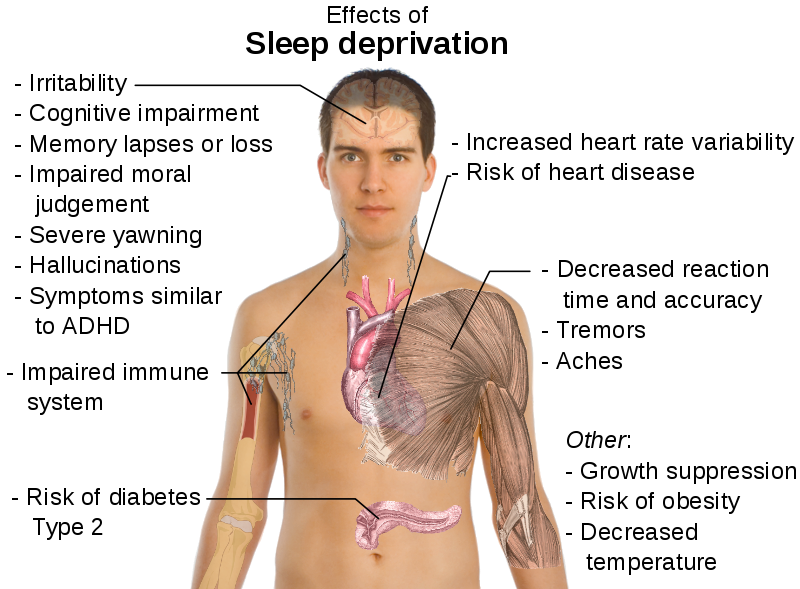
Aside from time, another key factor for optimal naps will be your environment: a room with a comfortable climate and minimal lighting will do wonderfully. You also want to reduce the amount of external noise. Napping is also a fantastic way to save your hard earned money. Instead of buying expensive drink at Starbucks or Red Bulls why not get some energy the old fashioned way?
On the research end of things, NASA performed a study looking at the effects that a 40 minute nap had on pilots and astronauts and found that performance went up by 34% while alertness rose by 100%. You may not need to navigate a shuttle around the solar system but why not use a nap to prosper in your office or next competition? D Wade loves naps.
Awesome Athlete Updates
A few cool updates: 1. Huge congratulations to Soolmaz Abooali!
We posted last week on our Facebook page that she competed in 17th World Traditional Karate-Do Championship in Geneva. She dominated and took 4th! She is 4th in the WORLD. That's pretty stinkin' awesome and we're super proud of her and are looking forward to when she conquers the 18th World Championship!
2. Victoria nailed her first bodyweight chin-up two weeks ago and I thought I'd share it.
Victoria worked hard all summer and has improved in more ways that just the chin-up department. It's always a huge encouragement to me when our female athletes rock it in the weight room and attack their workouts with vigor.
3. 2 of our baseball boys committed to colleges recently. Mitch Blackstone committed to Cornell, and Shane Russell to Lynchburg. Great job guys!
4. There is a powerlifting meet in mid-December. We have multiple people from SAPT competing: Conrad Mann, Ron Reed, Matt Gerald, Mike Snowden (SAPT's own coach), and Amanda Santiago (who is killin' her meet prep and destroying her old maxes.) Come out and support us!
That's all for now, though I'm sure we'll have more in the next month!