Crawling Your Way to Chiseled Abs
Since we're now 8 days into the New Year, I figure it's officially safe to bring up talk about New Year's Resolutions. As 2015 approaches it's 2 week anniversary, the local gyms are finally beginning to recover from the post-New Year membership boom. The gym regulars have finally returned, glad to be relieved of those performing bicep curls in the squat rack. Among them are the brave few who have actually stuck to their resolution. If you're one of these brave men and women, it's important that you give yourself a pat on the back for making it this far. By now, you've probably logged anywhere between 4 and 6 training sessions, begun incorporating movement into your daily routine more frequently, and, hopefully, you've been introduced, or made a triumphant return, to the weight room. It's important that you stick to your resolution. Remember, this goal is important to you, and you made it for a reason. Whether your resolution was to finally bench 350, simply lose that pudge thats been sticking around for entirely too long, or achieve the core strength of these gentlemen...
It's imperative that you have a game plan set up to help you tackle this challenge. If your resolution is fitness related, it's likely that you'll be expecting a trimmer belly from all the hard word you'll be putting in. Your game plan will probably include 100's of sit-ups, miles upon miles of jogging, and a new diet plan void of any form of carbohydrates. Now I can go on and on about why cutting carbs may not be the wisest choice (especially if you're also planning on ramping up your physical activity), but for now I want to tackle the misinformed notion that sit-ups are the way to go for developing core strength.
Most people with normal cognitive function would agree that sitting hunched over your computer is not the most ideal position for us to spend our time. They recognize assuming this posture just isn't healthy for our spine, and can contribute to neck pain and back pain that haunt the desk-jockey. Unfortunately, many of us don't even consider the fact that we're replicating and training this poor posture over and over again when we perform a sit-up. Not only that, but some people will take it a step further, and add load to the movement. Needless to say, I am not a fan.
"So what am I supposed to do to get that rock solid core?" - you may ask. Well, I'm here to provide another way... Crawling. Tiger Crawls, Leopard Crawls, Spider Crawls, Alligator Crawls. You may think you're "too advanced" to waste your time crawling, but even Green Bay Packer CB Sam Shields incorporates crawls into his workouts. Check out the video below to watch our very own Steve Reed demonstrate a wide variety of crawl variations.
Why crawl? Well, it's really very simple. Contrary to popular belief, our core is comprised of more then just our rectus abdominals (your 6-pack). You have your intrinsic core, which consists of your diaphragm, your transverse abdominals, your pelvic floor and your multifidi. You also have your extrinsic care, which consists of your rectus abdominals and your internal and external obliques. Some may argue (and I'm inclined to agree) that your glutes, hip flexors, and your spinal erectors also consist of your "core".
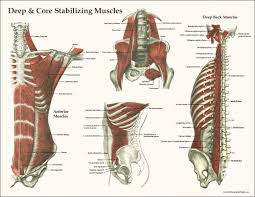
There are so many muscles tied to core stability that it's ludicrous to assume that the common sit-up will truly be able to train all of them at once. Really, we're only training trunk flexion when we're performing the sit up. This is the function of the rectus abdominis and the psoas, while both pairs of oblique muscles work as synergists. Crawling, on the other hand, hits just about every core muscle I've mentioned, a few others I have neglected, while also providing a huge amount of side benefits.
The challenging part of performing any crawl variation is maintaining a neutral spine, while keeping your hips still and your breathing steady. Unless you're crawling on the moon, gravity is going to be pulling you to the floor, and you're going to have to give it everything you've got to keep your core engaged and avoid sagging your lower back. This will present an enormous challenge. If Sam Shields uses crawl variations in his workout, you better believe you'll be feeling the burn after a 20 meter crawl.
On top of that, crawling is a great way to build shoulder, hip, and knee stability. It's a low-impact movement that will also cause your heart rate to shoot through the roof. This results in a joint-friendly exercise that also causes you to burn a load of calories and shed that unwanted belly fat. You can take it a step further by adding chains or dragging a sled to supercharge the benefits and really ramp up the stimulus.
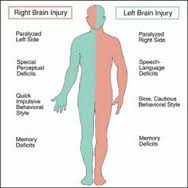
Last, but certainly not least, crawling is a great base-building exercise for field sport athletes and runners. I mentioned the low-impact nature and the effect on joint stability, but a proper crawl is also executed using contralateral (opposite) limb movement. This means you should be taking a step with your left leg while simultaneously reaching forward with your right arm. We initially develop the ability to perform contralateral movement during early childhood development. The left hemisphere of our brain controls the right side of our body, and vice verse. Executing a crawl with proper contralateral movement in turn stimulates both sides of our brain, and strengthens the pathways between the two hemispheres.
Now that you've seen the light, ditch those sit-ups and start incorporating crawling into your workout routine. Not only will your waistline thank you, but the effect on your overall strength and stability will blow your mind. My New Year's Resolution: Crawl more in 2015.
A New Super Smoothie
Today’s blog post seems like an excellent time to share a smoothie recipe I recently tried and enjoyed. I try to make a smoothie most days of the week, usually as a snack, and this typically involves tossing together bunch of ingredients in a blender that sound delicious. Rarely do I follow recipes regarding my smoothies, or cooking in general, because I consider myself an artist in the kitchen. On this occasion I surfed the web and found myself on the Blendtec website where I found a recipe calling for:
- 6oz Water
- ½ Cup Low Fat Cottage Cheese
- 1 Tbsp. Chia Seeds
- 1 Banana
- 1 ½ Cups Kale
- 1 Cup Pineapple
- ¾ Cup Mango
- 1 Cup Ice
- 1 Tbsp. Sweetener of Choice (Agave Nectar, Honey, etc.)
Besides the taste, the best part of this recipe is its simplicity. You merely add the ingredients to a blender in the order listed and blend until you reach your desired thickness. One thing to note is that the portions listed crank out two 14oz. servings. The ease of this recipe means that in about 5 minutes you can be out the door with a smoothie that delicious and nutritious.
http://youtu.be/lBUJcD6Ws6s
7 Reasons To Swing Big Bells
I apologize for the slightly weird camera angle, but I had no one to film it for me.
I mention BIG bells because I assume that the reader/trainee is already a master of swinging normal size bells. Perhaps that will be next week's post, breaking down swing mechanics... What qualifies as "big"? One could argue that is a subjective measurement, which it is, but my standard of a "big" bell is anything over a 28K (62lbs). I had a 32k in the video. Why one should swing kettlebells to begin with shares the same reasons as swinging big bells, but because they're bigger and require more strength and power to move, big bells obviously will have a higher degree of awesomeness.
BIG BELLS and WHY YOU SHOULD SWING THEM:
1. Glute Strength- This is probably the most obvious one. The glutes are (or rather should) be the prime movers in the swing. Considering that athletic power- think sprinting, hitting a baseball, jumping, leaping- is found in the glutes, it would behoove one to have strong glutes.
2. Glute Power- Akin to strength, power= force/time, or in non-physics terms, power is how quickly one can express one's strength in a given time frame. For example, a broad jump is a pretty solid measure of lower body power as the athlete must produce a lot of force to launch the body forward in a very short amount of time. The distance traveled is a combination of strength and how quickly that strength was expressed (see more on Rate of Force Development if you're still confused). Swings are a quick, ballistic movement and thus train glute power because they have to contract forcefully in a brief time frame to hike the bell forward.
It's a less technique-intensive way to build power than say, barbell power cleans or snatches.
3. Teaches/Strengthens Core Stability- The core, encompassing both the anterior and posterior musculature, must remain taut to efficiently transfer force from those awesome gluteals to the arms which are attached to the bell. Without a stiff core, power leaks abound and the swing ends up make everyone's eyes bleed within a 10 foot radius. I've seen it happen. This ability to maintain a stiff core translates nicely to all sports in which the lower body transfers force through the core to the upper body (i.e. pole vaulting, baseball throw or batting, volleyball spike).
4. Fixes Anterior Pelvic Tilt- I've written on APT before (notably here) and how it can negatively affect performance, power output due to misalignment, and have an impact on hip and lower back health. Swings require a powerful posterior hip snap (see video above) at the top of the swing. That snap- via the glutes and anterior core contracting concurrently- pulls the pelvis into a more neutral position if one is in APT. As the glutes and anterior core muscles grow stronger, it becomes more natural for the pelvis to sit in a neutral position instead of tilted forward. I can attest that my APT, and subsequent back pain, has vanished since swinging big bells regularly. Huzzah for neutral alignment!

5. Grip Strength- Holding anything heavy over a given period of time will build grip strength, but holding onto a heavy thing that's flying through the air rapidly adds a challenge to the forearms and hands. Thus, if you're weakest link is your grip, swinging heavy bells is for you!
6. Builds Upper Back Strength- Much like the core, the upper back must remain stiff throughout the swing. The upper back muscles are essentially performing an isometric hold during the swing, and the heavier the bell, the harder they have to contract. The lats in particular must remain tight and strengthing those bad boys carries over to deadlifts and pull ups (both of which are money-makers in the strength game).
7. It's Good For You- If no other reason convinced you, which I can't imagine why not, you should swing big bells because it's good for you. I'm a Jedi, therefore you should trust what I say.
Part 10: Post-Season Training
The Triathlete Strength Training Primer
Part 10: Post-Season Training
Prior to Christmas, we discussed what our in-season strength training goals should be and how to create workouts designed to reach them. We noted that our in-season workouts should be organized in a way that maintains our strength and power, while keeping the typical injuries that plague endurance athletes at bay. Subsequently, in part 9, I showed you how to manipulate set/rep schemes in order to prioritize maintenance, while selecting exercises that give us the most bang-for-our-buck when it comes to injury prevention.
As you may remember, the very first article of this series presented an overview of periodization. What is it, what are the components of a fully periodized training year, and why do we take the time to plan any of this out any way? If you’ve been paying attention, you’ve come to appreciate how vitally important intelligent programming is. You understand the benefits that come with properly structuring your strength training, and have come to see some of the holes in your current plan.
Our Journey So Far…
We’ve journeyed through the off-season, entered the pre-season with relentless motivation for our sport and training, and dominated our competition during our in-season races. Now it’s time to enter the final period in a fully periodized plan; the 2nd Transition Period. This phase occurs immediately following our final race of the season, and serves as a segway between our in-season and off-season training.
The 2nd Transition Period…
The 2nd Transition Period is often referred to as our “Active Rest” phase. It should last long enough to allow the athlete to completely recover from the brutal demands of the in-season. We want to encourage non-sport-specific recreational activities performed at low intensities, and it’s important to avoid intense training to allow complete physical and mental recuperation.
Our strength training should be extremely GPP-oriented, and we want to avoid performing any lifts that demand high amounts of muscular tension or CNS activation. This means cutting out much of our explosive and plyometric work, eliminating super-heavy squats and deadlifts, and crafting workouts that are fun, easy, and designed to keep you moving, increase blood flow, and get you as far away from your sport as possible.
These types of workouts should last between 2-8 weeks, depending on the length of your competitive season and the event that you compete in. Ironman racers will likely spend more time recovering then your average sprint-distance triathlete.
Oftentimes, a serious triathlete will be very reluctant to stop running, biking and swimming. They have this fear of losing the enormous “base” that they worked hard for during the past 10 or so months, and rightfully so. Cardiovascular endurance is a performance attribute that tends to diminish relatively quickly when endurance-focused workouts are neglected. This process occurs much faster then the process of losing strength (strength gain are normally associated with structural changes; a process that takes longer to reverse), but there is a silver lining. Gains in cardiovascular endurance also occur much more rapidly, and they can also be maintained to a certain degree with proper organization of your training.
2 Methods for Maintaining Cardiovascular Endurance
1. Using Strength-Based Circuits
- Adding in strength-based circuits with weights are a great way to keep your heart rate at a respectable level, while also focusing on increased stability at your joints.
- An example would be to perform 3 rounds of the following, while resting minimally in between exercises, and for 45-90 seconds between rounds: A1. TRX Rows, A2. 1.5 Rep Goblet Squats, A3. Tempo Push-Ups, A4. Deadbugs.
2. Implementing Other Methods of Cardio
- Go for a hike! Go kayaking! Go play pick-up basketball at your local YMCA!
- These are all methods of cardiovascular activity that are not triathlon-related! Not only that, these activities allows you to spend time with other people, keep you moving at a lower intensity that won’t excessively wear you out, and they’re also incredibly fun!
The Bottom Line…
At the end of the day, competitive athletes are just that; competitive. They don’t want to take the time to rest and recover, and instead want to spend their training sessions doing anything they can to get faster, stronger, and gain that competitive edge over their competition.
There exists this false idea that taking time away from your sport will only make you worse (read all about why that’s wrong here), when it may be just exactly what you need in order to improve your performance. There’s a reason that high-level competitive athletes take weeks to lower their intensity and volume. They artfully implement these “deload” workouts that are designed to allow the body to recover and supercompensate from the past 3-6 weeks of hard training, and subsequently hit their next cycle with increased vigor and motivation.
What you need to realize as a competitive endurance athlete is that this period of training (the 2nd Transition Period) plays a crucial role in preparing you for a successful next season. This is the king of all deloads; a period of time that allows your body to FULLY RECOVER, and prepare itself for another intense season. You shouldn’t be worried about maintaining your peak condition, because the time to peak is before your race, not during the off-season. The entire process of periodization is meant to do just that; peak you for competition.
In conclusions: After your season, REST. It’s only going to help you in the end.
The Triathlete Strength Training Primer
Part 1: An Intro to Periodization - Seeing the Bigger Picture Part 2: The Repetition Maximum Continuum Part 3: The Preparatory Period a.ka. the Off-Season Part 4: Off-Season Periodization Part 5: Off-Season Periodization, cont. Part 6: The First Transition Period Part 7: The First Transition Period, cont. Part 8: The Competition Period - In-Season Strength Training Part 9: In-Season Template Part 10: Post- Season Training
The Lifts of 2014
One question I like to ask people is “What is your favorite exercise?” You never know what kind of answer you might get. Some people might reply that they really love working out with a Shake Weight (conversation ends there) while others may tell you it’s a toss-up between mixed grip pulls or snatch grip deadlifts. I wish I could say there was a cool psychological theory that I was trying to uncover when asking this question but it’s i'm usually just wondering. Although you, the reader didn’t ask, the year is coming to a close and I want to tell you about a couple of my favorite exercises that I had the honor to perform a set of this year. It was tough for me to compile this list because I tried a lot of different exercises this year. Some of these exercises are American classics like cheeseburgers (or cheesesteaks) and some of these exercises just sounded fun so I figured I’d bang out a rep or two. So without further ado I bring you 5 fantastic exercises to try before years end. Rear Foot Elevated Split Squat
https://www.youtube.com/watch?v=LEBhQL1ntVo
Regardless of the implement used to perform this exercise (barbell, dumbbell, etc.) this is unilateral exercise is a classic and favorite of the masses. This exercise trains a ton of muscle in the lower extremity and even provides some active mobility work for those with shortened and cranky hip flexors. The RFE is also a great choice for athletes whose sports frequently put them in a single leg position (#anytimeyourun). Additional causes of me falling for this movement is because it’s relatively simple to perform and it can be progressed and regressed in more ways than you can shake a stick at.
Farmers Walk
http://youtu.be/qAix9MxjOk8
This is another exercise that has a lot of carryover into athletics including the obvious development of strong legs and hips. The benefits don’t stop there though as this exercise has been shown to add strength to the back, midsection, and grip strength muscles. When performing this exercise focus on taking short rhythmic steps to avoid having the weights bang into your knees or thighs with each step.
Pull Throughs
http://youtu.be/xVTkZXUOsow
The effects this exercise has on the hips, glutes, and hamstring make it and its many variations a staple of several effective training programs. Some lifters tend to reach very far through their legs and get into a ton of spinal flexion but I prefer to keep a neutral spine, get a solid hip hinge, and finish with a powerful extension of the hip and knee.
Brettzel
http://youtu.be/GopIp5ZIRPI
The brettzel, from the moment I learned it became one of my favorite exercises. This exercise has the ability to expose and attack a number of muscle groups that may be tight and cause some movement restrictions. Included in these areas are the thoracic spine, piriformis, quads, hip flexors, and glutes.
Z Press
http://youtu.be/WHx1g_9f740
It wouldn’t be right to finish off this list without an upper body exercise. With that being said I think the Z press is a very underutilized multidimensional vertical pushing movement. The exercise can be performed with a variety of tools like every other exercise featured here minus the brettzel. One thing I really like about the movement is that it is a self-limiting exercise and you aren’t able grind through it with crappy technique. This exercise requires a heavy dose of core stabilization and hamstring strength to remain upright throughout the movement. To make it even more
Go on and utilize these movements to bring you gains in what’s left of 2014.You’ll be setting off the lunk alarm in no time. Also, if you’ve taken the time to read to this point please leave a comment below with your favorite exercise or five because I really really want to know what they are.
Circuit Training
With the holidays and travel and gyms being closed, I figured regular trainees might have limited time to work out. Thus, a post from the archives on circuit training hopefully will provide a few useful ideas for training with limited time. Enjoy!
Picture this:
You got out of work later than ususal... perfect timing to hit rush hour at its height and extend your normal 20-minute commute to the gym into an all-out 45-minute crawl full of frustration.
By the time you get to the gym, you only have about 25 minutes before you need to leave.
What do you do? Do you literally throw in your towel and just go home? How can you possibly salvage a decent training session out of the train wreck that was the afternoon?
Circuit Training is waiting to save the day! Well, so are Time Turners, but us Muggles don't have access to one of those things...
What is Circuit Training?
The possibilities are limited only by your imagination (and your physical capacity. I know from personal experience that performing box jumps after a barbell sumo deadlift is a baaaaad idea).
Typically, circuits are comprised of 5-8 exercises and you want to work with weights about 75-80% of your max. Translation: pick weights that you could probably perform for 8-10 challenging repetitions. String them all together, and work through the circuit with minimal rest between exercises.
In terms of time, you can set up your circuit a couple of different ways:
1. Set a particular rep goal per exercise and then have at it for 15-25 minutes and see how many rounds of the circuit you can perform.
2. Pick a number of rounds to complete and try to finish as quickly as possible. Usually, if you have about 5-8 exercises, 5 rounds will be around 20-ish minutes.
Benefits of Circuits:
1. They're a great way to improve overall conditioning without watching your hard earned muscle mass wither away. Two recent research reviews (abstracts here and here) have found that steady state cardiovascular training can a) decrease power output (yikes! Not good for athletes that need to produce power aka: everyone) and b) compromises muscle mass (and thus strength) gains. This effect is seen most prominent when aerobic training is 3x/week for greater than 20 minutes- so one jog here and there won't hurt you. The metabolic pathways that aerobic and anaerobic (that is, strength training and sprint/interval training) are conflicting. It's very hard to maintain a large amount of muscle mass and be a long-distance runner!
Circuit training is similar, metabolically, to sprint/interval/hill training in that it preserves lean muscle mass.
Steady state cardiovascular training, on the other hand, can lead to elevated levels of cortisol (stress hormone) which can decrease the effectiveness of muscle-building hormones such as testosterone and insulin-like growth. It also encourages muscle protein break down. Again, based on the research, this was steady-state cardio training 3x/week at 20 minutes or more.
While strength training too breaks down muscle tissue, the anabolic (building) environment produced by strength training encourages repair more than the catabolic (break down) environment of aerobic training. Strength coach Charles Poliquin says:
Whereas endurance exercises compromise anaerobic performance and body composition, anaerobic training modes such as sprint intervals and weight lifting will benefit endurance athletes if programed properly. To improve endurance performance, do a strength-type resistance training program with loads of 80 percent of the 1RM or heavier. This will train the type IIA muscle fibers so they increase the rate of force development and get faster.
Type IIA muscle fibers = strong, powerful muscles. We want those!

So if you're still with me, we'll move on to the second point.
2. It's time-efficient. After a quick dynamic warm-up and maybe a warm-up set or two of the planned exercises, the total time of a circuit should be no more than 25-minutes start to finish. 15-minutes would even be sufficient depending on the intensity of the exercise selection and weights used. Nice huh? It's just long enough to make you feel like you've worked out but not too long that you're home late for dinner.
3. (but really 2.5) Not only are they time-efficient but they're efficient in the sense that a circuit can hit a lot of muscle groups, through full ranges of motion, in one fell swoop. While a jog will really only get your legs (and, I would argue, not very well since the range of motion is small, the force production is low, and the intensity isn't that high either) and maybe some low level core activation, a circuit can be full body. Take a look at this sample:
Goblet or barbell squat x 6-8
Pushup x 8-10
Step back lunge x 6-8/side
3 Point Row x 8/side
Kettle bell swing x 10
Can you see the total body genius in that? We have lower body (both bilateral and unilateral movements), upper body (push and pull) and a delightful amount of full range of motion exercises. All of which, if one wanted, could be done with just one kettlebell.
Run through that baby 5 or 6 times and try to tell me that's not cardio. Oh wait, you can't. I can't hear you over your screaming lungs and gasping breaths.
4. Because circuits demand so much from your muscles and cardiovascular system, they're pretty calorically expensive, which means your body will be burning calories longer post-workout than they would after a lower intensity training session (aka: low-intensity, steady state cardio). On those above-linked research reviews, it was found that athletes reduced body fat when they performed high intensity exercise (sprints or circuits).
So, if you're looking for an efficient way to reduce body fat, preserve lean tissue, AND improve your cardiovascular fitness, circuit training is definitely a tool you want in your toolbox!
I feel obligated to note that strength training, solid strength training sessions, need to make up the bulk of your training week. Picking up heavy things repeatedly is the best way to build muscle and get stronger. Circuit training, while it won't make you weaker and can aid with strength gains, is inferior overall to 80-90% max lifting in terms of producing maximal strength gains. While I don't recommend basing your entire training plan around circuits, they are beneficial and even fun (yes, fun.) to throw in every once and a while.