Anti-Lateral Flexion Core Exercises
We've gone over two core exercises in previous blogs. Deadbugs, which are mainly an anti-extension exercise that targets our 6-pack and obliques, and the Pallof Press, which we use to develop our anti-rotation strength and stability.
Today, I'll walk you through a few exercises that help us develop our capacity for resisting lateral flexion, or side-bending.
Exercise 1: SA Suitcase Carry
- Key Points: The kettlebell will be held at one side and you'll maintain a perfectly upright posture, not allowing the weight of the bell to pull you into side-bending. You'll keep the tension in your core, maintaining perfect posture while walking about 20-30 yards.
- To Progress: Add weight to increase the difficulty.
- To Regress: Take out the walking component and perform a static hold with the weight in one hand. You can increase the difficulty by increasing the weight.
Exercise 2: Side Plank
- Key Points: Keep your shoulder engaged by pressing the ground away with your bottom elbow and staying as long as you can from elbow to top shoulder. Keep your hips pushed forward by squeezing your glutes and maintain a double-chin to keep your head in line. Maintain a straight line from the top of your head to the your feet.
- To Progress: Add weight, movement, or elevate your feet in order to increase the difficulty.
- To Regress: Perform a short-lever side plank from your knees (video below), elevate your elbow on a bench, or do both in order to decrease the difficulty of the exercise and make it more manageable.
Exercise 3: Anti-Lateral Flexion Pallof Press
- Key Points: This exercise will help develop your ability to resist lateral flexion and increase your shoulder stability at the same time. Begin in an athletic position with your hips and knees slightly bent, holding onto a band or cable that is attached to a beam at your side. Press the band or cable up overhead, maintaining a straight line from head to pelvis, and a rigid core to resist the band's lateral pull.
- To Progress: Step further away from the point of attachment or use a stronger band in order to decrease the difficulty. You can also mess around with your stance to change the stability requirements.
- To Regress: Step closer to the point of attachment or use a weaker band to make the exercise more manageable.
Exercise 4: Off-Set Deadlift
- Key Points: This exercise is very hard and it's a ton of fun. If you really want to develop strength in resisting lateral flexion this exercise is a great choice. You're essentially performing a deadlift with weight on one side of the bar. Be sure to maintain a neutral spine, hinge at the hips, and use your posterior chain to lift the weight. Don't let the off-set load cause you to bend laterally.
- To Progress: Add more weight or pull from a deficit!
- To Regress: Elevate the bar slightly to decrease the range-of-motion, or spend more time developing lateral strength and stability using the exercises detailed above!
Throw a few of these exercises in your next program, focus on maintaining a steady progression, and soon you'll have abs like the gentlemen in the picture below!
Two Underrated Progressions for Sprint Mechanics
Poor hip extension, poor alignment, poor rotary stability and over-reaching . These are all VERY common faults in sprint mechanics that are hard to fix with a simple cue. So what do you do when your athletes exhibit any of the listed symptoms? You fill in the gaps with the proper drills.
The Single-leg rock and the Half-kneeling Knee-lift are two of my favorite drills to throw into a warm up to help alleviate some of the aforementioned flaws. At first they appear to be arbitrary movements, not corresponding with traditional training means. But, when the processes of the movements are taken in you can see how they will have quite an impact on running mechanics or general mobility issues.
Single Leg Rock Progression
Lumbo-pelvic disassociation, rotary stability and increased joint centration, all rolled into one. This is a great drill that I've started using for many of our athletes who have trouble with unilateral lower-body work. As you can see in the video, it has many different benefits and really drives home reflexive hip stability.
Half-kneeling Knee Lift Progression
This is great for teaching hip extension, anterior core stability, proper alignment and even coordinating the sequencing of them all together (though I accidentally swing my arms wrong in the video... no one's perfect, don't judge me). It's also east to progress as you can see in the video.
Athlete Spotlight: Brian Eckert
Name: Brian Eckert
Age: 18
High School: James Madison High School
College: Radford
Sport/Position: Baseball/Left Handed Pitcher
Pitches: 88MPH Fastball, Slider, Curveball
Favorite Lift: Deadlift (you can see him pull an easy 350# right here)
Fun Fact: Brian is also an avid surfer.
Accomplishments:
- 23-1 Career record at Madison
- First Team All Conference
- First Team All Region
- First Team All State
- First Team All-Met
On paper, a job as a strength and conditioning coach seems like the perfect position. You're given the responsibility of wearing gym shorts all day and allowed to parade around a weight room working with highly driven athletes who want nothing more than to crush the day's lifts. However, this isn't always the case. Sometimes you're dealt kids who simply don't believe in strength training and the carryover it can have on performance, or just don't care. Fortunately for us, Brian Eckert is not one of them.
Brian has been training consistently with us for about 3 years now. This state champion pitcher is the type of kid who shows up at the gym with intensity ready to train and perfect the days lifts. He listens to every detail you present him with, and not passively either. He'll digest the information and come back at you with a question. It's these little things that make him as successful as he's been over his high school career. His high school team, James Madison, won the 6A Virginia State Title this past year and Brian was named First-Team All-Met by the Washington Post.
The awesome thing is, as serious as he comes across in training, Brian is pretty laid back when it really comes down to it. He's the type of kid you can carry on a conversation and joke around with during his training session, and then he'll flip that switch as soon as it's his turn to deadlift. He'll be pitching for Radford University as an incoming freshmen next year and the staff here at SAPT can't wait to watch him succeed on the mound. Good luck next year, Brian. We'll be cheering for you!
Sand, Sand, and more Sand! How to Conquer Challenges and Have Fun
Running through sand is not unlike, I imagine, trekking through Mordor: it's hot, dirty, and you feel like you're going nowhere fast.
For three years running (pun totally intended), I've competed in the ASYMCA Mud Run in Virginia Beach. It's 8K with at least half of it in sand- the loose, shift-under-your-feet-every-step kind of sand; the other half is through the sandy beach woods with lots of hills. There are some obstacles, but really, the sand is the biggest one. I really enjoy this race because it's a) very challenging (did I mention that it's in sand?) and b) it supports young enlisted military members and their families. As an Air Force brat myself, I'm all over supporting other military kids!
I'll save the pictures of the race till the end of the post, but I wanted to throw out some musing I had about facing a daunting challenge- physical or not.
1. Be disciplined in your preparation
Obviously, life throws curve balls and you can't plan for everything, but as much as possible, prepare for known challenges; have the discipline to follow through with the full amount of preparation needed. If it's a physical challenge, like a race, you need to train for it. It wouldn't be terribly helpful to train sporadically and infrequently. Do you have a large presentation at work or a speech to deliver? Do the research, practice the speech, and double check your work. The more prepared you are, the more easily you'll catch life's curve balls.
2. Be adaptable
For example, last year I broke my toe at the beginning of my training period for the race. Oops. I trained in the weight room as best I could, and got a few runs in once my toe was healed (a grand total of 2). I wound up getting the exact same time as the first year I raced, despite the fact that I didn't really run leading up to the race. Too many people are unable to adapt to changes in their environments and all their preparation goes to waste. So I guess to combine points 1 and 2: Prepare to adapt!
3. Expect difficulties
Life's tough; wear a helmet- then you won't get beaned in the head from the curve balls. Seriously, expect difficulties, get over it, and enjoy yourself. You can either moan and groan about how tough an event or challenge is, or you can choose to have a good time. It's like traffic in the D.C. area- it's always there so just plan for it and choose to enjoy the time in the car instead of raging at the awful traffic. My dad asked me how I prepare mentally for the race and I told him, "I expect it to be difficult, I accept it, and then I can have fun."
There you have it, a few thoughtful musings spawned by my time on the sand this weekend. As promised, pictures:


Thanks to my awesome supportive husband and parents for cheering me on and keeping me warm during the rainy, windy start to the day.
How To Eat Less Added Sugar- Use Fruit!
Last week's Washington Post had a short article on using fruit instead of other sources to sweeten various dishes and baked goods. I thought I would expand a bit here and offer up some more suggestions for uses of various fruits as sugar-substitutes.
In the article, the author references a study by the American Medical Association that higher sugar (added sugar, mind you) consumption is linked to markedly increased risk for heart attacks. (for a more reader-friendly version try THIS.) Also, it's been found to, unsurprisingly, increase the risk of diabetes and obesity (though I feel like I don't need to tell you that again).
Sugar is rampant in our food system and most of it is found in packaged foods and comes in all types of forms, the most notable: white and brown sugar, corn syrup, high-fructose corn syrup, fructose, invert sugar, sucrose, malt syrup, and maltose. There are "healthy" sugars, that many companies will tout as better-for-you than regular sugar- typically honey, agave, and maple syrup. Sure, they have some antioxidant and antimicrobial compounds in them, but at the end of the meal, it's still straight glucose (that would be sugar). Your body is going to respond to that free-trade agave nectar from whole foods pretty much the same way it will to the Good Value table sugar from Wal-Mart.
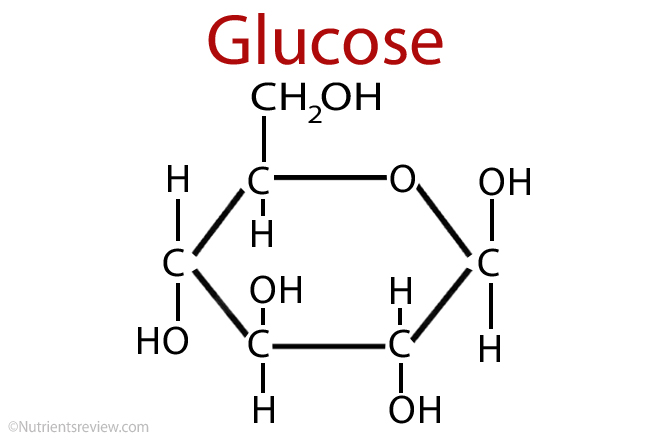
That's not to say that sources of natural sugars- notably fruit- should be avoided entirely. Perish the thought! Fruit contains fiber, vitamins, minerals, and other phytonutrients that are beneficial to us.
Along with the obvious choice of bananas in smoothies, you can also use them to make pancakes. How?
In a blender, blend:
1 banana
2 eggs
1 Tsp of flour or oatmeal (to thicken it a bit)
Fry in a pan as you would regular pancakes. They're quite tasty and can be pretty fluffy depending on how long your blend it. Easy huh?
Bananas can be substituted in baking as well- about 1 cup of ripened mashed bananas for 1 cup of sugar. You may have to add a little extra flour to account for the extra moisture of the bananas.
Yes, fruit has sugar, but if you're going to use it, you might as well bundle it up with vital nutrients. Take a look at what apricots contain:
Dried fruit can also be used in baking- 1 cup of ground up fruit being equal to 1 cup of sugar. Raisins, dates, apricots, and prunes (though be careful how many of those you use...) are the typical fare.
A Reed-House Fave is:
2 cups dried apricots
1/2-3/4 cup oatmeal
3 Tbs peanut or almond butter (we found the peanut butter tends to overwhelm the cookie, but it's not a bad thing)
Water/milk as needed
1. Dump all ingredients, minus the water or milk, into a food processor and pulse until combined.
2. Add water/milk as needed to create a thick mud-like texture. After this, if you want you can sprinkle in chocolate chips...
3. Scoop onto a baking sheet 1 spoonful at a time.
4. Bake at 350 for 15-20 minutes.
Voila! A fiber-rich and tasty cookie!
There are a ton of recipes out there for homemade energy bars. Some of my favorites are HERE, HERE, and HERE.
The article also mentioned using 100% fruit juices in sauces, marinades, and salad dressings. Typically citrus are the best kinds- lemon, lime, grapefruit, and orange. They add a pleasant zing to your food.
Next time you're in the kitchen, instead of reaching for the sugar canister, reach for the fruit drawer. Your tastebuds, waistline, and heart will thank you.
Create Your Own Workout - Part 4: Categorizing Movement
By now, the importance of viewing exercises in terms of movement patterns it should be drilled into your head. Isolation exercises certainly have their time and place, but we want to develop the strongest, most resilient body that we can. This demands that we use it as the sophisticated, interwoven organism that absorbs and generates force as a single unit.
Previously, we've introduced the basic human movement patterns that include: Push, Pull, Hinge, Squat, Carry, and Locomotion. Today I'll break them down even further, lay out the prime movers of each movement pattern, and help you categorize common exercises into their proper movement categories.
Basic Human Movements
Lower Body Movements:
- Squat: Essentially every muscle in our lower extremities; Quadriceps, Hamstrings, Glutes, Calves, and Hip Flexors.
- Hinge: Like the squat, hinge movements such as the deadlift utilize a large amount of lower body muscle mass, but place a major emphasis on the hamstrings, glutes, and spinal erectors.
Some people typically categorize squatting movements as "Lower Body Push" exercises, and hinge movements as "Lower Body Pull" movement, but for our purposes we use denote squat and hinge to emphasize the following:
During a hinge movement, like the deadlift, we want to predominantly see HIP FLEXION during the eccentric phase, making the movements primarily HIP EXTENSION exercises during the concentric contraction of the involved musculature.
Squatting movements normally involve a large amount of HIP AND KNEE FLEXION, resulting in more involvement of the knee extensors (read: quads) during the lifting phase.

Upper Body Movements:
For the upper body, we typically separate exercises into "Upper Body Push" and "Upper Body Pull" exercises, but we can divide them further as well. It's useful to note the vector in which you're pulling and pushing, for instance, is the exercise a vertical pull or a horizontal pull? This slight difference in direction will result in changes in muscle sequencing and the prime movers will vary.
- Vertical Push: Anterior/Middle Deltoids, Triceps.
- Horizontal Push: Pectoralis Major, Anterior Deltoids, Triceps.
- Vertical Pull: Latissimus Dorsi, Biceps, Triceps-Long Head.
- Horizontal Pull: Rhomboids, Latissimus Dorsi, Posterior Deltoids, Biceps.

Keep in mind I am strictly listing the muscles that play the largest part in each movement, the prime movers. Yes, the pecs (especially the clavicular fibers) play a synergistic role in an overhead press, but you'll be sorely disappointed if you decide to choose it for your main chest-builder. Horizontal pushes will give you the most bang for you buck if building a barrel chest is your goal.
You also need to be aware that the lower body lifts will cause muscular growth in your upper body because of the large amounts of tension being placed on the muscles. Your forearms and lats will absolutely grow as a result of gripping a heavy deadlift, and your shoulders will grow as a result of a heavy barbell loaded on your shoulders in a heavy front squat.
Locomotion and Carrying:
Locomotion and carrying movements are variable, and can be manipulated to emphasize different training adaptations. A Single-Arm Bottoms-Up Overhead KB Carry will be targeting shoulder stability to a much greater degree than a heavy Farmer's Carry, which will be placing the emphasis much more on hip stability and overall strength.
Final Thoughts and Example Exercises:
You can break most of the categories up in bilateral and unilateral variations, and we'll touch on the difference between the two later on in the series. They each provide unique training adaptations, therefore it's important to always decide on your training goal before choosing an exercise.
Below I'll leave you with a few example exercises of each movement pattern. These all serve as perfectly reasonable choices for your workout. Try them out before the next part in our series!
- Squat: Goblet Squat, Back Squat, Front Squat, Zercher Squat, Split Squat, Pistol Squat.
- Hinge: Deadlift, RDL, Glutebridge, Single-Leg RDL, Goodmorning.
- Vertical Push: OH Press, Single-Arm Bottoms-Up OH Press, Z-Press, Handstand Pushups.
- Horizontal Push: Bench Press, Floor Press, Pushups, Single-Arm Variations.
- Vertical Pull: Chinups, Lat Pulldown, KB/DB Pullovers, TRX Ys.
- Horizontal Pull: Row variations, Rear Delt Flys, TRX Ts, Face Pulls.
- Locomotion: Leopard Crawls, Prowler Push, Bear Crawl, Bounding.
- Carries: Farmer Carry, Goblet Carry, DA KB Racked Carry, Crossbody Carries.