Breathing and Bracing for Stronger, Safer Lifts
Today we’re going to discuss, or rather I’m going to tell you about, bracing. It’s not glamorous or jazz-hand exciting, but it is crucial for successful strength training.
What is bracing exactly?
To brace your midsection in the context of lifting is simply creating 360 degree (circumferential for you intellectual types) intra-abdominal pressure. This will stabilize the spine and protect it from shear stress.

Mixing shear forces and spines is as smart as sticking a fork in an electrical outlet.
Your brain LOVES a stable spine. When your brain senses instability, in this case in the spine, it will put the brakes on your muscle power. Translation: you’re not as strong if you’re unstable. However, stabilization through bracing reassures the brain that it can handle the load and it will punch the gas on force production and, voila! You can lift more weight (safely).
Charlie wrote about the Valsalva Maneuver, which is merely a fancy name for bracing, a while back if you’d like to take a gander at that post too.
Now, how does one brace?
Below are two videos that explain 360-degree or circumferential breathing- that is the first half of successful bracing and it is a critical step. The other half is locking down the midsection once you’ve established 360-degree expansion with your breath (explained in the first video.)
Below is Jim Laird explaining breathing and bracing at the basic level. I thought about making a video, but why re-invent the wheel?
If you're having trouble breathing with full expansion or feeling what it means to "forcefully" exhale as Jim Laird described, here's a drill that can help teach both. It's wonderful because your receive tactile feedback on the inhale and exhale:
SAPT-ers, do those breathing drills look familiar?
If you’re still having trouble establishing tension through bracing, here is how I explain it to our athletes:
Place your hands around your waist.
Take a deep breath and fill your hands with your stomach- you should feel the front and sides expanding into your hands.
Once you’ve filled your belly, squeeze everything like you’re constipated. (This last cue, while crude, conveys the “braced” feeling better than anything else I’ve tried. It also usually elicits at least a smile.)
Now, apply that to a deadlift: while you’re set up at the bottom, before you begin to pull, take a deep breath (you should feel your belly expand towards/into your thighs), brace like you’re constipated, then pull. In a squat, deep breath at the top before you squat, brace, then squat. It’s as simple as that.
And just because you’re not using a barbell or “heavy” weight (I say “heavy” because it’s relative to the lifter) doesn’t mean you shouldn’t brace. I’m not saying that you should hold your breath and brace your midsection as hard as you can during every movement, but you should always actively brace to some degree.
Apply this oft-overlooked element to your training and you’ll find yourself with a happy spine and stronger lifts!
Get The Most Bang for Your Buck: Tips for 1-Arm Farmer Carries
Today I tried my hand at creating a voice over video. (Laugh all you want- I am easily discombobulated under pressure).
Farmer carries are a fantastic exercise to build overall strength and stability. The overhead variety in particular is effective for building stability throughout the shoulder girdle (for instance, the muscles of the rotator cuff and shoulder blade stabilizers). It also provides a unique training effect to the core musculature to maintain a neutral spine and, as a bonus, the 1-arm variation challenges the opposite side as well as it fights to keep you from tipping over.
Without further ado:
How to Accomplish Fitness Goals: Consistency Is King
Monday’s are my favorite day of the week. As you recover from your recoil of horror, let me explain.
I am a “routine” person. I find comfort and stability in the routines. As a kid, I didn’t really like summer vacation all that much because there wasn’t structure to my day like there was during the school year. Don’t get me wrong, I enjoyed time away from homework and the annoying kids at school, but I usually missed the schedule that school provided. I went to school, I went to practice (various sports, depending on the season), and I attended Girl Scouts (lifetime member!). I carried this into college; I went to class, I worked out (a lot), I studied, and I slept.
I had a pretty regimented 4 years- I kept to my schedule. I woke up and went to bed at the same time every day, I went to the same coffee shop to study, I (almost) always sat at the same table, I worked out at the same times, and even took the same route to each class. Though the details of my schedule shifted a bit every semester as my classes changed, I maintained a fairly rigid structure throughout the week.
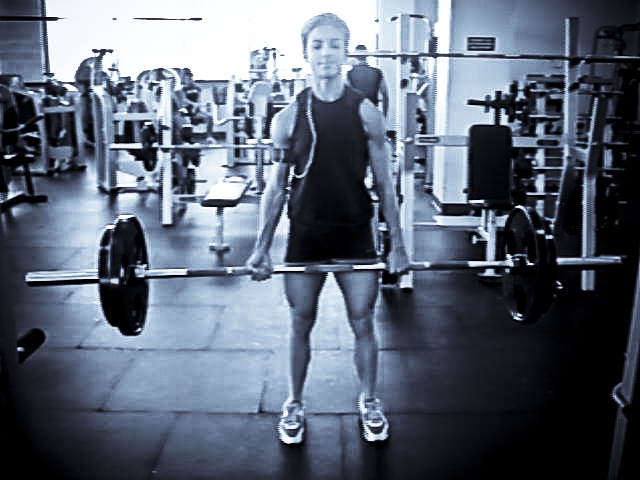
Kelsey circa 2008.
At first, weekends were hard for me, because the structure was gone. I compensated for it by working at one of the campus dining halls on the weekends. I clung to my routines as I would a kettlebell during swings.
I know, I was a barrel of fun in college.
I was a competitive body builder in college, as I think most readers of the blog know, and the routine and structure I had helped me accomplish my goals of successfully competing in each show.
I learned through those four years that long-term goals necessitate long-term strategies.
I’ve loosened my tight, death-grip on my schedule over the years- mostly thanks to my loving, patient husband who helps me step outside those routines and relax on the weekends- though I still maintain a fairly structured work week. I have goals I want to accomplish, both short- and long-term, and I know that no matter how weird and wily the week may be, I can fall back onto my routines that allow me to work on each one regularly.
While I’m not advocating that you should NEVER deviate from your schedule, I am saying that structure is a boon when you’re on the path to achieve a goal. It allows for consistency and adherence to processes that propel you forward to that goal.
Do you want to deadlift your bodyweight? Drop 1 minute off your mile time or 5 seconds off your 60 yard dash? Leaner? Improve your performance on the field, court, or in the pool?
All those things take time and consistency.
Question: How are you going to consistently strength train? How are you going to ensure you’re consistently running? How are you going to consistently adhere to your eating plan?
Answer: By planning times in your day/week to do so. The best way to do that is to make it part of your normal routine. Everyone has their own daily and weekly rituals. Simply add training and/or meal prep or both to them!
When I get in the car, I check my mirrors, put on my seatbelt, turn the car on, check my mirrors again, put the car in reverse, and back out. This is my routine, and it’s so ingrained that I do most of it automatically without thinking about it. If I get distracted (say a large bird hits my windshield- true story) and I don’t perform all the checks in order, I usually forget something and I wind up lost on the process.
The same can be said, on a larger scale, about training. If it’s not part of your routine, you’ll forget to do it (or worse, find excuses not to do it). If it's automatically included in your daily life, it takes less mental bandwidth to remember and pretty soon, that seemingly far-off goal is accomplished!
This is my number one piece of advice for anyone looking to improve in the physical fitness realm- be it for athletics, aesthetics, or life- make it a part of your life routine.
Supplements- How to Ensure You Get What You Paid For
Today's post comes from Michael Hull, SAPT intern and all-around nutrition research whiz. Michael is finishing up his degree at George Mason (while working full time!) and also works for Examine.com- which is a superb resource for everything regarding supplement and nutrition research. You can find his personal web site HERE. In short, he is one smart cookie and you would do well to take a gander at his advice!
Supplements: How To Ensure You Get What You Pay For
I want to tell you a tale of Jack and Jill. Jack and Jill both had some unfortunate experiences buying less than stellar supplements, which they probably could have avoided by reading this blog post (so congratulations to you, dear reader, for being ahead of the game).
Jack’s Fish Oil
Jack has some very high triglycerides (i.e. he had too much fat in his blood. No good!). Both he and his doctor discussed his situation and decided they would try having him take some fish oil supplements to get his triglycerides under control. Jack went out to his local CVS and bought some fish oil pills and dutifully took them over the next month. Upon returning to his doctor, Jack was disappointed to find that his triglycerides had not dropped as much as expected. Unbeknownst to our friend Jack, the pills he had purchased did not contain everything promised on the label and had become oxidized. Essentially, the fish oil had gone bad, causing it to lose some of its triglyceride-lowering power.
This problem is more common than you might think. A study of 32 fish oil pills found that more than 90% of them did not contain all of the beneficial omega-3 content claimed on the label. Many contained less than 70% of the stated omega-3 amount. Half of them had gone rancid. Now, these discrepancies may not be due to any nefarious motives by the Big Fish Oil industry. There could have been oxidation that occurred during the packaging of the product or when the researchers handled them for testing. Seasonal variation in omega-3 content of fish is another possible explanation. For someone who is otherwise healthy, consuming oxidized fish oil will not likely have any deleterious effects, but it may dampen some benefits of the oil. However, if you are like our friend Jack and are trying to improve some blood markers, taking a bad fish oil may yield less substantial results over a consuming a non-oxidized oil.
Jack could have avoided this whole debacle if he had opted for a 3rd party tested and verified fish oil pill. Where can I get these 3rd party tested supplements you ask? I will tell you right after we check in with Jill the gym rat.
Jill’s Protein Powder
Jill is just a girl that wants to make sweet sweet #gainz in the gym. To help achieve her gains goals, she consumes a protein shake on workout days to help support her muscle growth. What Jill doesn’t realize is that the protein powder she is consuming has been tainted with cheap filler products that will most certainly not assist her in building maximum muscle. Some creative minds in the supplement industry have figured out a way to trick the standard quality control measure, called the Kjeldahl method, used to calculate how much protein content is in a powder. By adding in cheap filler products like arginine, glycine, creatine, and taurine the Kjeldahl test can be fooled into thinking the protein powder in question is a quality product.
PRO TIP - If you see crystalline material in your powder it’s an indication of high amounts of taurine. Do yourself a solid and go seek out another brand.
Brands that have used this dishonest tactic in the past include:
Body Fortress, ProSupps, MusclePharm Arnold series, 4 Dimension Nutrition, Designer Whey, Mutant Nutrition, Gaspari Nutrition, Giant Sports Nutrition, Infinite Labs, and Beast Sports Nutrition.
Currently, some of these manufacturers are being sued in court over these practices.
By now, some of you may be wondering how the supplement industry can get away with selling some of these shoddy products. For a better understanding of why the supplement industry is so unregulated, John Oliver has a very informative rant on this topic.
How To Avoid Sketchy Supplements
Luckily, all hope is not lost. There are 3rd party companies that will test a brand's supplements to verify that they contain what the lables say they contain and that they are free from any harmful or illegal substances. These independently verified products are particularly useful for professional or NCAA athletes by helping them avoid unknowingly taking a supplement that has been contaminated with a banned substance. If you, as an athlete, test positive for a banned substance it does not matter if you ingested it unwittingly from a tainted supplement. You will get suspended or otherwise punished regardless; even more reason to ensure your supplements are clean.
There are 4 major players in the supplement testing industry. I’ll go over each one of them below starting with my favorite two: NSF and Informed Choice.

NSF
NSF international is one of the better-established testers. Their testing is incredibly thorough and is the certification most NCAA athletes look for when choosing supplements. Each product batch undergoes testing and all products that pass will have the blue NSF seal right on the packaging. To find an NSF certified product, search one of the databases listed below:
NSF Certified Dietary Supplements
NSF Certified Functional Food and Beverages
Informed Choice
The folks at Informed Choice are the new kid on the block but have a stellar reputation for their rigorous testing methods. Informed Choice test for “substances that appear on the World Anti-Doping Agency (WADA) Prohibited List, as well as lists from organizations such as the NFL, NCAA, and MLB”. Products that have passed their testing will have a green Informed Choice logo on the label. Certified Products can be found here.
United States Pharmacopeia
The USP has been around for a while now. They will test for things like contaminants, bioavailability, and ensure good manufacturing practices. The USP will also randomly buy samples from the open market to ensure the supplements are still up to par. To find products that have the USP label, check out their site here.
PRO TIP – Costco’s Kirkland Signature brand supplements are all certified by the USP.
Consumer Lab
Last but not least, we have the folks at CL. They also test for substances banned by the World Anti-Doping Agency (WADA) and participate in the Athletic Banned Substances Screening Program (ABSSP). However, unlike the other supplements, they do not put their seal of approval on each product tested. You have to look up supplements on their site beforehand.
Now you are equipped with the knowledge to never be swindled by devious supplement manufacturers ever again. Go forth and buy safe supplements!
A Case for Mindful Data-Based Training
Today's guest post comes from pro-triathlete Calah Schlabach. You can find her delightful writing over at her blog. In the era of ever-evolving technology and, especially, a dearth of fitness trackers, Calah makes the case for training the old fashioned way: by feel.
I once read a competitor’s race report and was shocked to read that she hadn’t had a great bike leg of her race because heart rate monitor malfunctioned, so she didn’t know how to pace herself.
At the time I was still new to, and not entirely sold on, the various data-monitoring gadgets so prevalent in endurance sport. I immediately judged her and thought, “Why didn’t she just ride really hard? Shouldn’t she know what riding hard is, even without her data--how can she be that dependent on it?”
Since that time, I got a power meter of my own and am sold on the benefits of this type of data. I even (grudgingly) admit the benefits of heart rate data, even though I complain to no end about how annoying it is to have a permanent abrasion in the middle of my chest where my monitor chafes me.
There are probably hundreds of articles out there about the benefits of heart-rate- and power-based training. I agree with them. That being said, this is my treatise in support of (sometimes) running and biking free of data, and (always) using data devices mindfully.
I am a runner from the era just before heart rate monitors and GPS watches became the norm. My college coaches were all about running by “feel,” and even had a scale for feel-based pace that ranged from “Sprint” to “Walk the Dog.”
Since starting triathlon, I have converted to wearing a Garmin and a heart-rate monitor for most of my training, but still prefer to go free, leaving all the gadgets at home when I can. However, I have found myself to be a loner among triathletes in this respect. Triathletes love their gadgets, and there is no harm in this. The problem comes, I believe, when we become so attached to our gadgets that we can’t live, train, or race without them.
There are two different problems here, I think. The first is fixation:
It’s easy to get so fixated on our goal paces/powers/etcetera, that we strive after them all the time, every workout, even when we shouldn’t be (and think we aren’t). In other words, easy days should be easy, but sometimes it is tempting to run the pace I think should be my easy pace, based on my Garmin and my goals, rather than the pace my body is screaming at me that it needs that day.
So, on days I know are meant to be easy or active recovery--and especially when my body is telling me it is particularly tired--I often run without my Garmin and slog along as slowly as my body wants/needs to. This way I’m not tempted to average a certain pace, and I won’t even know my pace; thus I can’t judge myself for it.
The other problem is a lack of feel due to not making the connection between your data and how your body feels when you achieve specific numbers.
Heart-rate monitors were made to help athletes dial in Rate of Perceived Exertion (RPE). However, they have instead developed into effort dictators. To fix this problem, it is imperative to use devices, but to be aware enough to match RPE with actual training ranges.
In other words, I shouldn’t check out mentally and focus solely on hitting a certain number. By taking note of how quick my breathing is and what my legs feel like when I am riding at threshold power, for example, I will have another method to gauge my effort if my power meter konks out during a race.
Furthermore, even if my power meter never ever malfunctions, I know that mindful training will make me a better athlete. At the same time, sometimes I need a break from the numbers, and those are the times when running free can give my body and mind the break it needs to come back and hit the right numbers on a quality workout.
Will Your Kid Be A Professional Athlete?
There is a great little article/news story on NPR today about SAPT's realm: sports and kids who play them! Here's is the full article (it also has the audio story so if you prefer to listen...)
The gist of the story is about the likelihood of kids making it to the professional level in sports. There was also mention of a growing number of parents who are going overboard, to the detriment of their kids and the family as a whole, with pushing their kids in sports.
Now granted, as Tom Farrey who is the director of the Sports and Society Program at the Aspen Institute pointed out, there are definitely talented kids out there who love their sports and should be encouraged and supported and will absolutely do fantastically well. Michael Jordan comes to my mind...
But the vast majority of kids aren't going to make it. Here's a quote from Tom Farrey which I totally agree with.
"But for the vast majority of [professional] athletes, that's not their path," Farrey says. "They played multiple sports when they were young. It was not about chasing the college scholarship or becoming a pro; they were just enjoying the games and falling in love with sports."
It's that love of sports, Farrey says, that drives kids to keep playing and to become successful — not just their parents' dreams."
Even more telling, the NCAA has a handy chart about the likelihood of children competing beyond high school in several sports.
I've written about early sport specialization before and golly days, and as a strength coach I see so many kids who would really benefit from playing multiple sports AND having at least one season off during the year.
If kids want to be successful in the sporting world I recommend:
1. Play multiple sports- specialize in mid- to late-high school.
2. Strength train- strong athletes beat the weaker ones every time.
3. Take an off-season!
In the end, I'm not trying to point accusatory fingers at parents- I know they just want the very best for their kids. But hopefully, as the detrimental effects of early sport specialization for the majority of kids gains more and more attention, we'll see that trend reverse itself.