Good Reads for the Weekend-- Protein, Nutrition Myths, and the Truth about Cleanses
Here are a couple of good reads for the long weekend ahead.
I’m sure there will be some people will have a cookout or friend-gathering where food is involved. Don’t be afraid to eat an extra helping of meat. Precision Nutrition has a great article about what eating “high-protein” actually means. If you’ve heard any of the dire warnings of kidney or bone damage due to protein intakes, you need to read this, like, now.
Speaking of busting myths, Susan Kleiner at Girls Gone Strong has a great article about three nutritional myths that can hinder athletic performance and development. It’s a must read for any ardent trainee or competitive athlete.
The marketing hype around “cleanses” is just reeeedikulous. Therefore any article that digs under the surface of the thin layer of hype and exposes the truth of cleanses, makes me happy. Brandon Morrison from Lift Big, Eat Big filled that bill.
And lastly, here’s an article I wrote over two years ago where I reviewed the sensational “Forks Over Knives” documentary; really it was urging all of us to think more critically when it comes to nutritional information- especially when that information is using fear tactics.
That should tide you over for the long weekend. Happy Labor Day!
Common Deadlift Mistake: Squatting the Weight
The deadlift is one of those exercises that seems so simple, yet there are a lot of things that can go awry and one winds up with an injury or, at best, a wasted set.
One of the more common mishaps is turning the deadlift into a squat instead of performing a hinge pattern.
First, what is the difference between a squat and a hinge?
Dan John’s definition will do nicely:
Squat- maximal hip bend, maximal knee bend

Deadlift- maximal hip bend, minimal knee bend

Why do we want to hinge instead of squat?
Well, for starters, that’s what the squat is for…
Seriously, squatting the weight during a deadlift does several things:
Takes the emphasis off the hamstrings and glutes. The quads do pitch in a bit during a deadlift, more so in a trap bar deadlift, but really, the bulk of the work should be performed by the hamstrings and glutes. This is not good because...
Decreasing the power of the hams and glutes typically means you’re leaning forward a bit too much on your toes and your torso is too upright relative to the bar. It’s now more likely that the lower back is going to jump in there and then you’re in a whole mess of trouble because...
Of the torso angle, you have a decreased ability to brace well and stabilize the spine and we all know that causes...
A sore back and not a whole lot of benefit for the effort exerted and finally...
It’s awkward- the bar bangs into the knees on the way up and down and it feels like wearing your shoes on the wrong feet.
Let’s take a gander at what the difference looks like:
Note-
This athlete’s torso is really long for his body, so he will look a little more squatty compared to a longer-legged individual.
Notice the position of the shoulder blades, they are behind the bar in the first example when he squats it, and then directly over the top when he gets into a better hinge pattern. This is a key indicator of squatting vs hinging in a deadlift. You WANT the shoulder blades directly over the bar as that’s the most mechanically advantageous position.
Now we know the difference between the two; film your next deadlift set and do a form check on yourself. If you want to know a related deadlift mistake, the hips popping up too much, you can watch THIS video.
The Importance of Single-Leg Work: Do Your Lunges!
Lunges are hard. Step ups make people groan and roll their eyes.. and don't even get me started on things like the Bulgarian split squat...

I've seen, literally, guys who can squat and deadlift four to five hundred pounds but fall over when they try to do a lunge with 40lbs. That type of discrepancy is a big red flag that there are some lagging muscle groups.
Despite most people's feelings of utter loathing towards single-leg work, it's uber important to regularly perform such things for the following reasons:
Main points of the video:
1. Even out imbalances between sides (from head to toes, quite literally).
2. Challenge and strengthen the smaller stabilizers muscles of the foot, ankle, hip, and core. The bigger muscles often compensate for these guys so it's for them to get lazy.
3. Prepare you to perform normal human movement like, running, jumping, dashing side to side as your sprint down the field or racing your kids upstairs, you know, normal things.
Personally, I've stepped away from squatting and/or deadlifting for a couple weeks to work on single-leg work and when I came back to the bilateral movements, I felt much more solid and tighter- probably because I was able to strengthen my stabilizers and reduced any overcompensation that was happening on one side to make up for the other.
Now you don't have to drop squats or deadlifts, but putting a little more emphasis (or any emphasis at all) on your single-leg work will prove to be a useful, if not DOMS-inducing, addition to your training.
Training Around Shoulder Pain: International Chest Day Tip
As we all know, Monday is International Chest Day. But if you've been celebrating for a few years, you've probably experienced shoulder pain at one time or another.
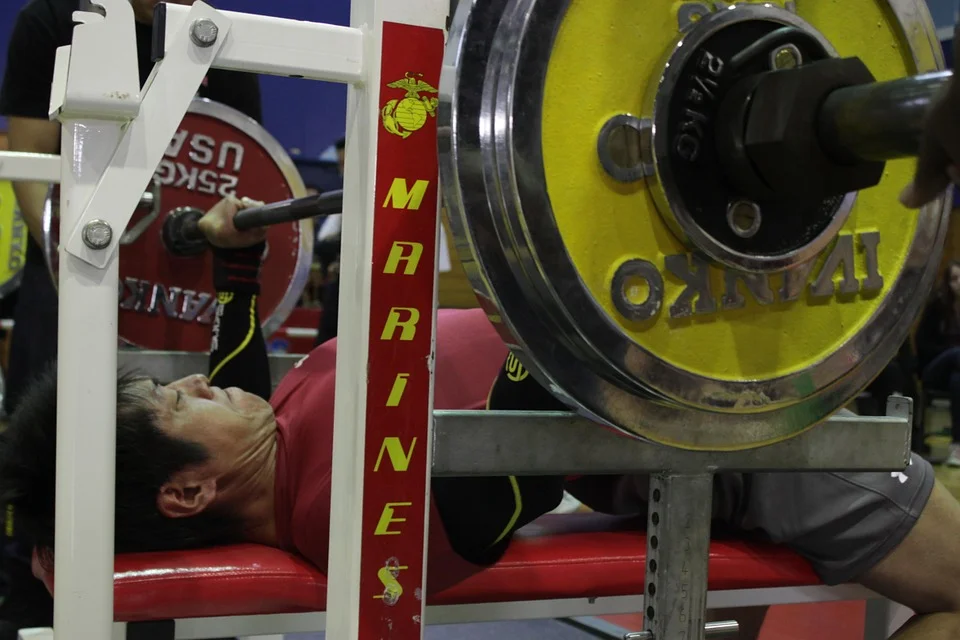
Today's quick tip video offers some options with training with shoulder pain (or to prevent it) so you can still pump up zee pecs.
Main points:
1. If you're really in a lot of pain*, step away from the barbell for a few weeks -gasp!- and try dumbbells with a neutral grip (palms facing each other). This will open up the shoulder space and allow you to still press will minimizing the risk of pinching and causing more irritation.
2. Switch from open-chain exercises to closed-chained exercises. For example, swap out the barbell or dumbbell presses for pushups. (You'll have to watch the video for an explanation on the differences.)
3. Increase the total volume of rowing. Often niggling shoulder pain can be dealt with by strengthening the upper back and balancing out front/back bits of the shoulder (those are the technical terms...). We like to press and we don't like to row; therefore, we ought to row more.
Go forth and press!
*If you have structural damage, these tips will only go so far. If you're in a lot of pain, you should go to a doctor to get a diagnosis or ensure nothing major is wrong. Make sure you follow the rule: if it hurts, don't do it.
Flaxseed Bread- Keep it Real, Keep it Regular
Flaxseed is one of those healthy foods that is a nutritional gold star to our daily intake. Rightly so, flaxseed contains omega-3s (the healthy kinds of fats that our brains love), plenty of fiber (which our gut loves and keeps us regular, if you know what I mean), and when utilized well, can help keep us full and prevent blood sugar crashes. I've written about fiber's lovely effects HERE.
I have a li’l recipe for you all today that is quite tasty and incorporates our lovely friend, flaxseed. All credit goes to Leanne Vogul over at healthfulpursuit.com for her pretty delectable bread that she created. Here is the link to the original post.
The recipe is as follows:
2 cups roughly ground flaxseed (I get ours at Trader Joe’s)
1 tablespoon baking powder
1 tablespoon Italian herb mix
1 teaspoon sea salt
5 large eggs
½ cup water
⅓ cup olive oil
Directions:
Preheat oven to 350F and line a 13x9 baking pan with parchment paper draped over the sides. (Trust me, you want parchment paper or one of those silicone baking mats. Your life will be much better for it.) Set aside.
Throw the flax seed with baking powder, herb mix, and sea salt in a large bowl. Whisk to combine fully and set aside.
Add eggs, water, and oil to a bowl and beat with a fork or whisk until pretty frothy.
Transfer liquid mixture to the bowl with the flaxseed mixture. Stir with a spatula, just until incorporated. The mixture will be very fluffy. Once incorporated, allow to sit for 3 minutes. It will get thick and goopy over the next couple of minutes- that’s normal.
Drop mixture into prepared baking pan. Smooth with the back of the spatula and transfer the pan to the preheated oven.
Bake bread for 20-ish minutes, until top is golden. Remove from the oven and lift bread (from the parchment paper sides) to a cooling rack. Peel the parchment paper from the bottom of the bread and allow the bread to cool on the cooling rack for an hour.
Cut into 12 pieces.
Bread can be toasted or frozen. Keeps in the fridge for 3-4 days and in the freezer for up to 3 months.
If you want another bowel-movement related post, check out this one about the benefits of squatting.
Get your air! Breathing and Bracing for Powerful Lifts and Injury Prevention
Why do you need to brace your core?
First, let’s define “bracing.”
To brace your midsection in the context of lifting is simply creating 360 degree (circumferential for you intellectual types) intra-abdominal pressure. This will stabilize the spine and protect it from shear stress.
It is NOT sucking in your belly button towards your spine, as some trainers out there will say. That does not actually create nor maintain enough intra-abdominal (the core) pressure and not only will you experience power leaks, but it puts you at a greater risk of injury.
So, why do we brace?
1. Efficient power/force transfer- for example during a squat or deadlift your lower body applies force to the ground and that transfers to your upper body and thus the bar moves up (hopefully…). In athletics, your body will naturally brace during high-power activities such as sprinting or jumping. Learning how to brace and do it well in a slow setting, i.e. lifting, will transfer beautifully to the “faster” movements such as sprinting and thus, you have much more efficient movement (aka, you run faster).
2. Prevents power leaks- part 2 of creating a system for efficient force transfer is preventing leaks in that system. For instance, I see a lot of people’s upper backs (or lower backs…) round during a deadlift. This not only increases risk for injury (see next point) but it’s also a power leak. Some of that force that the lower body is applying to the ground is lost which limits the amount of weight a person can lift. It’s like watering grass in the middle of a hot day- some water still gets down in the ground but a lot of it is lost to evaporation and doesn’t actually benefit the lawn. The same thing applies here: there still force being applied to the barbell, but some of the power is lost in that leak.
3. Injury prevention- A stable spine is a happy spine. The intra-abdominal pressure created during bracing supports the spine while it’s under load/stress, such as during a back squat or the landing of a broad jump. Usually the reason why people hurt their backs is because they don't brace properly.
Bracing involves taking a big ol’ breath (but not just any ol’ breath as you’ll see below) and then clamping down on that air, squeezing all your midsection, and holding it throughout the lift (like you’re about to get punched or constipated). The holding part is usually not the problem, I’ve found, but the actual intake of breath.
Below is a video where I get a little more detailed on how to actually breathe in prior to bracing.
So there you have it! Breathe in to fill both your belly and rib cage, crush it, and hoist your barbell. If you want to read a slight more in-depth article, click HERE.