Get a Massage: Research Backs it Up!
My amazing spouse surprised me with a short getaway this past weekend. He coordinated everything: Arabella’s weekend care, room at the Gaylord in the National Harbor, meals, and – what I want to focus on – a massage. It’s been a while since I had a really good massage. My last one was also a pregnancy massage, which I thought was a bit too light – I mean, just cause I’m pregnant, doesn’t mean I’m not training. So, I was pleasantly surprised when this therapist really started digging into the muscle adhesions.
She effectively addressed my trouble areas: upper back, lower back, and calves. Plus, found an unexpected problem area in my lateral deltoids.
Ryan’s therapist attacked the root of his elbow tendonitis by working on his forearms and, hopefully, reiterated (in his mind) the importance of soft-tissue care for this type of ailment.

This experience got me thinking about all the benefits that have been proven to be associated with massage:
Are you an athlete with athsma? If so, read this… a little massage will likely improve your pulmonary function (and, bonus alert, feel amazing):
Pulmonary Functions of Children with Asthma Improve Following Massage Therapy. Objectives: This study aimed at evaluating the effect of massage therapy on the pulmonary functions of stable Egyptian children with asthma. Design: This study was an open, randomized, controlled trial. Settings/location: The study was conducted in pediatric allergy and chest unit of the New Children's Hospital of Cairo University, Egypt. Subjects and interventions: Sixty (60) children with asthma were divided randomly into two equal groups: massage therapy group and control group. Subjects in the massage therapy group received a 20-minute massage therapy by their parents at home before bedtime every night for 5 weeks in addition to the standard asthma treatment. The control group received the standard asthma treatment alone for 5 weeks. Outcome measures: Spirometry was performed for all children on the first and last days of the study. Forced expiratory flow in first second (FEV1), forced vital capacity (FVC), FEV1/FVC and peak expiratory flow (PEF) were recorded. Results: At the end of the study, mean FEV1 of the massage therapy group was significantly higher than controls (2.3±0.8 L versus 1.9±0.9 L, p=0.04). There was no significant difference in FVC (2.5±0.8 L versus 2.7±0.7 L, p=0.43). However, FEV1/FVC ratio showed a significant improvement in the massage therapy group (92.3±21.5 versus 69.5±17, p<0.01). PEF difference was not significant (263.5±39.6 L/minute versus 245.9±32 L/minute, p=0.06). Conclusions: A beneficial role for massage therapy in pediatric asthma is suggested. It improved the key pulmonary functions of the children, namely, FEV1 and FEV1/FVC ratio. However, further research on a larger scale is warranted.
No, asthma? Just a regular ol’ person? This study indicates all kinds of great biologic effects:
A Preliminary Study of the Effects of a Single Session of Swedish Massage on Hypothalamic-Pituitary-Adrenal and Immune Function in Normal Individuals. Objectives: Massage therapy is a multi-billion dollar industry in the United States with 8.7% of adults receiving at least one massage within the last year; yet, little is known about the physiologic effects of a single session of massage in healthy individuals. The purpose of this study was to determine effects of a single session of Swedish massage on neuroendocrine and immune function. It was hypothesized that Swedish Massage Therapy would increase oxytocin (OT) levels, which would lead to a decrease in hypothalamic-pituitary-adrenal (HPA) activity and enhanced immune function. Design: The study design was a head-to-head, single-session comparison of Swedish Massage Therapy with a light touch control condition. Serial measurements were performed to determine OT, arginine-vasopressin (AVP), adrenal corticotropin hormone (ACTH), cortisol (CORT), circulating phenotypic lymphocytes markers, and mitogen-stimulated cytokine production. Setting: This research was conducted in an outpatient research unit in an academic medical center. Subjects: Medically and psychiatrically healthy adults, 18-45 years old, participated in this study. Intervention: The intervention tested was 45 minutes of Swedish Massage Therapy versus a light touch control condition, using highly specified and identical protocols. Outcome measures: The standardized mean difference was calculated between Swedish Massage Therapy versus light touch on pre- to postintervention change in levels of OT, AVP, ACTH, CORT, lymphocyte markers, and cytokine levels. Results: Compared to light touch, Swedish Massage Therapy caused a large effect size decrease in AVP, and a small effect size decrease in CORT, but these findings were not mediated by OT. Massage increased the number of circulating lymphocytes, CD 25+ lymphocytes, CD 56+ lymphocytes, CD4 + lymphocytes, and CD8+ lymphocytes (effect sizes from 0.14 to 0.43). Mitogen-stimulated levels of interleukin (IL)-1ß, IL-2, IL-4, IL-5, IL-6, IL-10, IL-13, and IFN-? decreased for subjects receiving Swedish Massage Therapy versus light touch (effect sizes from ?0.22 to ?0.63). Swedish Massage Therapy decreased IL-4, IL-5, IL-10, and IL-13 levels relative to baseline measures. Conclusions: Preliminary data suggest that a single session of Swedish Massage Therapy produces measurable biologic effects. If replicated, these findings may have implications for managing inflammatory and autoimmune conditions.
Thinking about getting a pre-event massage before your next competition? BE CAREFUL with your decision and KNOW yourself!
Psychophysiological effects of preperformance massage before isokinetic exercise. Sports massage provided before an activity is called pre-event massage. The hypothesized effects of pre-event massage include injury prevention, increased performance, and the promotion of a mental state conducive to performance. However, evidence with regard to the effects of pre-event massage is limited and equivocal. The exact manner in which massage produces its hypothesized effects also remains a topic of debate and investigation. This randomized single-blind placebo-controlled crossover design compared the immediate effects of pre-event massage to a sham intervention of detuned ultrasound. Outcome measures included isokinetic peak torque assessments of knee extension and flexion; salivary flow rate, cortisol concentration, and [alpha]-amylase activity; mechanical detection thresholds (MDTs) using Semmes-Weinstein monofilaments and mood state using the Profile of Mood States (POMS) questionnaire. This study showed that massage before activity negatively affected subsequent muscle performance in the sense of decreased isokinetic peak torque at higher speed (p < 0.05). Although the study yielded no significant changes in salivary cortisol concentration and [alpha]-amylase activity, it found a significant increase in salivary flow rate (p = 0.03). With the massage intervention, there was a significant increase in the MDT at both locations tested (p < 0.01). This study also noted a significant decrease in the tension subscale of the POMS for massage as compared to placebo (p = 0.01). Pre-event massage was found to negatively affect muscle performance possibly because of increased parasympathetic nervous system activity and decreased afferent input with resultant decreased motor-unit activation. However, psychological effects may indicate a role for pre-event massage in some sports, specifically in sportspeople prone to excessive pre-event tension.
Outside of these few studies, there are loads of studies supporting massage for everything from improving brain development in preterm babies to care for cancer patients to treating chronic constipation.
Pretty interesting stuff and perhaps something to add to your self-care to-do list.
SAPT Exercise of the Week: 3-Way Sledge Leveraging for an Iron Grip
Whether your playing field is in the middle of a football stadium or simply the weight room itself, there are few things NOT to be gained from grip training. As we've noted before (HERE and HERE), we make grip strength a major priority at SAPT. Be it the improved control and feel of the bar during compound lifts (deadlifts, chinups, bench presses, etc.), increased muscle mass, more calories burned during a given training session, or the injury risk reduction benefits added to the elbow and shoulder regions, I'd be foolish not to include them in my athlete's programs.
 As an added bonus, for the fathers in the crowd, a stronger grip will help definitely show your daughter's boyfriend "who the boss is around here" when he shows up at your door for the first time. Giving him a bone-crushing handshake will allow you to escape failing miserably like Phil from Modern Family:
Getting right to it, here's a simple exercise you can use to work your way to bone-crushing forearms. All you need is a simple sledgehammer, so this is something that anyone can do at home.
3-Way Sledge Leveraging
How to Do It: Grip the handle TIGHT. A lot of people tend to let the handle "slide and rock" back and forth in their hands....don't be that guy. You'll have three directions to move: ulnar deviation, radial deviation, and forearm supination/pronation. Move the hammer slowly, and note that you can increase/lessen the difficulty of the exercise based on how far up/down the sledge you hold.
Do 2-3 sets of 8-15 repetitions per hand, beginning on the low end of the spectrum. Toss these babies in once a week at the end of a training session and let the magic happen.
Research Supports ACL Tear Prevention Programs Beginning at Age 11 for Girls
Research supports ACL tear prevention training beginning for girls at age 11. Find out more details in this post.

ACLTear
A recent study: Anterior cruciate ligament laxity and strength of quadriceps, hamstrings, and hip abductors in young pre-pubescent female soccer players over time: a three-year prospective longitudinal pilot study.
…whoo, long title… as I was saying, a recent study was published in Orthopedic Physical Therapy Practice that clearly demonstrates the timeframe and magnitude to which the strength balance of young females’ bodies begins to become unbalanced.
Here’s the abstract:
Purpose: This was a longitudinal study to determine the effects of maturation on anterior cruciate ligament (ACL) laxity and muscle strength in pre-pubescent female soccer players. Methods: ACL laxity and quadriceps, hamstrings, and abductors strength were measured annually from 2006 through 2008 in 22 pre-pubescent female soccer players, ages 7-12yrs. Results: ACL laxity increased 2.2 mm (p < 0.0002) in 2007 and 1.7 mm (p < 0.005) in 2008. Quadriceps strength increased 1.9 kg (p < 0.01) in 2007 and 2.1 kg (p < 0.009) in 2008. No significant change was noted in the hamstrings. Abductor strength decreased 3.0 kg (p < 0.0001) in 2007 and 2.3 kg (p < 0.0001) in 2008. Quadriceps to hamstring (Q/H) ratio decreased 0.4 kg (p < 0.02) in 2008. Conclusion: ACL laxity increased with age in pre-pubescent girls. The high Q/H ratio, and decreased abductor muscle strength, indicates an increased risk of ACL injury. Significant changes at age 11.5 occur both in ACL laxity and muscle strength, just one year prior to average age of menses. Girls may be approaching puberty with preexisting muscle weakness and imbalance that may expose them to ACL injury.
The critical pieces to pull from the abstract refer to the combined effects of a high strength ratio between the quadriceps and hamstrings (ideally, you want them to be well balanced and fairly even), the decreasing strength of the abductors (they keep the knee from "caving"), and ever increasing strength of the quadriceps.
It’s worth noting that this study was conducted on girls who are athletes, female soccer players to be exact. So, the increase in ACL laxity was not due to inactivity.
I think it is fantastic that the exact age – 11.5 years – has been pinpointed as the most significant time when this shift towards imbalance is occurring.
What should you do? Well, if you have a daughter, I’d suggest getting her started in a program that has a strong (and highly successful) ACL tear prevention protocol. Training to prevent ACL tears is serious business and, in the long run, it will cost a lot less to PREVENT a tear that to surgically repair and rehab a tear.
SAPT Exercise of the Week: Stir the Pot Alphabet
 When it comes to training someone's "core," I'd often rather have them jump in front of a moving a school bus than perform endless sit-up and crunch variations. However, I've explained the "why" on this site multiple times (and most people are caught up to this information by now anyway), so I won't belabor the point here and now.
Moving on, planks (and their variations) tend to be one of the best bang-for-your-buck exercises when it comes to training the "core," or - the muscles that control the pelvis and thoracic region with respect to the lumbar spine - to put it in "non-bro" terms.
When it comes to training someone's "core," I'd often rather have them jump in front of a moving a school bus than perform endless sit-up and crunch variations. However, I've explained the "why" on this site multiple times (and most people are caught up to this information by now anyway), so I won't belabor the point here and now.
Moving on, planks (and their variations) tend to be one of the best bang-for-your-buck exercises when it comes to training the "core," or - the muscles that control the pelvis and thoracic region with respect to the lumbar spine - to put it in "non-bro" terms.
This is why, once someone has mastered the basic plank, I'll progress them to something more difficult (and fun!) than just holding a static bridge for 60 seconds. This is where something like a move-the-mountain plank or a plank bodysaw will come in handy to make someone's abdominals hate life. Today I'd like to share another plank variation I love to use, that is challenging and also helps keep those with ADD a specified task to focus on.
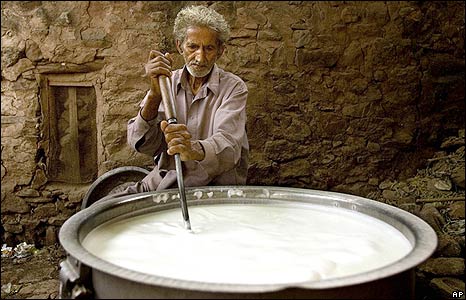
Here we have SAPT's exercise of the week, along with allowing you to finally understand why I placed a picture of a random man stirring a large pot at the beginning of this post (don't pretend like you didn't doubt me).
Stir the Pot: Alphabet
What is it: This is a progression from the classic "Stir the Pot" exercise that Dr. Stuart McGill invented. It trains your core to resist extension and rotational forces, on top of improving core endurance, a key component in keeping back pain at bay.
The idea for the featured variation actually came to me after Coach Chris invented the Pallof Press: Alphabet back in 2010.
How to do it: Get in a nice plank position (abs tight, glutes SQUEEZED, yadda yadda yadda). Then, trace the alphabet in big, CAPITAL letters. Take your time here. and ensure that there is minimal movement taking place at your low back and hips.
I typically like to progress this by having someone start by tracing just a portion of the alphabet (ex. A-L) and eventually have them work through the entire alphabet. Perform 2-3 sets, working as far through the alphabet as you dare.
To make it even more difficult, you could have someone appear out of nowhere and samurai-kick the ball. I heard my friend Tony Gentilcore mention this for the original stir the pot, and I feel it is a fair progression.
 Why I like it: As mentioned above, it's a good fit for us ADD folk in the crowd. Not to mention it will kick your butt. While an advanced athlete can make a plank very difficult if they put their mind to it and actually focus throughout the entire thing, I honestly can't always count on people to do this. Variations such as Stir the Pot practically force you into staying tight, as otherwise you'll fall over and/or snap your spine in two.
I also like this because those of you who train in commercial gyms can do it without any special equipment. Commercial gyms tend to have so many of those stability balls that I often feel like I'm a very small person in the middle of Goliath's equivalent of a Chuck E. Cheese's. This will give you something useful to do with those balls other than throwing them out the window.
Press Around the Pain
If a bigger bench press is your goal there is a chance that at some point you will experience some type of elbow pain. This is usually brought on by the intensity, volume, or frequency at which you are bench pressing and most likely the combination of the three. What results is inflammation of the tendon near the olecranon. If left untreated the situation could become worse and result in tendinosis. When this problem comes about you have three options: You can take time off and let it recover, you can work through the pain, or you can find ways to work around the pain. Even though the smartest thing to do is take some time off, most people aren’t going to do this. Taking time off will reduce the stimulus to the area which will allow inflammation to subside and the area to heal.
Most people, including myself, are stubborn so if you refuse to take time off your next best option is working around the pain. This is what I did and I’m still making gains in my bench press while also reducing my elbow pain. The following are some of the ways I did that and I encourage you to implement them as well if you don't want to take the time off necessary to recover.
1. Take Out Elbow Dominant Accessory Work
Usually, what you’ll find, is that most elbow pain does not flare up during pressing exercises. Rather, the pain occurs during accessory movements that make the elbow the main point of action. Accessory movements such as triceps pushdowns, skull crushers, supine triceps extensions, and seated overhead triceps extensions should be avoided. These types of isolation exercises cause the elbows to take the brunt of the work and cause pain in already irritated elbows. Try substituting partial range of motion pressing movements, close grip pressing movements, or a combination of the two for your accessory movements. Things like a 4 board close grip bench press is a great one. As well as partial pushups to sandbags or to a 4-5 board works great as well. You’ll find that these movements will cause less elbow pain because the work is no longer completely centered on the elbow but spread out to the chest and shoulders.
[vsw id="8PA58Ds6duo&list=UUKSYQ75Buogznl62rdbks2Q&index=2&feature=plcp" source="youtube" width="425" height="344" autoplay="no"]
2. Hammer Your SMR and Mobility Work
When engaging in a high volume/high intensity press focused program, it is likely some serious adhesions will build up in your triceps. And if you’re not staying up on your shoulder and t-spine mobility, the problem in your elbows may get even worse. I learned these two lessons the hard way. Since making them a priority my elbows have gotten better, I still have a long way to go. Spend 5 minutes on your days off and after hard sessions rolling your triceps and anywhere around the problem area. I’ve found using the cardboard cylinder from the plastic wrap that athletic trainers use to wrap ice bags with to be an awesome tool to use for SMR. It’s small which allows for a little more concentrated roll and much more handy and easier to manipulate than an actual foam roller.
As I stated before it’s important to hammer your shoulder and t-spine mobility as well. Just like knee problems arise from poor hip mobility the same goes for elbow problems and lack of shoulder mobility. Poor shoulder mobility basically impedes the ability of the triceps to aid in shoulder extension and when coupled with excessive elbow dominant exercises the end result is inflammation and pain. Take time to work in some static stretching drills for your pecs, lats and rotator cuff. I found that working this in after your SMR sessions yields the best results. Be sure to also incorporate some t-spine extensions either on the wall or on a foam roller throughout your sessions as well in order to get that upper back a little more mobile. Try to accumulate around 5 minutes of total work for your shoulders and t-spine.

3. Use a Thorough Warm-up/Prehab work
In order to help work around your elbow pain, it’s imperative that the area have a good amount of blood flow before you slam it with heavy doubles or high volume accessory work. The same goes for your warm up and prehab work as it does for your accessory work; lay off the movements that isolate your elbow. Use full range pushups, band pullaparts, facepulls, rotator cuff circuits, etc. to warm up before pressing. These will not only get your elbows ready but also your upper back, shoulders and chest as well. One exercise I just recently started using that is a variation of an exercise I learned from Mark Bell is what I nicknamed the Elbow TKE. I’ve been using this almost every day for the past couple of weeks to warm up my elbows for not only pressing movements but for squatting, deadlifting, and just general blood flow work as well. This is an awesome exercise to isolate your triceps without putting direct pressure on the elbow.
[vsw id="OnqWOWq0WVA&feature=related" source="youtube" width="425" height="344" autoplay="no"]
Keep on pressing my friends.
Mid-Point Goals
I want to give a few personal updates on my training these days. I am just over the half-way point with this pregnancy (21 weeks) and last week we found out we're having a boy (yay!). Since I've already been through this process once before I know that the next 20 or so weeks can become quite physically trying. So, I've reassessed my progress to this point and have created some new goals.

First 20-weeks goals:
- Build a solid aerobic base ahead of time - ACCOMPLISHED. With Arabella I had NO IDEA how important aerobic exercise would be for my day-to-day tasks. I ended up having to play "catch-up." You'd think this would happen late in the pregnancy when you've gained a bunch of weight... surprise! It doesn't! It happens very quickly as the result of increased blood volume. The aerobic training helps your body adapt more quickly. For Baby #2 I began a conditioning program (geared towards 800m runners) about 1 month before we started trying to "get pregnant" - it has worked wonders. Weight gain has been slower and I've felt much better.
- Address my body's areas of breakdown ahead of time - ACCOMPLISHED. I've learned that, while pregnant, I need to take special care of my lower back via simple strength movements like the bird-dog, address calf weakness and overall foot health, and can train with more vigor than I did with Arabella (again, I realized this about half-way through with her). The result is that while my back flares up from time-to-time, it is under control and overall I feel much more like myself in terms of strength and health. Regarding foot health, I won't know if I've been successful until after the baby is born.
Second 20-week Goals:
- Continue to prioritize low- to moderate-level conditioning but without laying the foundation for wicked plantar fasciitis. I'm shifting towards Prowler sled pushes 2x/week, stepper or bike or smililar low impact activity 2x/week, and 1 or 2x/week of actual running. Believe it or not, with Arabella I ran 3-4x/week (with low impact on off days) up until I was 38 weeks pregnant. For my Prowler pushes I will do a "trip" for every week pregnant I am - today I did 21. Took about 30 min.
- Keep up with lower leg pre-hab to keep my feet and calves strong enough to safely continue to propel my heavy(er) body when I'm running.
- Maintain pullups and chinups in my training regime. Sadly, these will not be body weight. BUT, on the upside, they can be called "Banded + 25lbs Pullups" by the due date - I'm sure somewhere in there things even out. With Arabella the stretch placed on my torso from the hang position was too uncomfortable/borderline painful to keep in (even banded). So, I'm hoping to keep them in throughout, if possible. Same approach as the Prowler: 1 rep for every week pregnant.
- Lastly - and, okay, I recognize this borders on the ridiculous - but, if everything goes smoothly and all the variables line up in the best possible way. Then my goal is to beat my time in "active" labor. Arabella took 55 minutes. I'm after a PR with this little guy.
One final note is that I'm not entirely a crazy person, I do certainly understand the limits of my body and the safety of the baby comes first. So, as with #1, I know when to dial things down if my body isn't feeling quite right. And, the above is by NO MEANS my recommendation to pregnant women looking to stay active throughout their pregnancies. Rather, this is the by-product of a body (mine) which has been trained consistently at a very high level for about a decade.
I categorized this post under "Awesome" and "Chest Thumping" because, well, staying active throughout a pregnancy is really, really tough. So, anyone who manages that feat should feel it is both awesome and a serious point of pride!