Happy 4th of July
I hope everyone is enjoying the 4th and having an opportunity to get outside, grill some awesome food, and watch some explosions later on today. If you have a cat, be sure he/she doesn't steal your drink (as Latte is doing in the video below). We'll be back tomorrow!
Bird-Dogs, Verticals, etc.
I'm not gonna lie, I'm experiencing some major writer's block this morning, so it's going to be short and sweet today.
1. I thought I'd share an exercise I've been using for some active recovery circuits, and as a filler exercise in some of our overhead athlete's programs. It's a sandbag walkup with a pushup position bird-dog at the top.
While this exercise may seem a bit "frou-frou" at first glance, don't knock it till you try it. In fact, most will need to start by lifting the arm only, as adding the alternate leg lift will cause many people to topple over.
Why I like it
- The hand-walking portion helps to promote scapular stability (via strengthening of the serratus).
- The alternate arm+leg lift gives you some pretty solid benefits in the trunk stability department, as your entire body will have to resist rotation (in the transverse plane) and hyperextension of the low back (in the sagittal plane).
- You can perform it nearly anywhere. Whether you're traveling, at home, in the gym, etc. all you need is something (a phone book, aerobics step, etc.) to elevate your hands on.
How to do it
- Don't fall over.
- The main thing you need to watch out for is hyperextension (excessive arching) of the low back and you lift up the opposite arm and leg.
- Hold each reach for a two-count.
- Perform for 6-10 repetitions.
When it comes to taking an off day, you either have people doing nothing, or you get those that consider 400m repeats and/or long distance running an off day. Both are sub-optimal and will most likely hinder your recovery process.
Toss in this walkup variation along with some mobility drills, crawl variations, bodyweight split squats, KB swings, etc. and you'll have yourself accelerating blood flow to damaged tissue, ungluing sticky joints, charging yourself for the following day's training session, and enjoying the sensation of undoing the musculoskeletal nightmare of sitting at a desk for 8 hours straight.
2. We just re-tested the vertical of Alexis (who plays for one of VA's premiere volleyball teams), after 16-weeks of training with us.

Long story short, her vertical jump improved 9 inches over the last 16-weeks. And yes, we're measuring absolute vertical displacement, not simply how far up she can touch (as she's grown 1/2" over the past four months, which we took into account). A huge congrats to Alexis for all her hard work!
How did we accomplish this? Simple. Lots and lots and lots, and lots, of jumping, "plyometrics," and endless agility drills. The more of these, the better. (Go back those two sentences again again, but with a healthy dose of sarcasm).
The reality is we rarely used more than 15 TOTAL jumps in a given session (and she only trained twice a week).
Increase the horsepower, the brakes, and the accelerator. Therein lies the key. Furthermore, most trainees can benefit tremendously from developing eccentric force absorption and muscle contraction (one example of this would be altitude drops....using the appropriate progressions), which will lay the framework for enhanced concentric strength potential. Then, Voila! We have more reactive and stronger athletes capable of greater force and power output.
W, T, Y, and I your way to a stronger serve, pitch, or bench press…
Initially, the vast majority of our clientele exhibit less than optimal upper-back strength/stability, and a drastic imbalance between the upper traps and mid/low traps (the upper traps proving to be dominant in this relationship). Considering a large portion of our clientele are overhead athletes, the scenario above provides a perfect recipe for shoulder dysfunction. Desk jockeys and bench press “specialists,” keep reading because you can benefit from the information below as well. One of the many drills we incorporate into our clienteles programming to increase strength and reduce asymmetries in the stabilizing muscles surrounding the shoulder blades is W, T, Y, and I. The clip below was taken from our online database of exercises that we use to coach our distance coaching clientele. Without further ado, I give you the W, T, Y, and I drill:
The drill’s benefit lies in the execution of the movement (what else is new, right?). A couple important coaching cues to note are as follows:
-Perform these drills on a flat-solid surface where one is parallel to the ground. This will ensure the delts and upper traps don’t take over the movement. My preferred surfaces are a bench, or treatment table. You’ll see these drills sometimes performed on stability balls or other unstable surfaces. I’d advise not doing them on these surfaces as it’ll detract from force output and subsequently the conditioning of the upper-back musculature.
-Avoid hyperextension of the lumbar spine (lower back) as this will again limit the effectiveness of the drill.
-Be sure to squeeze the middle of the back (lower and mid trap activation!) when performing these movements. If you feel like you’re shrugging to raise the arms, that’s a sign your upper traps are taking over and you’re now just compounding problems…
-If you’re having a difficult time performing them bilaterally (both arms simultaneously), try performing them one arm at a time.
-Try to relax the neck as much as possible; stare at the ground NOT the wall in front of you.
If you’re an overhead athlete it’s imperative that you address your upper-back through drills such as these. Honestly, your pitching career probably depends on it.
For our bench press “specialists” in the crowd, if you think addressing the retractors and depressors is a waste of your time, enjoy benching 185 the rest of your life…if you’re lucky enough to bench the rest of your life.
And for the desk jockey whose neck and shoulders kill him after a day at work, or weekend golf/tennis match, come see SAPT and we’ll get you right.
To improve your fastball, serve, bench press or just quality of life, give me a clicksee right HERE…
A pocket full of M80’s and Roman Candles…who’s coming with me…
Chris AKA Romo AKA "Put your dishes in the dishwasher, please"
Goal Setting at the 50% Mark
We are now halfway through 2011. Well, actually, tomorrow marks the halfway mark, but I'm preparing you in advance. You can thank me later, no worries. 50% of 2011 is gone, never to return.
How are those New Years Resolutions looking?
If your goal was to lose 30lbs of fat, have you lost 15lbs by now?
If your goal was to add 40lbs to your max squat (or bench, deadlift, weighted chinup, etc.), are you at least 20lbs stronger?
If your goal was to get in 156 workouts this year (that’s just averaging 3 workouts a week), are you on track to complete your 78th workout today?
Or even if your goal was to get in just 104 workouts this year (an average of two workouts a week), are you going in to take charge of your 52nd workout today?
It’s amazing how quickly time passes by. Don’t waste a single moment.
If your goal is fat loss, get back on track NOW. If your goal is muscle gain, start TODAY.
If your goal is to run a Marathon (*injury free*) next year, please don’t wait and try one of those “16-week” training programs (they’re a hulk of B.S., by the way). No one ever became world-class at something in 16-weeks. Begin your movement training, mobility work, dynamic flexibility, core work, energy systems development, strength training, and running training now.
Not sure where to begin, or having trouble holding yourself accountable? Easy. Hire a coach to guide you through the process. After a long day's work, the last thing you probably want is to worry about is knowing whether the workout you’re doing is actually optimal for your desired outcome.
Hiring someone to design the program for you, and walk you through the process, takes all the guesswork out for you. All you need to do is show up. Not to mention, you get to train alongside a group of other like-minded individuals, which will only fast track your progress and make training more enjoyable.
Not sure of the optimal number of sets and reps for a fat loss workout? Uncertain if you’re following the 80-20 rule in order to ensure you’re putting on muscle mass as fast as you could be? Confused as to how to efficiently prepare for your next running event? (Hint: the answer isn’t logging endless miles on the road each week).
Start now. Where are you going to be another six months from now?
It's a simple question: Look at your behaviors. Look at your goals. Do your behaviors match your goals?
But the time is going to pass anyway.
-Steve
4-Weeks to a Stronger Total Body
That’s a short amount of time to make some big gains, I’ll admit. But for much of the population adding a grip strength specialization routine to their regular training program can result in significant gains on all of their lifts. Why is improving grip strength so effective? Basically, grip strength tends to be the “weak link” for recreational lifters and athletes alike and, thus, a lot of extra neural activity is wasted in the direction of controlling the grip musculature that can be more effectively directed towards the large muscle groups (think about the deadlift… what fatigues first? Your legs, your back, or your grip? The last thing you should notice fatiguing is your grip). So, spend a handful of weeks crushing your grip and you should quickly notice the following benefits:
1. For most men, another 3-5 reps squeezed out on pulling movements like body weight pull-ups and for most women, another 1-2 reps. 2. The perception of easier deadlifting and – gasp – even squatting! You heard it hear first, folks, a stronger grip will give you a bigger squat, too! 3. A slight bench press PR… it might show up in the form of a repetition PR or a max PR, I’m not sure. But you’ll get a PR, I promise. Want to test this one out? Set up a bench press with just the bar, for the first 5 repetitions lightly grasp the bar and notice how it feels. Then reset and this time squeeze the bar as if your life depends on it. What do you notice now? Something you already though was easy is now way easier and those nagging issues with shoulders and wrists often clear up like magic.
You’ll even get injury prevention benefits for the elbow and shoulder directly from increased and focused grip training. Plus, if you want to include the numerous injury prevention benefits that will come from increasing load and proficiency on the lifts I noted above, you only have to ask yourself… “How fast can I get some heavy fat bar holds going on?!?”
 At SAPT, grip training is a regular portion of our programs and can be found in forms both direct and indirect. Here are a few examples of some of our favorite direct grip exercises:
• Farmer’s Walk variations with a towel hold. • Kettlebell or plate pinch (squeeze as if you’re trying to ring water from the iron). • Sledge Leveraging. • Sledge Finger Walks (not for the faint of heart). • Barbell Holds – one of my personal favorites for the rowing team at Mason – just load up a barbell and hold with perfect posture for time.
Consider spicing up your routine and your fast tracking your strength gains by adding in some direct grip work – and for goodness sake, if you know what “straps” are, throw them away!
Suspended Pushup (with a twist) for an Added Challenge + Improved Shoulder Stability
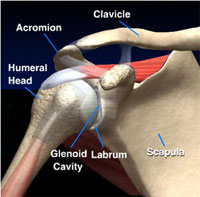 The primary function of the rotator cuff (which many people often miss) is to center the humeral head in the glenoid fossa. In order to accomplish this, the dynamic stabilizers of the shoulder need to be on their "A" game. This is of special consideration when dealing with athletes, as the nature of competition is frequently an "open loop" scenario.
See the video below for a pushup variation that incorporates some dynamic stabilization of the shoulder girdle. We named it "Suspended Pushup ISO Hold (with perturbations) into Repetitions."
The primary function of the rotator cuff (which many people often miss) is to center the humeral head in the glenoid fossa. In order to accomplish this, the dynamic stabilizers of the shoulder need to be on their "A" game. This is of special consideration when dealing with athletes, as the nature of competition is frequently an "open loop" scenario.
See the video below for a pushup variation that incorporates some dynamic stabilization of the shoulder girdle. We named it "Suspended Pushup ISO Hold (with perturbations) into Repetitions."
A couple notes:
- Having a studly powerlifter give you perturbations during the ISO hold is optional, as the suspension straps inherently provide a stability challenge on their own.
- This exercise hits multiple birds with one stone. It will give you a tremendous challenge for your core (you're essentially holding a plank position for the entire time), give you a nice stretch for the pecs in the bottom, improve the ability of your rotator cuff to stabilize the humeral head (where your upper arm bone attaches to the shoulder joint), and develop your upper body strength. Sounds like a winner to me.
- As shown in the video, hold at the bottom for 10-20 seconds, and then move into the desired number of repetitions. Stay TIGHT in the bottom. Everything should be braced. Everything....
- Using the suspension straps is actually a fairly advanced progression of a pushup (especially if your feet are elevated, as shown). Be sure you master the ground-based pushups first.
- (Piggybacking off of #2) If you don't have access to suspension straps (or a partner), no problem! Holding a tight isometric at the bottom of a pushup (on the floor), and then moving into repetitions, can make a great way of taking on a new challenge if standard pushups have become a bit easy for you.
- You increase testosterone levels by 50% if you wear a "Do Work" shirt while performing these.
Just don't tear your shoulder in two....Stevo