When You Can’t Sleep
So, you’re not sleeping? Ahh – neither am I.
Here’s a list of things to keep your busy mind occupied and focused on something positive instead of dwelling on the issues that are probably keeping you up in the first place:
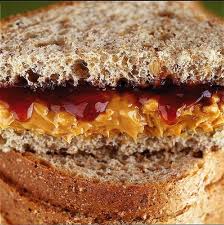
- Eat a peanut butter and jelly sandwich. Why not? Who cares that it’s 2AM? They’re delicious and will probably make you feel a little bit better about being awake.
- Take the bull by the horns: address whatever is keeping you from falling back to sleep. Returning emails, addressing little projects, addressing little parts of big projects, etc. Can’t hurt, right?
- Listen to music.
- Turn on SportsCenter. It’s sports, it’s on 24-hours a day, it’s usually pretty positive and inspiring.
- Do something enjoyable/out of the ordinary.
Here’s my early morning play-by-play after Arabella woke up at 1:17AM (you start remembering the exact time after about the 300th occasion you’ve been roused by crying in the dead of night):
- Lay awake in bed for approximately 60-minutes mulling over small, but important and irritating, “issues.” Eventually, I officially acknowledged I’m not going back to sleep.
- Go downstairs and make a peanut butter and jelly sandwich (see #1 above). It was delicious.
- Return a few emails.
- Fill out SAPT product survey: I filled out a review on one of SAPT’s excellent products (if you’re reading between the lines, yes, that means I buy them, too… at full price). They actually are excellent and I actually enjoyed pouring some positivity out in a way, which for me is very non-traditional.
- Rediscover my love for Britney Spears. I'm totally serious right now.

- Make adjustments to my program for women’s basketball (Mason).
- Realize I can do a blog post on not sleeping – begin that.
- Fill out testing roster for women’s soccer (Mason) and go over testing protocol and setup one more time to ensure things go smoothly in the morning.
- Finalize this blog post while watching highlights of Pro Bowl players on SportsCenter.
Seriously though, here are some Actual Recommendations for Improving Sleep Patterns:
- Exercise daily: this helps reduce stress and expend the extra energy that may be stored up.

- Eat sensibly: throughout the day and before going to bed. It’s best to steer clear of large, dense meals right before trying to sleep.
- Set yourself up for some relaxing wind-down time: take a shower, drink some water, and get into bed with a good book (again, something relaxing).
- Allot 7-9 hours for uninterrupted sleep.
- Avoid allowing young, fitful sleepers occupancy near your bedroom. I’m hoping to surmount this problem in about 5 years.
Good LUCK!
Excellent Strategy for Upper Back Development
 I really don't think there's a such thing as "too much upper back work." In fact, I'd go so far to say that undergoing a training plan (be it athletic performance training, running, bodybuilding, etc.) without paying special heed to the portion of your torso that you don't see in the mirror is akin to constructing a house on a foundation of sand.
Keeping it brief, here's a simple, truncated list of what upper back work can do for you:
I really don't think there's a such thing as "too much upper back work." In fact, I'd go so far to say that undergoing a training plan (be it athletic performance training, running, bodybuilding, etc.) without paying special heed to the portion of your torso that you don't see in the mirror is akin to constructing a house on a foundation of sand.
Keeping it brief, here's a simple, truncated list of what upper back work can do for you:
- Improve posture
- Augment your "big lift" training (upper back weakness is often a limiting factor in how much you can deadlift, squat/front squat, and bench press)
- Ward off shoulder issues
- Offset all the slouching we do on a daily basis
And, perhaps what most of the majority of the crowd cares about: Enhancing one's aesthetic. For the ladies in the crowd, nothing exudes more confidence than standing "tall" with the shoulders pulled back. For the men the crowd - with some added assistance from farmers carries - you can at least come close to emulating Tommy Conlon's trap/upper back development which totally PWNED in the movie Warrior (see picture on the left).
Yeah, exactly.
Alright, let's get to it. Here's an awesome strategy to give your upper back some much-needed attention:
Pair a bilateral 'pull' with a unilateral 'push,' and double the number of sets for the pulling exercise.
As soon as I heard this strategy from Eric Cressey I knew it was brilliant, and, upon implementing it in my own training, I wasn't disappointed.
What does it look like?
Pick a bilateral, horizontal pulling exercise (chest-supported row, barbell row, TRX row, cable row, etc.) and pair it with a unilateral pushing exercise (single-arm dumbbell press, single-arm overhead press, single-arm pushup, etc.). I recommend putting this pairing first during an upper body day, so the first two exercises would look something like this:
A1. Seated Cable Row, Pronated Grip
A2. SA DB Bench Press, Neutral Grip
HOWEVER, here's the kicker.....set up the set-rep scheme something like this:
A1. Seated Cable Row, Pronated Grip: 6x8 A2. SA DB Bench Press, Neutral Grip: 3x6/side
THEN, sequence the movements as follows: Seated Row --> SA Bench (left side) --> Seated Row --> SA Bench (right side) --> Seated Row --> SA Bench (left side) --> etc. etc. etc. clap yo' hands, fist pump x1,000.
I've been using this with enormous success for the past eight weeks or so in my own training. Why is this so awesome?
1. It's an easy way to keep your pulling vs. pushing volume in check. Most All of us tend to favor pressing over pulling, so setting up the sets/reps like this forces us to remain honest.
2. It's a fantastic way of getting in a lot of good horizontal pulling without feeling too fatigued. Since you essentially take a "mini break" between each set of rows to do your pressing exercise, it activates the antagonists of the back musculature, leaving you feeling a bit more rested by the time you get back to the row.
3. You're still providing plenty stimuli for the pressing muscles via the single-arm variation. Not to mention, the single-arm pressing exercise is an excellent method of receiving the added benefit of core stability training. Your have to brace your abs and glutes HARD to keep your torso from shifting side to side. (Note: If you're wondering why I have my arm out to the side like an idiot in the video, it's 'cuz I'm trying to counterbalance. Don't knock it till you try it....geeze....)
4. It just flows well. You can knock out this pairing in relatively little time while still getting a lot of work accomplished.
To put things in perspective, let's say you just do this during one of your upper body days for two, 4-week training blocks. Assuming you keep all your other pull/push pairings of equal volume (which I wouldn't...but let's just go with it...), that gives you an extra 240 reps of pulling over a mere 8-week period! Just by making that simple adjustment in your programming.
Even if you go with a "6x6" set-rep scheme for the bilateral pull, that still gives you 144 more repetitions of pulling over pushing, and we're talking only two months out of the year.
As long as you keep up with your deadlifts and other cornerstone lifts for the backside, imagine what will happen if you cycled this in and out of your training year round?
Tactical Frog Mobilization
Here's a quick video on an excellent hip mobility drill I like to use to open up the hips before training.
Have a frogtastic weekend everyone.
Press Around the Pain
If a bigger bench press is your goal there is a chance that at some point you will experience some type of elbow pain. This is usually brought on by the intensity, volume, or frequency at which you are bench pressing and most likely the combination of the three. What results is inflammation of the tendon near the olecranon. If left untreated the situation could become worse and result in tendinosis. When this problem comes about you have three options: You can take time off and let it recover, you can work through the pain, or you can find ways to work around the pain. Even though the smartest thing to do is take some time off, most people aren’t going to do this. Taking time off will reduce the stimulus to the area which will allow inflammation to subside and the area to heal.
Most people, including myself, are stubborn so if you refuse to take time off your next best option is working around the pain. This is what I did and I’m still making gains in my bench press while also reducing my elbow pain. The following are some of the ways I did that and I encourage you to implement them as well if you don't want to take the time off necessary to recover.
1. Take Out Elbow Dominant Accessory Work
Usually, what you’ll find, is that most elbow pain does not flare up during pressing exercises. Rather, the pain occurs during accessory movements that make the elbow the main point of action. Accessory movements such as triceps pushdowns, skull crushers, supine triceps extensions, and seated overhead triceps extensions should be avoided. These types of isolation exercises cause the elbows to take the brunt of the work and cause pain in already irritated elbows. Try substituting partial range of motion pressing movements, close grip pressing movements, or a combination of the two for your accessory movements. Things like a 4 board close grip bench press is a great one. As well as partial pushups to sandbags or to a 4-5 board works great as well. You’ll find that these movements will cause less elbow pain because the work is no longer completely centered on the elbow but spread out to the chest and shoulders.
[vsw id="8PA58Ds6duo&list=UUKSYQ75Buogznl62rdbks2Q&index=2&feature=plcp" source="youtube" width="425" height="344" autoplay="no"]
2. Hammer Your SMR and Mobility Work
When engaging in a high volume/high intensity press focused program, it is likely some serious adhesions will build up in your triceps. And if you’re not staying up on your shoulder and t-spine mobility, the problem in your elbows may get even worse. I learned these two lessons the hard way. Since making them a priority my elbows have gotten better, I still have a long way to go. Spend 5 minutes on your days off and after hard sessions rolling your triceps and anywhere around the problem area. I’ve found using the cardboard cylinder from the plastic wrap that athletic trainers use to wrap ice bags with to be an awesome tool to use for SMR. It’s small which allows for a little more concentrated roll and much more handy and easier to manipulate than an actual foam roller.
As I stated before it’s important to hammer your shoulder and t-spine mobility as well. Just like knee problems arise from poor hip mobility the same goes for elbow problems and lack of shoulder mobility. Poor shoulder mobility basically impedes the ability of the triceps to aid in shoulder extension and when coupled with excessive elbow dominant exercises the end result is inflammation and pain. Take time to work in some static stretching drills for your pecs, lats and rotator cuff. I found that working this in after your SMR sessions yields the best results. Be sure to also incorporate some t-spine extensions either on the wall or on a foam roller throughout your sessions as well in order to get that upper back a little more mobile. Try to accumulate around 5 minutes of total work for your shoulders and t-spine.

3. Use a Thorough Warm-up/Prehab work
In order to help work around your elbow pain, it’s imperative that the area have a good amount of blood flow before you slam it with heavy doubles or high volume accessory work. The same goes for your warm up and prehab work as it does for your accessory work; lay off the movements that isolate your elbow. Use full range pushups, band pullaparts, facepulls, rotator cuff circuits, etc. to warm up before pressing. These will not only get your elbows ready but also your upper back, shoulders and chest as well. One exercise I just recently started using that is a variation of an exercise I learned from Mark Bell is what I nicknamed the Elbow TKE. I’ve been using this almost every day for the past couple of weeks to warm up my elbows for not only pressing movements but for squatting, deadlifting, and just general blood flow work as well. This is an awesome exercise to isolate your triceps without putting direct pressure on the elbow.
[vsw id="OnqWOWq0WVA&feature=related" source="youtube" width="425" height="344" autoplay="no"]
Keep on pressing my friends.
SAPT Exercise of the Week: Pushup Bodysaw Series
Here's a fantastic pushup variation I've found myself using with increasing frequency in my own training, along with programming them for some of the athletes in SAPT who have progressed appropriately.
What is it: Pushup Bodysaw Series. You can choose one three options shown in the video below:
Why I like it
Ummm, 'cuz it looks completely awesome! While I have yet to confirm this, I'm pretty sure Batman used these in his preparation to battle it out with Bane, the verifiable genius and muscle-bound brawler we'll experience during The Dark Knight Rises this Summer. (Yes I'll be seeing this opening night in IMAX)

Sorry, I got distracted....let me try this again.
Why I like the pushup bodysaw series
- You can do it virtually anywhere, without needing any crazy special equipment!
- It's a pushup variation. When it comes to "bang for your buck" exercises, few can top the pushup. I rank them right up there with deadlifts, chinups, and farmers carries for best return for your investment.
- It really increases the difficulty of the standard pushup by adding a dynamic component for the hands+scapula, providing an "anti-extension" challenge for the core, and decreasing the mechanical advantage via base of support shifting.
- You get a bit of scapular rotation work with the arm that's sliding up.
- The spiderman bodysaw (third in the series) increases the difficulty even further by taking away a base of support, along with giving you a bit of hip mobility as your leg goes into flexion and abduction at the top.
How to do it
- Grab one or two furniture sliders, these are crazy cheap and can be found at nearly any hardware or Bed, Bath, & Beyond-related store. If you insist, you can omit the sliders and simply use a towels (if you have a slick surface to use, like a wood or tile floor), or paper plates on carpet.
- Squeeze your glutes HARD (as if you could crack a walnut between your buttcheeks) and brace your abdominals as if the world is about to end. This will keep your hips and low back from "sagging" throughout the movement.
- Keep your neck in neutral by resisting the urge to let your head drop, "reaching" for the ground. This is probably the most common error I see people unaware of.
- Perform 4-10 reps per side.
- Pretty self-explanatory from here, just watch the video and try to avoid falling on your face.
Depending on where you're at, I would NOT begin by trying to slide all the way out. Stay within a range of motion that you can keep good form in, and progress from there (most of you will have to watch out for the hips sagging to the ground). If you haven't already, master the perfect pushup before moving to one of the pushup bodysaw variations.
Mid-Point Goals
I want to give a few personal updates on my training these days. I am just over the half-way point with this pregnancy (21 weeks) and last week we found out we're having a boy (yay!). Since I've already been through this process once before I know that the next 20 or so weeks can become quite physically trying. So, I've reassessed my progress to this point and have created some new goals.

First 20-weeks goals:
- Build a solid aerobic base ahead of time - ACCOMPLISHED. With Arabella I had NO IDEA how important aerobic exercise would be for my day-to-day tasks. I ended up having to play "catch-up." You'd think this would happen late in the pregnancy when you've gained a bunch of weight... surprise! It doesn't! It happens very quickly as the result of increased blood volume. The aerobic training helps your body adapt more quickly. For Baby #2 I began a conditioning program (geared towards 800m runners) about 1 month before we started trying to "get pregnant" - it has worked wonders. Weight gain has been slower and I've felt much better.
- Address my body's areas of breakdown ahead of time - ACCOMPLISHED. I've learned that, while pregnant, I need to take special care of my lower back via simple strength movements like the bird-dog, address calf weakness and overall foot health, and can train with more vigor than I did with Arabella (again, I realized this about half-way through with her). The result is that while my back flares up from time-to-time, it is under control and overall I feel much more like myself in terms of strength and health. Regarding foot health, I won't know if I've been successful until after the baby is born.
Second 20-week Goals:
- Continue to prioritize low- to moderate-level conditioning but without laying the foundation for wicked plantar fasciitis. I'm shifting towards Prowler sled pushes 2x/week, stepper or bike or smililar low impact activity 2x/week, and 1 or 2x/week of actual running. Believe it or not, with Arabella I ran 3-4x/week (with low impact on off days) up until I was 38 weeks pregnant. For my Prowler pushes I will do a "trip" for every week pregnant I am - today I did 21. Took about 30 min.
- Keep up with lower leg pre-hab to keep my feet and calves strong enough to safely continue to propel my heavy(er) body when I'm running.
- Maintain pullups and chinups in my training regime. Sadly, these will not be body weight. BUT, on the upside, they can be called "Banded + 25lbs Pullups" by the due date - I'm sure somewhere in there things even out. With Arabella the stretch placed on my torso from the hang position was too uncomfortable/borderline painful to keep in (even banded). So, I'm hoping to keep them in throughout, if possible. Same approach as the Prowler: 1 rep for every week pregnant.
- Lastly - and, okay, I recognize this borders on the ridiculous - but, if everything goes smoothly and all the variables line up in the best possible way. Then my goal is to beat my time in "active" labor. Arabella took 55 minutes. I'm after a PR with this little guy.
One final note is that I'm not entirely a crazy person, I do certainly understand the limits of my body and the safety of the baby comes first. So, as with #1, I know when to dial things down if my body isn't feeling quite right. And, the above is by NO MEANS my recommendation to pregnant women looking to stay active throughout their pregnancies. Rather, this is the by-product of a body (mine) which has been trained consistently at a very high level for about a decade.
I categorized this post under "Awesome" and "Chest Thumping" because, well, staying active throughout a pregnancy is really, really tough. So, anyone who manages that feat should feel it is both awesome and a serious point of pride!