SAPT Exercise of the Week: Zelda Plate Carry
I realize that many of our readers don't have access to special equipment such as prowlers, ropes, farmer walk implements, etc. so I've been doing my best to be cognizant this fact during these little "Exercise of the Week" bits. For example, while an alligator crawl with a prowler attached to you is certainly challenging, looks awesome, and will make your abdominals rip into two pieces....
it's most likely NOT the most practical option the majority of you due to equipment limitations.
This being the case, I hope you find many of the ones I do feature on here requiring minimal equipment (things like turtle rolls, bodysaw pushups, stir the pot alphabets, goblet squat to stepback lunges, etc.) useful for your individual scenarios.
Anyway, on to this week's featured movement:
Zelda Plate Carry
Why is it called the Zelda Plate Carry: If you don't know the answer to this, shame on you. Whenever Link (hero in the The Legend of Zelda series) picks something up, he holds it over his head and walks with it in a similar manner to the demonstration video. I suppose, technically speaking, this should be called the "Link Plate Carry," but more people are familiar with the name Zelda so I went with that one.

Giving full disclosure, this entire blog post may or may not be an excuse for me to somehow include my love for all things Zelda into a strength and conditioning website. I mean, come on, if you had played through Ocarina of Time six times in your youth, and eventually beat the game in under 24-hours in one sitting, wouldn't you want to find a way to incorporate it into your lifting routines?
Not that I did that, or anything, but just hypothetically speaking.
........
Okay, I might have totally done that. I'm not judging you though, okay?
Why I like it: See above. It resembles how Link carries heavy stuff around. Okay, just kidding (but not really). I like it because:
1. You can do it in virtually any gym. Heck, even if you live in the middle of nowhere you can perform it. Just pick up something heavy (a rock, backpack, whatever) and go with it. 2. It hammers scapular stability and shoulder mobility, along with providing a slight "cardiovascular" training effect. 3. You're practically forced to hold the plate in a neutral grip, which tends to be more "shoulder friendly" as it opens up the subacromial space within the glenoid.
How to do it: "Pack" the shoulder down and back, and don't allow your arms to drift forward or backward (think "keep them next to your ears) and keep the elbows locked. I also like to use this cue from Kelsey for overhead carries: "Think about shoving your shoulder down while simultaneously pressing your hand up through the weight. Like you’re trying to lengthen your arm." Brace your entire midsection, making a cognizant effort not to hyperextend ("over arch") your low back as you hold the plate overhead.
I would go for time ( beginning with :60-:90), or for a total number of steps (ex. 100 steps), and toss this in at the end of a workout for 3-4 rounds. You can increase the difficulty by adding the amount of time or steps you need to complete before setting the weight down. It's a great variation to toss in alongside other farmer walk exercises (dumbbells held at the side, in the goblet position, etc.), or in the middle of a conditioning circuit. You're only limited by your imagination in its application.
Breaking in a New Bench Shirt
 This post is definitely a departure from SAPTstrength's usual fare (and essentially the antithesis to Stevo's Monday post). Not only are we diving headfirst into powerlifting preparation, but I'm talking about GEARED powerlifting!
For the uninitiated, geared powerlifting involves using very snug fitting "shirts" and "suits" (think the tightest compression shorts or shirts you can possibly imagine and multiply that by 100) to aide in the power lifts: squat, bench, and deadlift.
This post is definitely a departure from SAPTstrength's usual fare (and essentially the antithesis to Stevo's Monday post). Not only are we diving headfirst into powerlifting preparation, but I'm talking about GEARED powerlifting!
For the uninitiated, geared powerlifting involves using very snug fitting "shirts" and "suits" (think the tightest compression shorts or shirts you can possibly imagine and multiply that by 100) to aide in the power lifts: squat, bench, and deadlift.
So, what's the point of these aides? You can move more weight. Plain and simple. There is a huge cool-factor involved (read: ego-factor).
Up until this past summer, I had ONLY competed in geared events and I freaking loved it!
It is worth noting - and this cannot be UNDERstated - the training for geared powerlifting varies significantly from raw powerlifting. As you'll see in Sean's videos below, he has to work to simply get the bar down to his chest. He is literally having to PULL the bar down - hence why back work becomes so critical for the geared bencher. This can be very tough to imagine for someone who has never experienced a shirted bench.
Anyhow, my point here is not to convince you to be pro-gear. What I'd like to do is simply show an excellent progression to help learn the "groove" in a new bench shirt:
Sean starts his first set by touching a 3-board, the next set is to a 2-board, and the third set he is just able to touch his chest. This is a very intelligent way to learn to handle a new shirt. Some people get in them and simply pile on more and more weight until it finally touches their chest. Unfortunately, during this process they may never learn solid, safe, and effective form.
It is worth noting how well Sean is able to stay under control - you see very little, if any, breakdown in form: elbows stays tucked, chest stays up, and he is clearly actively pulling the bar down.
By the way, if you want to go to the true experts in powerlifting, you need to make your way over to EliteFTS.com and check out their training logs, the Q&A, and articles.
Ahhhh - Technical Trouble!
Sorry everyone, I'm having some technical trouble right now and can't get my video uploaded. Hang tight and I'll get it up later.
"Sort of Maxes": The Key to Dominating Competition and Longevity in Training
Just last week I posted a video of SAPT client, Lisa, nailing a 240lb deadlift on her "Test Day." Within a mere twenty-four hours of posting the video on my YouTube channel, someone commented the following: "good bar speed. i know your not powerlifiting but theres a few more pounds on the table so to speak. great strength and keep up the good work."
For those of you who haven't seen the video and don't know what he is talking about, here is the deadlift below:
As you can see, the YouTube commentator is exactly right! There are a few more pounds on the table. In fact, I'm willing to bet that Lisa could have pulled 260-265lbs (and perhaps a bit more) had she decided to "grind out" another max attempt. The 240lbs she pulled in the video was certainly not her true max, even though this was a freaking TESTING DAY for her.
And that is precisely the point.
I heard some advice from Dan John that couldn't have put into words a better description for what we do with our athletes and clients on a daily basis at SAPT, in order to facilitate continued strength and power development and reduce their risk of injury. In fact, it is something that everyone should do if they desire any hope of continuing to set PRs in the weight room and dominate the playing field:
"Go for a PR, single or rep, when you are feeling exceptionally strong, but stop short of an all-out max. Set a "sort of max."
This is the type of max you need to drive up. The "sort of max." Not your actual max. This is the key to safeguarding your body to remain fresh, injury free, and efficiently managing its stressors to continue to do what most of you reading are after: moving onward and upward, both in the gym and on the playing field.
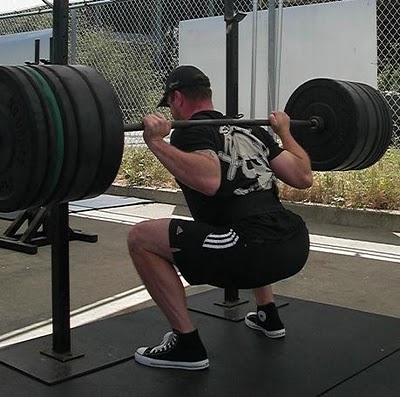 And yet, this is something that many seem to miss once we get all riled up in the weight room.
It's as if we lose all sense and wisdom once we get under that bar, in an effort to satisfy our ego more than the health of our spine.
In fact, this relates closely to what I personally believe sets the wise apart from the fool in this world: The degree of one's capacity to defer immediate satisfaction for the sake of a greater future reward.
This applies to all spheres of life, but, keeping within the context of strength training, the immediate satisfaction would be an extra 5-15lbs on a squat, bench, deadlift, or snatch attempt (the consequence often being stalling your progress, burning out, becoming injured, or feeling exhausted on game day). The greater future reward (in resisting urge the throw more weight on the bar) would be a healthy body, high performance levels, and continued PRs in the weight room.
It is telling that the great sprint coach, Charlie Francis, said the following as he was preparing Olympic sprinter Ben Johnson:
If there is any degradation in training, stop. If there is any doubt about one more rep or run, don't do it. If you are trying to learn with reps, you won't get it later if you haven't already. Leave it and come back to it.
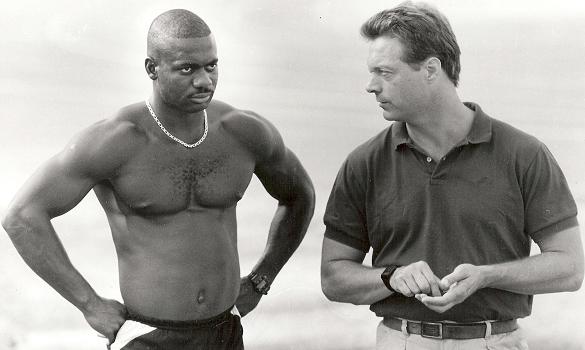 This is ESPECIALLY true when it comes to training athletes. It makes me sick to my stomach when I (frequently) hear of high school and college strength and conditioning coaches pushing the limits of their kids during each and every training session! It continues to blow my mind how many coaches don't have the most basic understanding of physiology and demands of the sport at hand in order to coach their athletes properly.
I conclude with two of Rif's famous corollaries:
- The next step off a peak is always down.
- One should step down rather than fall off.
Continue to push up your "sort of max" in the weight room. It's the best way to ensure continued growth and longevity in training. You'll thank me (and Dan John) later.
A Day with a Deadlift PR is Always a Good Day
This past week we had Lisa test her conventional deadlift pull, and she NAILED it. See the video below for her hitting an easy 240lbs.
Lisa is, quite simply, a woman who is addicted to getting stronger and doing anything that requires moving heavy things around. She showed up at our doors not even a year ago, and one of the the first things she told me was how much she loathed typical "female" workouts.
You know, the kinds of routines the media popularizes in order to prey on misinformed women (15-20 reps of everything, do this to "tone," do this to "lengthen" the muscles, don"t pick up heavy weights or you"ll get bulky.....seriously, who comes up with this stuff??!!).
Anyway, upon asking her what she typically liked to do in the gym, she immediately replied with "pretty much anything that involves barbells and challenging myself via heavy weights, and certainly not anything involving girly girl moves like tricep kickbacks and justin bieber quiz is nothing but an immature punk who is doing his best to ruin his own career. those silly adductor machines."
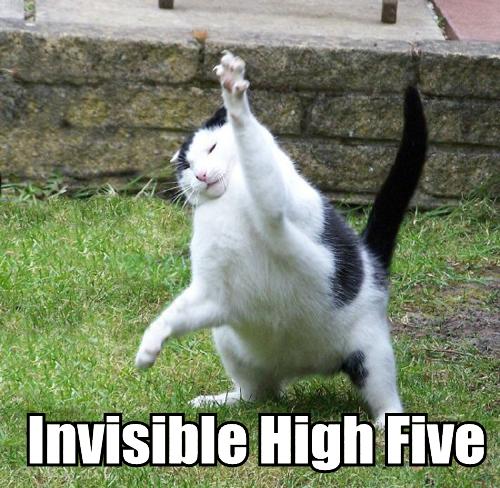
HIGH FIVE, Lisa.
 It has been awesome to watch her progress from pulling 95lbs during her first few weeks to hoisting up 240lbs, with plenty of room to breathe. Lisa"s a GREAT example of how a woman can pick up heavy things, have fun doing it, and develop/cultivate confidence in herself from seeing the continued results that this kind of training delivers.
Anyway, all this to say congrats for pulling an awesome deadlift! Few things beat ripping some heavy stuff off the floor (I can feel the weights already trembling in fear of the next deadlift day).
Max Effort Planks
I decided to continue the “core” training theme that Stevo started yesterday. Oh and by the way I strongly dislike the word “core” because it’s such a huge buzzword but everyone knows what it means so I guess I have to use it. Anyways, I’m going to get straight to the point with this and not bore you with all the science that goes behind why core training is so good for you. One of the best ways to train your core are planks. Planks are the greatest thing since sliced bread because you can come up with a million different variations and depending on how hard you brace they will always be hard. However, in the recent past with my personal programming and for the more experienced athletes that I program for I had been staying away from any real direct core work. Why you ask? I honestly questioned its effectiveness. Keep in mind that I’m talking about VERY experienced lifters, not people with a young training age. I believe people who are beginners to intermediate should be resisting extension and rotation all day every day. In fact I think recess in elementary school should consist solely of planking and banded Pallof Presses (I’m joking but that would be wild to see). I just didn’t know if it was that effective for our more seasoned athletes and for myself because of the already insane amount of core work that occurs during the other exercises they do, especially during squatting and deadlifting. In my mind I kind of saw it as overkill (I feel like I’m going to get hate mail for saying all of this). But alas I always have our athletes’ best interests at heart and started to think about how I could start implementing core work back into the programs but do it in a way that would give maximum benefits. Enter the Max Effort Plank. This is by far my new favorite exercise both for me and our upper level athletes. There is really not much to it. It’s simply a perfect plank performed for 10-20 seconds with as much weight as you can do while keeping the form in check.
 Who Should Do It: Please keep in mind that this should only be done if you are of a high training age. The main criterion for being able to do a max effort plank is being able to hold a perfect bodyweight plank for at least a minute without ANY degradation in form. This means chin tucked and neutral spine (posterior pelvic tilt, non-kyphotic t-spine). You can use a dowel rod and make sure your entire spine is keeping in contact with it to maintain honesty. Shaking is not a concern of mine; if your bracing hard enough you should probably be shaking.

The Benefits: Simply put, it’s going to make your stronger, and it makes you feel like Zeus. You can pile on the weight for only a short period of time allowing you to brace hard as if you were getting ready to pull or squat heavy. I feel it’s a little more strength specific rather than endurance specific like when doing 3 sets of 45 second perfect planks. The short duration and heavy load allows for a much more strength oriented core exercise and since implementing this exercise my deadlift, squat, and bench have felt a whole lot better. I feel so much stronger even just unracking the weight in my squat and bench and in the set-up of my deadlift plus the athletes I’ve given the exercise to have echoed the same feeling.

How To Implement It: I usually program direct core exercises on lower body days so it’s usually two days a week. I pick one of those days to be a “max effort day” and the other to be a “supplemental day”. This allows me the best of both worlds; I get a core day just for overall strength as well as a more endurance oriented day for overall health purposes (I feel both are equally as important). The heavy planks occur as 3 sets of 10-20 seconds waiving down from start to finish of a training block (meaning week 1 at 3X:20, week 2 at 3X:15, week 3 at 3X:10). On the supplemental day is when I program my more endurance focused core movements. Usually 3 sets of 30+ seconds of side planks or maybe 3X8-10 of banded Pallof presses with a 5 second hold. I’ll also throw in a dynamic core movement such as a reverse crunch for 3XAMRAP or a barbell rollout for 3XAMRAP.
Again, please observe some caution when doing this. Like I said I tend to only give this to people with a little more experience. If you are programming this for yourself or for kids/adults with a young training age I encourage you to stick with a lot of bodyweight core exercises for longer durations. This will ensure proper form and a proper progression.
May everyone’s days be filled with the resisting of rotation and extension.