Nutrition Tips For Those LOOOOONG High School Tournament Weekends
Tournaments! Weekend-long (sometimes longer) events where athletes play multiple games in one day with very short breaks between games. Definitely not long enough to get a solid meal in before the beginning of the next match. All of our baseball and volleyball players have, seemingly, an endless stream of tournaments during the club seasons; it blows my mind a bit.
Anyway, this can pose a problem when it comes to being able to fuel properly before/after games. The aim for this post will be to provide tips how to eat leading up to the tournament, during the tournament (i.e. between games/matches), and sample snacks to bring. One can make this a complicated subject (eat 23.5 grams of protein, 15.8 grams of carbohydrates, eaten during the half-moon's light for optimum performance), but it's not really. It's easier than tracking orcs through the plains of Rohan.
If you glean nothing else out of the post, glean this: EAT. REAL. FOOD. There's no magic bullet supplement that will enhance your performance any more than eating solid, real food regularly.
Leading up to the tournament:
For (at least) the week prior, ensure that your meals consist of REAL foods, that is, plenty of vegetables and fruits, lean proteins, and healthy fats. Conveniently, the same rules that appeared in the post Eating for Strength and Performance, apply here. Craziness. As I've said before, if you fill your tank with crap, you're going to feel like crap, thus leading to performing like crap. Simple yes? We live in an age where technology makes our lives "easier" (though I would argue against a few of the more recent inventions) yet eating, the most basic human need, is over complicated. Our volleyball and baseball player (and all our athletes!) will take their training to the next level if if they just ate real food. Practical tips on how to achieve this below.
During the Tournament:
The length of the competitive day (6, 8, 10 hours?!!) will, to a degree, determine what types and how much food to bring. Obviously, longer tournament days will require more food than the shorter days. Here are three main points to remember when seeking foods for between games/matches.
1. EAT. REAL. FOOD. (notice a theme?) Don't go to 7-Eleven and pick up a Slurpee and whatever else they sell there. (You should NOT find body fuel at the same place you find car fuel.) Grab some fruit, make some sandwiches, and bring plenty of WATER. We'll go over a couple of beverages down below, but the number one liquid you should slurp: good ol' water. Divide your bodyweight in half... that's how many ounces (MINIMUM!) you should be drinking. If it's hot, and sweat is soaking your garments, drink your body weight in ounces.
2. Choose food that you know will sit well in your stomach. If you never eat peanut butter and pickle sandwiches (though if you don't, I don't know what's wrong with you. Try it. But not on tournament day.), don't pack them. The combination of nerves and high activity doesn't provide the best situation to try new foods. Pack food that you know you can handle (I also recommend staying away from a lot of dairy and highly acidic foods/drinks as both can lead to upset stomachs during intense activity).
3. Pack a cooler. I know it's extra work, but you'll be glad you did when you're able to chow down on healthy, delicious and filling foods while your friends are relegated to protein bars, candy, and who knows what other food they scrounge up.
Practical Solutions:
What does all this look like? Fill in your preferred food choice utilizing this general template. Think of it as a nutritional MadLib.
Breakfast:
1-2 fist-sized Protein source (eggs, cottage cheese, lean meat, Greek yogurt) + 1/2- 1 cup of Complex Carbohydrate source (fruit, oatmeal, whole grain toast, sweet potato, beans, any kind of vegetable) + 1-3 Tablespoons healthy fat (nut butter, real butter, olive oil, egg yolks, 1/2 avocado, nuts, pumpkin seeds) + at least 1-2 fist-sized serving of vegetables!
As an aside, I made cauliflower cream of "wheat" (and you know I love my cauliflower) the other day for breakfast. I tried this recipe and I just found this one. I think the second one would be a tastier option; the recipe I tried still had a cauliflower-y aftertaste. Maybe I needed riper banana or something. Anyway, this is an example a creative way to incorporate vegetables in tastier ways. And make them a DAILY part of your diet.
Lunch:
1-2 fist-sized protein source + 1/2 cup/serving of carbohydrate* + 1-3 Tablespoons healthy fat + at least 1-2 fist-sized serving of vegetables!
Dinner:
You guessed it: 1-2 fist-sized protein source + 1/2 cup/serving of carbohydrate* + 1-3 Tablespoons healthy fat + (you guessed it) at least 1-2 fist-sized serving of vegetables!
Snacks:
The same composition as the meals, just take half the serving side. For example, a hard boiled egg and an apple would be perfect. If you want some ideas of various foods to try, check out my posts here and here for other, less publicized super foods that have a plethora of benefits to offer to the competitive athlete.
* the amount of carbohydrates will fluctuate depending on if you work out/practice that day or not (see linked post about performance nutrition for more information). Eat 1-2 extra cups of carbohydrates spread throughout the day if practice/workouts are on that day. The "carb-loading" tactic is not a good idea unless you're running an Iron Man. A huge pasta meal the day before a competition doesn't do much for you except make you feel really full and sick.
Here are some sample snack options that might do well during long tournament days:
- Fruits (always a great option) such as bananas, apples, oranges, kiwis, melon etc.
- Homemade granola (complex carbohydrate source)
- Trail mix- a healthy blend of nuts and seeds (to provide satiety) and dried fruit with maybe a little chocolate thrown in (because let's be honest, the M&Ms are the best part).
- Celery, carrots, sliced bell peppers, jicima slices (or any raw veggie) and hummus
- Hardboiled eggs (this is where the cooler becomes handy), deli meat, tuna fish, sardines (if you're ok with no one sitting near you while you eat)
- Sandwiches: meat/cheese or peanut butter variations
Beverages-
1. Water, water, and more water. Water is the oil that keeps the body's engine running smoothly. No water? The engine starts grinding and struggling, like Gimli over long distances, and eventually poops out entirely. Not a desirable result during a big showcase tournament.
2. Drinks like Gatorade and Powerade are ok, but don't make them the primary source of liquid. They're useful if there's copious amounts of sweating going on (to help replace electrolytes) but too often I see athletes downing multiple bottles, when really, 1 bottle should be plenty.
3. If there's a decent chunk of time between games/matches, chocolate milk is actually a pretty good option for providing carbohydrates and protein (both of which are needed after a workout). I don't recommend drinking if there's only 15-20 minutes between games as dairy can sometimes upset stomachs.
4. Soda = fail.
Do you see a pattern? By eating quality food throughout the week and during the tournament days ensures that your body has the proper fuel for competition. Matter of fact, eating this way ALL the time does wonders for your health and performance.
Think of it this way: leading up to the tournament, athletes practice and strength train to prepare their bodies to ensure they're ready to compete. Any coach would tell you that if you try to cram all those hours of practice in the day before the tournament, things won't work out so well. The exact same principle applies to nutrition. If eating nutritious food starts the night before, well, things won't work out so well. Be vigilant in your preparations and take care as to what goes in your body as diligently and enthusiastically as you practice for each tournament.
Updates: Rugby, Tysons, New Coach, Vegas
This post is really off the topic I'm supposed to be covering today, but I've got too many important (and awesome) updates!
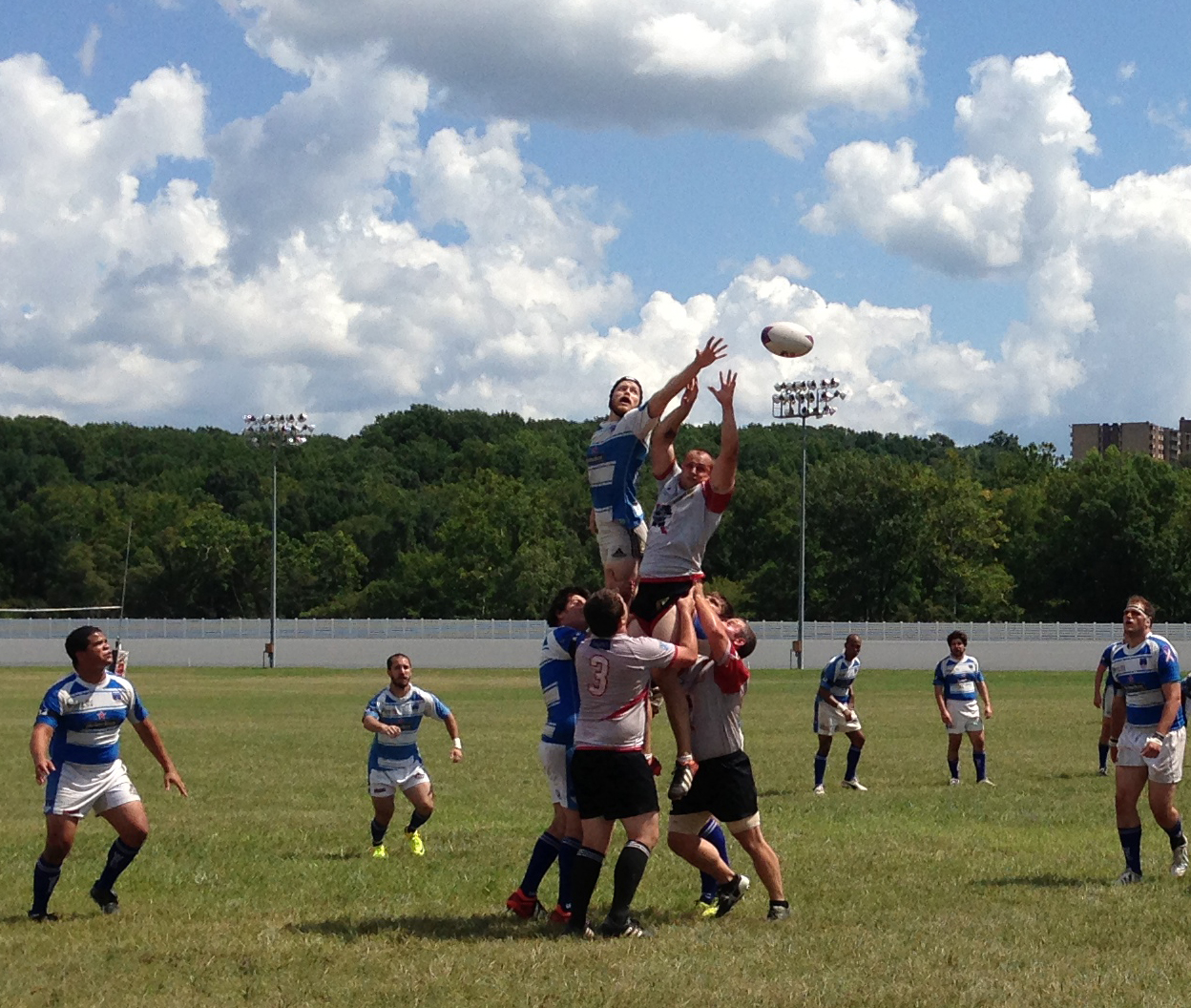
1. On Saturday I went out to watch the Washington Rugby Football Club at a pre-season warm-up tournament. It was an amazing day and the WRFC did quite well during the matches I saw.
SAPT will be working with the club in the coming months to refine as much of their strength and conditioning related needs as possible. There's no question, these guys train! The majority of the guys are what I'd describe as "BIG DUDES" but - as is a common misconception - just because you're a big dude, doesn't mean you can't learn better techniques, best practices, and generally step your game up to improve your training and become an even bigger, more deadly dude!
We'll start by working with the team on implementing a rotation of warm-ups. I like using warm-up rotations as it keeps the monotony down and allows us to match warm-ups with the practice to come. Why look like a bozo doing some high-intensity, "ready to crush anything" warm-up if the team has a very low-key recovery day at practice? We'll also be refining their pre-game routine and cool-downs.
2. Our new Tysons location is almost ready! Construction is going on right now to fix the floors and install showers. Our first day is set for Monday, September 16th!

Thank you to Custom Kinetics for helping making this possible!
3. Please welcome Jarrett Brummett as SAPT's newest coach! You may have already met Jarrett during his internship with us last summer. He was one of the interns that really stood out and we new was the most logical choice when we learned Tadashi would be leaving to head into a pre-med program.
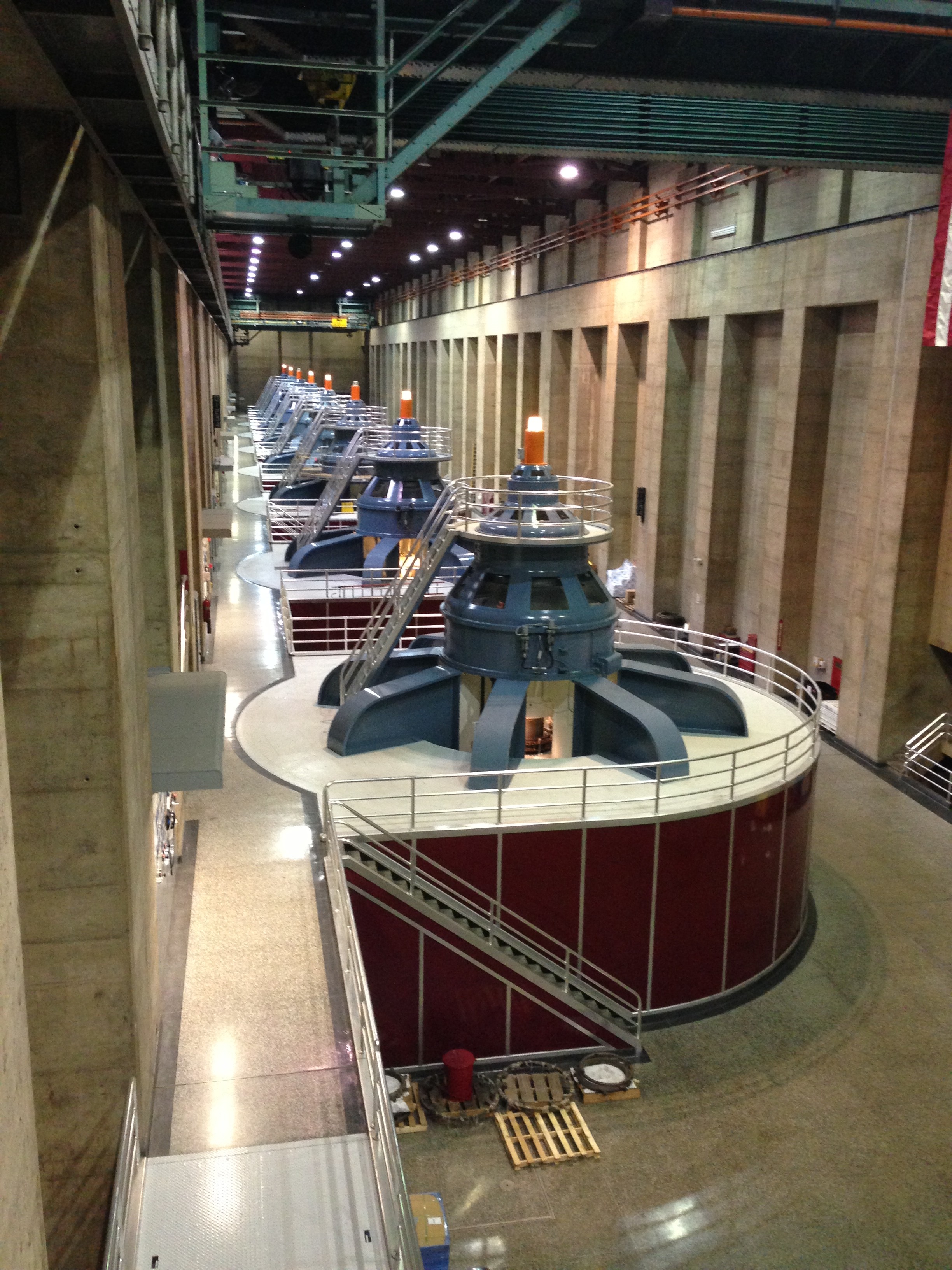
4. Ryan and I are in Las Vegas right now (still) celebrating our 10-year wedding anniversary.





Have you voted yet today????
Rotary Stability for the Overhead Athlete and Cyber Revolutionist
Ever have trouble standing on one leg for a given time? How aboutbalancing a book on your head as you walk? Crawling under wire in an obstacle course without having your hip bump up and graze the wire? If so, you could be suffering from the condition many health professionals have deemed: Poopy Rotary Stability.
If you are an overhead athlete, this could be HUGE. Many of the things listed above may sound like they have nothing to do with serving or throwing a ball, but in essence they’re all accomplished with having a…. dare I say it…. Functional Core.
Yes, that’s right, I just dropped the F-word. Having Rotary Stability is all about having a core that functions correctly. Now usually I stray away from using the f-word because many functional zealots have lost the true meaning of functionality, probably somewhere in their pile of bosu balls and vipers, and I don’t want to be mixed in with them. But, if you look into the true meaning of functional movement as defined by Gray Cook and several other great coaches, you will see that there is something to this stuff. Functional is the absence of dysfunction. Dysfunction is when things aren't working the way they were designed to. So if your core has poor rotary stability (when it's deigned to have great stability), then it's reasonable to say it's dysfunctional.
So today’s post is going to be about the seemingly undefinable, “core” and its rotary stability component. I’ll walk you through what it is, what it does, and how to be less poopy. As an added bonus, I watched, "The Matrix" the other night and have been inspired to make it today's theme. So swallow the red pill and lets see how far the rabbit hole goes.
Rotary Stability is essentially the torso’s ability to resist rotation. Not all resistance is the same, however. When we use our core musculature, it is usually put into two categories: The Hard Core and the Soft Core.
The Hard Core is what is used in a maximal brace. The Hard core helps you when you pull a maximal deadlift, it overrides your breathing pattern and gives max effort to keeping your spine in place. This can be used in place of rotary stability at times, but if this is all you have to rely on, then there is no way you would be able to dodge Agent Smith’s bullets. When we use our hard core, we stop breathing, our blood pressure spikes, and we even temporarily lose range of motion in the torso. You can’t have very efficient movement using just your Hard Core, especially if it's repetitive.
The Soft Core is what is used at all other times. It consists of your deep core muscles that act as pelvic and spinal stabilizers. These muscles should work AUTOMATICALLY. In sports, the soft core is what is predominantly used in athletic movement. If these are poopy, then just imagine what is going on in that throw, serve, or punch.
Rotary Stability is a characteristic of your soft core. It helps to give your limbs a base of movement and transmit forces through your body. If you do not have sufficient Rotary Stability, then you are essentially shooting a cannon from a canoe. If you were to try to, the canoe would wobble and a lot of the force would be lost, the canoe may even topple. Whereas if you shoot it from an aircraft carrier, that cannon ball is going to fly. In the case of the overhead athlete, the force production of the hips and/or torso needs to travel through the core to be transmitted to the arm and eventually to the ball. So having their core be as stable as an aircraft carrier will ensure max power transference.
So the importance is obvious, but how do you commandeer that aircraft carrier? Well I have laid out a path for you to follow that even the oracle would approve of.
1. Make sure your mobility is in check. As I said in my mobility post, poor hip or thoracic spine mobility can really limit your core stability. Many of us lose mobility from sitting in our desks/pods and it goes hand in hand with losing our stability. So we need to remedy this first!
2. Work on Rotary Stability by itself. You need to start small and make sure you are not putting fitness on top of dysfunction. There are many exercises that do this: bird-dog, static anti-rotations, or even rotary planks.
3. Make it a dynamic stabilizer. Once you've established that base from step 2, you can start doing more advanced exercises. These exercises should put some sort of asymmetrical force on the body to make the soft core to turn on. Some that I like are: bent-over single-arm rows, single-leg RDL, single-arm rack carry, single-arm overhead press, single-arm rack squat.
4. Take down the Matrix. With Rotary Stability uploaded into your movement arsenal, you should now be ready to join Neo. You will be stronger, more injury-resistant and better at doing slow motion, three-dimensional stunts!
Powerful Hips for Power Hitters
Today we're going to touch on a topic that certainly doesn't warrant a prolix explanation, yet needs to be addressed regardless, as from time to time as I run into folks in the baseball/softball circles - be they coaches, parents, or players - who have been misguided in this area.
How does one improve the power of their swing, in order to make the ball fly farther and faster?
Just to clear the air, there are two primary components that must be capitalized upon: technique, and strength+power.
One can possess all the strength in the world, so much so that it makes Bane look like a utter weakling, but if they lack technique - timing of the swing, proper sequencing of the hips, shoulders and arms; hand-eye coordination to make the ball meet the bat at the precise location - then that ball isn't going to go very far, if anywhere.
Now that that is out of the way, let's look at the other side of the coin, strength+power. Which muscles in the human body are going to be able to harness and produce the most force, in the context of hitting a baseball?
The Hips!
With a capital H. Now, I can see some of you rolling your eyes, thinking, "Well, duh, please tell me something else that's painfully obvious...." but I had to clear this up given that (and I tell you true) I've had people approach me to say that it is the biceps and shoulders that posses the most potential to hit and/or throw a ball.
Excuse me while I go throw my face into a hornets' nest.
Let's all take a deep breathe, relax, and come to an agreement that the hips are indeed king when it comes to power production. To say that it's the shoulders and arms would be akin to saying that you can take a car with brand new, top-of-the-line tires, yet only a 200 horse power engine, and expect it to win a Grand Prix! Of course the tires are necessary to connect the chassis of the car to the road and have it go where you want to, but they aren't of much value without a powerful engine to move them, are they? The arms certainly have their merit in a swing, just as tires do in a road race, but they're both a far cry from the bread and butter we're looking for in terms of power output.
Just ask Miguel Cabrera, Jose Bautista, Bryce Harper, or any of the other big hitters currently instilling trepidation in pitchers all across the big leagues; I'm inclined to believe they'll concur.
Just watch the incredible hip extension+rotation during any number of Cabrera's home runs in the highlight video below.
So how does one develop these oh-so-important hips, to prepare them for prodigious levels power output and be the driving force behind smashing a ball into oblivion?
First, it may be prudent to discuss what not to do, as one can find an alarmingly high number of misguided training practices proliferating among the strength and conditioning programs of little league, high school, college, and yes, professional, levels.
Here's a blueprint if you'd like a sure fire way of attenuating a baseball players' force production:
- Perform copious volumes of long distance running.
- Do lots of high-rep, lower body work while in a state of fatigue. Walking overhead plate lunges across a gymnasium would be a perfect option here. Barbell squats in the middle of a circuit, even better.
- Undergo 300m repeats with only :30-:60 rest between each one. This will ensure that you never fully recover, and become increasingly mired down and slow throughout the season.
- Whatever you do, don't do deadlifts. They'll only strengthen your entire posterior chain and teach you how to put force into the ground.
- Instead of deadlifting, bench press three times per week. Putting the health of your shoulders and elbows in jeopardy is key so that you force your hips to pick up the slack.
Now, what TO do?
- Glute and hamstring work becomes your best friend, and anything that develops the posterior chain, for that matter. So, things like glute bridges, slider hamstring curls, RDLs, KB swings, a healthy dose of single-leg work, along with countless other options, are prime candidates.
- Deadlift, but keep the reps low and use plenty of rest between sets, for the love! This is power production we're training for, not an AMRAP contest at the Crossfit games.
Deadlifts are one of the best ways to develop the hips, just don't feel the need to be a hero and use so much weight that your form falls apart (which then shifts all the work away from your hips anyway, and instead fries your spine). And even though you may be using lower rep ranges - say, a set of three - this doesn't necessitate grinding out a three-rep max and continually using maximal loads. Keep the bar speed high, refine technique, learn to feel feel the hips powering the movement, and be amazed as you actually get stronger.
Strength is a skill, not a circus act; keep it as such.
- Squat.
- As I discussed in this article, baseball players need to get outside of the sagittal plane in order to maximize potential in a rotational context. Thus, the various lateral hops/bounds, and lateral single-leg variations will bode well for frontal plane development, and med ball work will take care of most needs in the transverse plane.
- Get the anterior core strong and stable, so that it can resist undesired motion and thus help the hips appropriately transfer force through the entire body
-Sprint! One of the truest forms of plyometric training one can perform, and your glutes and hamstrings will thank you for it.
Unfortunately, many coaches don't know how to administer a sound sprint training program. Keep the distance relatively short, the overall volume low, and rest long enough to be fresh for each sprint iteration. If it looks and feels like a mindless "get your sweat on" show, then that's all it likely is! At best, those "run till you drop" sessions will make you sweat a ton; at worst, they'll make you weak, tired, and slow.
There's no doubt that the hips are a critical, if not the most important, driving force of the musculoskeletal system for just about ANY athlete; hopefully this article helped to shed a bit of light on why baseball and softball players are no exception.
Energy Systems Training
Energy systems training, or EST for you acronym lovers, has come to the forefront of SAPT"s training programs for our high school athletes as new research has manifested about the importance of specifically training those systems. I advise you to grab a cup of coffee, this is a heavy one! (no pun intended)
Definitions first.
ATP- the currency, if you will, of energy within the body. ATP (adenosine triphosphate) is an adenosine molecule with three phosphate molecules attached. The bonds that hold the phosphate molecules to adenosine are considered "high energy" bonds, meaning when their broken a large amount of energy is released. This energy is harnessed by the cells within the muscle to drive function. Simply, ATP makes muscle contraction possible and thus the glorious thing we call athletic movement. (And, well, movement in general.) The soon-to-be-mentioned energy systems regenerate fresh sources of ATP (through metabolic processes not important to know at this point) and their ability to produce ATP varies upon the duration of the exercise, the length of the recovery period, and the number of activity bouts.
PCr/Alactic system- Provides immediate energy. The first couple explosive steps during a sprint or an approach and hit, the alactic system kicks into gear. it"s important, for example, for our baseball and volleyball training programs to include exercises that challenge the alactic system. (think jumping drills, acceleration drills, MB throws, etc.) Thankfully, near SAPT Fairfax, we have a turf field that we can perform running drills for our baseball, volleyball, and youth athletes.
*note* PCr stands for phosphocreatine. This is a molecule each of phosphate and creatine. The bond between them is weak, and the creatine will quickly relinquish it"s phosphate to reform the ATP. Part of that metabolic process I mentioned earlier. So, theoretically, an athlete that can replenish PCr faster, can use their alactic system to a greater capacity.
Glycolitic/lactic system- Provides intermediate energy. For example, in a 100 m race, the alactic provides for first 6-10 seconds and the glycolitic takes over as the predominate source of ATP production for the remainder of the sprint. Or, in a prowler race, the second pass is entirely glycolitic.
Aerobic system- Provides long-term energy. This can be anywhere from taking a long, leisurely walk with your dog, to the brief rest period on the field between plays. Technically, watching TV is an aerobic activity since all your energy is being produced by the aerobic system. But, for purposes of this post, we"ll consider aerobic system as the energy provider for the recovery time betwixt exercise bouts in athletics.
The initial thought was that energy systems turned on successively: the alactic system fired up it"s ATP production for the first 6 seconds or so, then the glycolytic system took over until the 90 second mark, followed by the aerobic system for any activity lasting longer than 90 seconds. Recent research disproved this and demonstrated that all systems are working simultaneously full tilt to produce ATP as fast as they"re capable of from the outset of activity.
The amount of ATP a system can contribute is dependent upon the power of the system and it"s capacity. Power = the rate which a system turns on and can produce ATP. The alactic system can start up the quickest, which is why it contributes so much at the onset of activity, while the aerobic system is a bit slower to get rolling. Capacity = duration at which the energy system can produce ATPs at a given activity level. The alactic system can produce a lot of ATP at a high level of activity, but only for short while; in contrast the aerobic system sustainably produces the most ATP at lower levels of activity. Which is why one can"t just sprint forever: the activity level exceeds the capacity of the alactic system to keep up with the energy demand. (good thing breathing doesn"t exceed the aerobic system"s capacity!)
The 1999 study but Parolin et al. asked the subject to perform three, 30 second sprint bouts on a bike followed by 4 minutes of recovery. The researchers sought to discover what was going on at a cellular level. One would postulate that the glycolitic system would be the predominate supplier of energy correct? Hold onto you hats, the curious researchers found that, over the course of those sprint bouts, the glycolitic system"s contribution decreased! Check out this graph from the study:
As you can see, the alactic system still provides the bulk of ATP for the first 6 seconds or so of the sprint, but the aerobic system steps it up in the last sprint and the glycolitic"s contribution is paltry at best. It"s suggested that the accumulation of the glycolitic by-products limits it"s ability to continue functioning, thus the aerobic system is tapped into in order to supply the online casino ATP. There"s another study here demonstrating similar effects if you care to check it out.
Ok, geeky strength coach, how does this relate to me and my training? A majority of sports, outside of the endurance sports (cycling, cross country, swimming, etc.) consist of short, intense bursts of activity followed by longer periods of rest. Think of a volleyball player on the court, for the most part, she"s shuffling around but not sprinting (aerobic mostly) this court movement punctuated by a spike or dive (alactic). Same thing with any field player, soccer, lacrosse, field hockey, football, etc. are all short sprints followed by longer periods of low intensity jogging.
Even lifting is an alactic/aerobic sport!
Gotta recover from that pull!
If a majority of athletes rely on the alactic and aerobic systems for energy production, why employ training methods like windsprints, suicides, and sprinting 400s, usually I might add, utilizing little to no recovery? Training the glycolitic system (which all these methods tend to do, since the activity bouts are usually longer than 10 seconds with inadequate recovery) actually hurts these athletes. Without a well-developed aerobic system, the athlete has no choice but to dip into the glycolitic system for energy production over repeated bouts of activity, and as demonstrated, the glycolitic system is limited because of the build up of by-products. Fatigue and decreased power output are the only options at this point. Not good.
Since this month"s articles are dedicated to training our overhead athletes, conveniently are mostly power athletes: volleyball, baseball, softball (with the exception of swimmers, athletes, sorry. Though the information STILL applies to you since the aerobic component of your sport is pretty high!) this is a game-changer when it comes to training.
Remember the PCr from up top? The essential ingredient to a high-capacity alactic system? Guess what replenishes PCr the best during the recovery periods... the aerobic system. Not only does the aerobic system contribute ATPs, it indirectly supplies ATP by helping out the alactic system by providing it the substrate (PCr) it needs to function. Power athletes NEED a solid aerobic base in order to perform at a high-intensity level without fatiguing before the end of the game/match.
Whoa, now, Kelsey, it sounds like you"re advocating long-distance running for power athletes. No, I"m not. Let"s be clear, a jog now and then won"t hurt (especially if it"s a REEEEALLLY nice day) but it should NOT, I repeat NOT, be the main focus of aerobic training. This especially applies to athletes that already stress their joints repeatedly during their sports. At SAPT, we help build the aerobic base, then back off to a maintenance level while focusing on the power/strength component of athletic preparation for our high school athletes. I wrote about the benefits of training sprint work here.
To build the aerobic foundation, at SAPT we like to throw in cardiac out put circuits as a joint-friendly conditioning for our baseball and volleyball athletes. Since this post is insanely long already and Steve did a spectacular job of explaining and providing samples of cardiac output circuits, I shall direct you here. The biggest take away is this little gem:
Perform the following in circuit fashion, keeping your heart rate roughly in the 120-150bpm range. Many people like to get way too crazy with these and push their heart rates through the roof (due to all the rage of high intensity training). Resist this urge, and take a moment to rest if your heart rate shoots above the desired range.
That keeps the athlete OUT of the glycolitic system"s domain and in the alactic (the exercises) and aerobic (rest in between). Ladders are another great way to train your aerobic system without stressing the joints too much and build strength.
Another option is High-Intensity Continuous Training, or HICT. Once again, my amazing other half has a post on it (video included! Bonus!) here. AND here should HICT tickle your fancy.
Am I saying that you should never run repeated sprints? No, especially if you"re a track athlete, but for the power athletes (including weight lifters!), maintaining a solid aerobic system while training strength will produce ideal effects.
Main Points to Remember:
- If you"re a power athlete, the bulk of your conditioning work should focus on building the aerobic system through cardiac output circuits, ladders, or sprints/hill sprints (with full, adequate rest). A little goes a long way, so don"t go crazy and sacrifice your strength for your aerobic training. Once the foundation is laid, one or two training sessions a week (max!) should be dedicated to training the aerobic system (especially if the sports season is in play, in that case, athletics will take care of most of it).
- The glycolitic system is not evil, and still needs to be respected, however, training modalities that rely on the glycolitic system (repeated sprints/exercises with little to no rest) are not as useful to power athletes a) do not mimic most athletic energy demands, b) cause fatigue faster (thus masking true fitness or strength) and c) due to fatigue during the training session, injuries are more likely.
- It"s still all about strength!
5 Tips for the Vertical Jump
As mentioned a bunch of times by now, our theme for this month on the blog is Training for Overhead Athletes. The holy grail of performance indicators for volleyball players is, without doubt, the VERTICAL JUMP and with good reason, the sport is won or lost in the air, so an athlete will clearly have the advantage the longer they can stay in the air to execute their portion of the play. Stevo did a great job talking about the pros and cons of the vertical jump as a test itself back in January 2012. You should check it out.
Now, if you read that post, you will clearly understand the limits of the test, but you may still be wondering "Okay, okay, Stevo... I get it. But can you PLEASE give me some tips on how to jump higher. I promise I won't vert test every day, nor will I ever allow my knees to cave!" Okay, since you've promised not to break the golden rules, I'll go ahead and give you my top 5 for improving your vertical jump. Please note, they are in order of basic to advanced:
- Get Stronger - you're entire body needs to be stronger to jump higher, but obviously some heavy emphasis on the lower body is required. And, NO, it's NOT your calf training routine that will make the difference. Think hips and hamstrings. You can pretty much read any other post on this site to learn how to do that.
- Try - yes, I'm throwing this out there: to jump higher, you must commit to doing so and that involves actually trying to achieve #1. Focus on it, embrace it, and it will happen.
- Practice Jumping Variations - Not just vertical jumping, but jumping in all planes of motion with as many variances as you can think of. And, for the love of your joints, please don't execute these with poor form and at 100% intensity/effort. You must be smart and your body will get much more from refining and perfecting technique than from being a hard-headed fool.
- Short Sprints - running is a plyometric activity, so add in some very short, high-intensity sprints.
- Consider Re-Working your Genetics - this is the "advanced" tip... what do I mean? At some point, you may need to acknowledge that your vertical jump dreams may not be achieved in 12-weeks and sadly (believe me, I know from personal experience) there's no amount of training that will fix the genes you were dealt. Once you realize it will be a tough road, go ahead and start back at #1.