Coaching Vertical Jump with a Valgus Collapse
Ahhh, the knee cave, my old friend. This, by far, is the most common strength and movement pattern deficit I see in developing athletes. More officially known as a valgus position of the knee, it signifies not only a severe lack of specific and general strength, but also may be an indicator of poor body control overall (due to other common muscular strength deficits that generally come as part of the "package").
Ahhh, the knee cave, my old friend. This, by far, is the most common strength and movement pattern deficit I see in developing athletes. More officially known as a valgus position of the knee, it signifies not only a severe lack of specific and general strength, but also may be an indicator of poor body control overall (due to other common muscular strength deficits that generally come as part of the "package").
The valgus position, in my experience, is an oversized red flag waving high in the air. This red flag is warning of a looming knee ligament injury.
This is a very important topic, as most coaches, parents, and athletes have no idea how to correct the problem or even identify that it is a very big - and potentially dangerous - problem.
Check out the video where I break down film of an athlete in for training and discuss what I've found and how we're going to fix the problems:
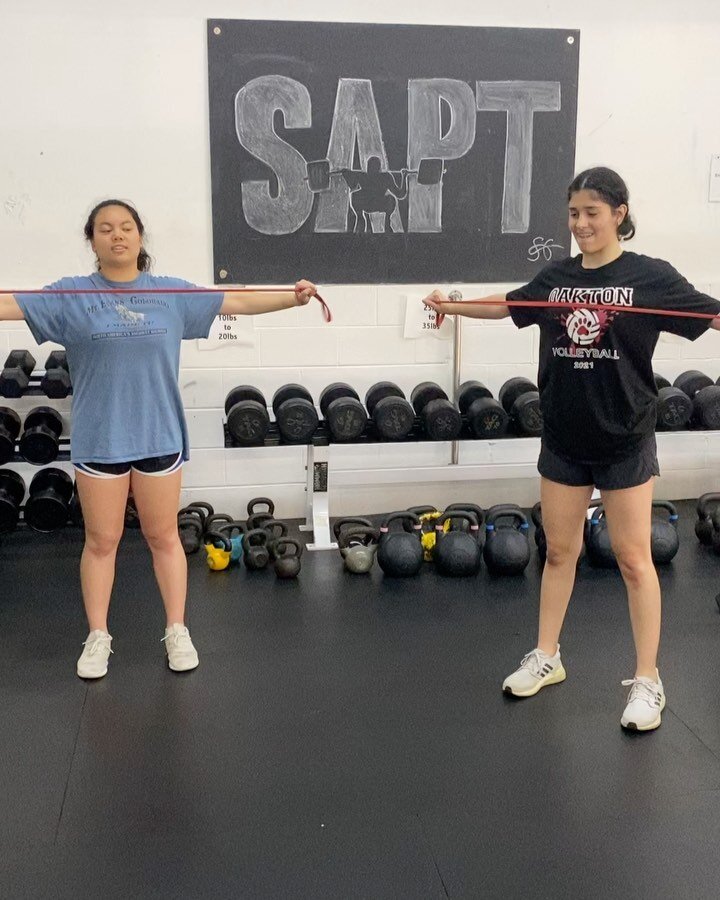

Coaching the Forearm Wallslide
A deceptively simple exercise, the forearm wallslide delivers a huge ROI:
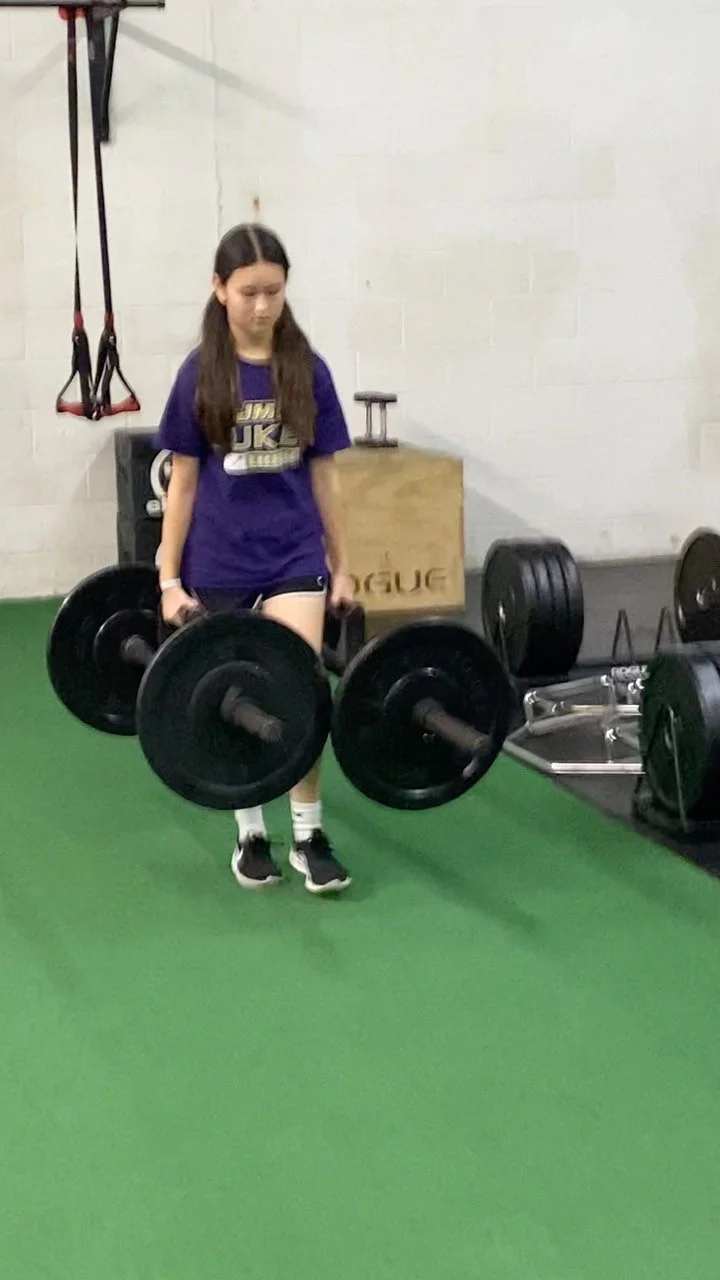
Deadlift Fine-tuning
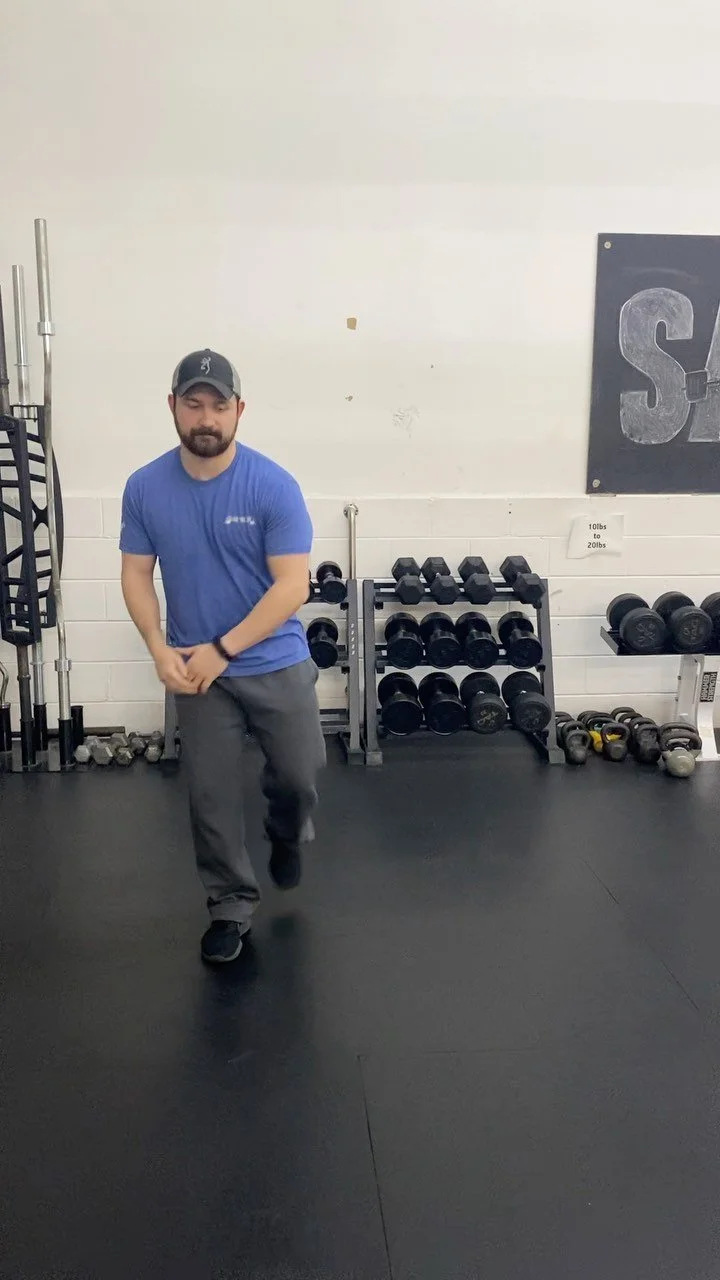
The deadlift is arguably the most valuable exercise for sport performance (and life) improvement. It is extremely versatile and effective for pretty much everyone. But, not if you don't have excellent technique! This movement is a basic at SAPT and if you already lift with us you know you're getting the kind of very detailed fine-tuning shown in this video.
The Science Behind Falling Out of Shape
I've been asked repeatedly how long it takes to lose the performance gains athletes work so hard to achieve in the off-season. It's never a question I've felt comfortable answering, as I really have no idea.
But, finally, I came across this wonderful article from Outsideonline.com that lays it out. The bottom line - you can never, ever stop training. It's just not worth it for so many reasons.
Enjoy:
The Science Behind Falling Out of Shape
Or why you should never, ever stop training
By: Erin Beresini Mar 29, 2016
When you’re in peak physical condition, you feel like a superhero—like you could go forever, outpace a cheetah, or lift a VW Bug. But your superpowers are ephemeral; the second you stop training, they start to fade. We asked sports physiologist Iñigo Mujika to give us a quick rundown of what’s behind the glory and the fall. The takeaway: you should never, ever stop training for more than two weeks if you can help it. Here’s why.
When you start working out, wonderful things begin to happen. Take strength, for instance. In just a few sessions, you’ll get stronger—but not because your muscles are any bigger yet. “The initial gains take place because of neuromuscular adaptations,” Mujika says. In short, your brain gets better at communicating with your muscles, learning to use them more efficiently. It’ll also start to recruit more of them, so power ultimately increases, too.
Just over a week of endurance training—often described as at least 30 minutes per day, five days a week of upping your heart rate to at least 60 percent of its max— increases your plasma and blood volume. That’s part of the reason why, a few weeks into a training program, your heart rate won’t spike like it did when you first started running, or whatever your sport may be. And you’ll get better at dissipating heat through sweat.
“You need to increase your plasma volume to start to feel better,” Mujika says. “As time goes by, you’re going to increase your stroke volume, capillarization, mitochondrial volume, thermoregulatory capacity. That’s when you can say you’re trained.”
Keep up your training, and you'll gain muscle mass and strength. You’ll also fine-tune your cardiovascular system; after six months of endurance training, it’s possible to increase blood volume by as much as 27 percent.
All of those adaptations lead to peak performance. But the catch: there’s no peak preserving pill, and all of those benefits quickly erode when you stop moving. “When you stop training, almost immediately—we think three days—you lose plasma volume and blood volume in general,” Mujika says. “Your heart rate for a given intensity increases.”
After about 10 days to two weeks, your VO2 max, or the max amount of oxygen you can take in during exercise, will start to drop at a steady rate of about 0.5 percent a day. Two weeks off, and your brain’s ability to recruit muscle will drop, by about one to five percent. That’s not much. But it can cut power in sports that require fine-tuned movements for optimal performance, like swimming.
After three to four weeks off, your muscles will start to atrophy. Your body will increase its reliance on carbs rather than fat for fuel while simultaneously upping its capacity to store fat. In other words, your ability to burn fat slacks off at the same time it becomes easier to get fat.
That’s how metabolic syndrome gets started, Mujika says. Physical inactivity leads to becoming overweight, then insulin resistant, then diabetic. “The symptoms experienced by athletes when they stop training are the same,” Mujika says, “but on a very small scale.”
That doesn’t mean you can’t ever take a break. Breaks are necessary to avoid overtraining and burnout. Mujika tells his athletes, including three-time Olympic triathlete Ainhoa Murúa, to take two weeks completely off from training at the end of their seasons, then spend two weeks doing physical activity that’s not sport specific. For Murúa, that might be hiking, SUP, surfing, playing tennis—anything but swimming, biking, and running. “After two weeks of that we start training into more sport-specific exercise,” Mujika says.
Expect it to take twice as long to get back into shape as the time you’ve spent being inactive, Mujika says. With a few exceptions: “heat training can accelerate plasma volume expansion,” he says. And if you’re starting from scratch, you might have an advantage over people who are. “There are some indications there’s some kind of muscle memory,” Mujika says. Just like people who’ve already ridden a bike will pick it up faster than those who haven’t, it’s possible “the more trained you’ve been before, the quicker you get back into form in terms of muscular strength and power.”
Priority #1: Breathing
If you were to say to me in 2006, Hey Sarah! Guess what?!? In 10-years you will be laying the foundation for high performance by pounding the crap out of breathing drills. I would have believed you***. It's pretty obvious, when you think about it, but the evidence for it's true importance has only been surfacing over the past couple of years.
This is an insanely complex topic that can literally have an effect on the obvious: your ability to recover effectively between bouts of intense exercise allllll the way to the obscure and surprising: regaining normal range of motion about joints that have been previously all kinds of locked up.
So, here ya go. My long-winded explanation of why you or your child may be doing do many drills to re-pattern their breathing. The concept of training breathing patterns now forms the foundation for all SAPT athletes.
Below I've organized a loose hierarchy of what proper breathing actually accomplishes for us humans:
Life Support
Like everything else in the body we adjust to sub-optimal patterns and just assume everything is A-OK (ex: somehow staying alive when only eating frankenfoods). In this case, I'm referring to our bodies amazing ability to be totally out-of-whack and yet not collapse in on itself, biomechanically speaking.
But, as professionals in the industry of human performance, we know that those common mal-alignments in the body ultimately stem from poor pelvic balance and that is in fact causing the postural asymmetries.
What causes the problem with the pelvis in the first place? Traditionally, we’ve chalked it up to an increasingly sedentary environment - too much sitting, not enough moving. Even for children. In fact this problem first develops in children, all children.
So, let’s take it deeper. There is actually something else going on besides our chair bound, screen driven environment. It just so happens that if you look very deep, like inside your body, you will discover that the muscle responsible for respiration, the diaphragm, is actually itself asymmetrical! In fact, the thorax is packed with asymmetrical situations: the heart sets on one side, the liver on the other to adjust the diaphragm is divided into two domes (on the right and left sides) one dome is smaller and weaker than the other. This sets off a precipitation of events. All of which ultimately influence our athletic performance, efficiency, injury patterns and more.
Posture
Okay, let’s break this down. It’s important, so try to stay with me… I’m also working hard to keep up with myself. All kinds of important parts of the body attach and interact with the diaphragm. Since, by our bodies’s design, one side of the diaphragm is stronger than the other that means that certain compensatory patterns always develop. Always. If you are a human you have this pattern.
The diaphragm is stronger on the right side, this ultimately means that we favor (and overwork) the right side of the body. While the left side becomes weakened and inefficient.
From here we can see the commonplace asymmetries develop: one shoulder higher than the other, the rib cage set at predictable angles from right to left and front to back, the pelvis rotated predictably.
Injury Potential
Alright, we’re getting back on solid footing. The by-design asymmetry of our diaphragm causes the postural asymmetries that cause, over time, injury.
How many times has a well meaning coach had an athlete statically stretch chronically tight hamstrings? Do they ever regain the proper ROM? Nope. But, those tight hamstrings are actually indicative of a risk for injury that points to pelvic misalignment and, you guessed it, points then towards diaphragm and thorax corrections that MUST occur before high performance can ever be achieved.
How many times has a pitching coach focused their injury prevention program to address only the throwing side? Good gracious that’s just layering on the problems.
Sub-Optimal Performance: Layers of dysfunction
Let’s continue to talk about the pitching coach who runs a one sided arm care program. Hey, it kind of makes sense. You throw with one arm, why wouldn’t focus on strengthening the musculature on just that side?
Because you frack up the entirety of the athlete, that’s why.
Never, ever layer strength on top of dysfunction. The potential for injury skyrockets (that’s my opinion) and it becomes very difficult to make the foundational corrections (to backtrack).
The result? The athlete has now gotten “stronger” and tighter and more imbalanced in the pursuit of performance.
What should the approach have been? Fix the imbalances first, prioritize this as essential to performance, then and only then, begin to strengthen.
Recovery during repeated efforts
When respiration isn’t occurring efficiently, an athlete’s ability to recover between bouts of training (or plays in a game) will be suboptimal. Potentially leading to injury, compromised decision making (think ability to read a developing play), lost points, or a Loss.
Gait
We’ve established that the diaphragm will cause poor pelvic balance. But what does that mean for gait?
“Walking and breathing are the foundations of movement and prerequisites for efficient, forceful, non-compensatory squatting, lunging, running, sprinting, leaping, hopping, or jumping ONLY WHEN three influential inputs are engaged: proprioception, referencing, and grounding.” PRI
Pulled muscles, ligament tears, rolled ankles can all be traced back to a pelvis, and thus, breathing problem.
That tilted and rotated pelvis can be a real problem!
How many great (or on their way to great) athletic careers have been stopped in their tracks by an injury?
How to fix: Zone of Apposition
Moving forward with the understanding that breathing really is the key to life, we have to ask: how do you fix this?
There is something called the Zone of Apposition (ZOA) and this is the area where the diaphragm and ribcage over lap each other. We want to maximize this overlap through proper ribcage positioning.
Here’s the good news: train the ribcage to be in the proper position and now those imbalances start to clear up:
- Better ROM at all joints
- Better recovery for bouts of work
- Less compensatory patterns throughout the body
Now we can work on performance
How SAPT uses/integrates breathing drills to achieve performance improvements:
- Ground based - 90/90, etc
- Against gravity —> Static
- Against gravity —> dynamic & sub-max
- Against gravity —> dynamic & max
What the athlete gets in return:
- Better movement patterns (without forcing it)
- Fewer injuries
- Better recovery (between intense bouts and sessions)
- More bulletproof and awesome
With regards to training the ZOA, it's not a matter of if it needs to be trained, rather the important aspect is for the coach to assess and determine what level the athlete needs to be placed at to get started and progressed forward.
***I'm sorry, I lied - in 2006, I was 25 - knew virtually nothing - and it was hard to tell me anything unless it was about box squats, deadlifts, or the bench press.