Athlete Spotlight: Amanda, the Unassuming Ironmaiden
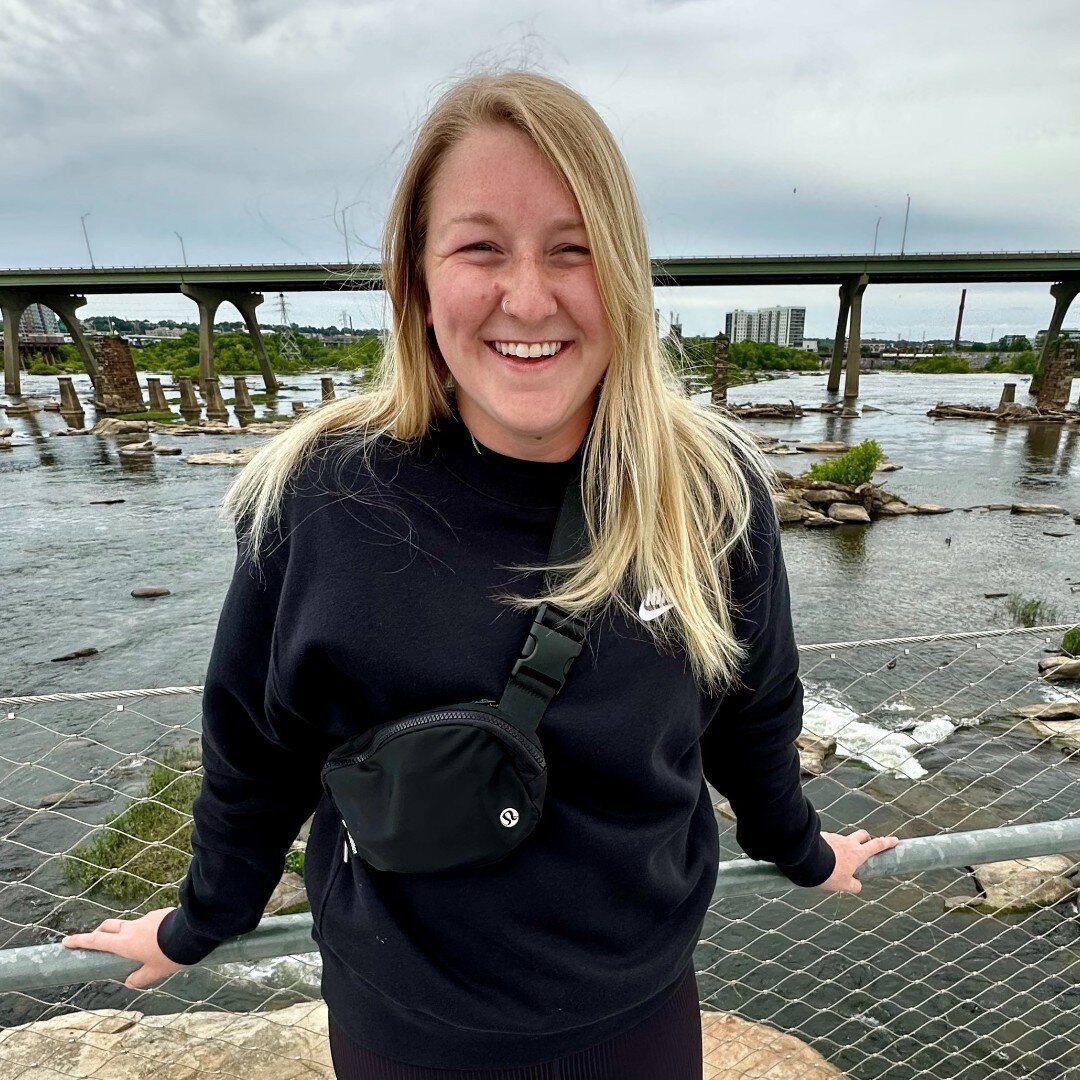
Meet Amanda:
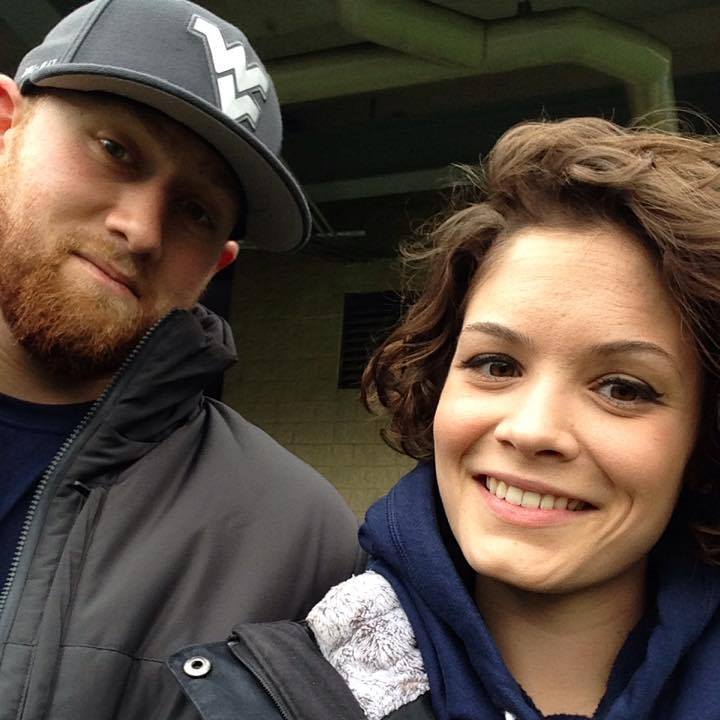
She is awesome, and not in the over-used sense of the word, but she truly is awesome. She started training at SAPT last September. When she first showed up, she was familiar with the barbell but was looking for further instruction in the iron game. Her words were, "I just can't figure out the squat. It's just a mess." But she wanted to improve at barbell lifts, specifically the squat, bench, and deadlift.
Her first pushup was on a barbell elevated up to her waist and she really struggled with any sort of single-leg movement. Lunges and split squats were tough and she hated how she wobbled. Not only that, but we started her goblet squatting with 25lbs to groove her mechanics.
Amanda trained, with intensity, three times per week consistently for months and months (and still does!). She was the perfect client: she was consistent, she focused during her training sessions, and she did exactly what we told her to do. Lo and behold! She accomplished her goal of losing 55lbs AND increased her total body strength by enormous levels. Here is a video of some pushups:
I don't know if you, dear reader, can grasp HOW MUCH WORK that took for her to get there. She trained pushups- and their variations- almost every session for MONTHS. Some days she felt as if her arms would fall off and would be sore for days afterwards. Guys, you have no idea how hard it can be for women to accomplish pushups (with great form, by the way) on the floor. It does not come naturally for us and it takes twice as long (if not more) to gain any sort of strength. The above video is a testament to Amanda's tenacity and overall strength gains.
Aside from her pushup accomplishment, Amanda decided to compete in her very first powerlifting meet. This past weekend, actually, was the date. Below are some videos from the meet. (I apologize, Amanda, they're not the most flattering angles, but I was behind the platform.)
Squat- 137.5 lbs (A far cry from that 25lb kettlebell!)
Bench- 81 lbs
Deadlift- 181lbs
I am beyond proud of Amanda and all her hard work!! What you can't see from these videos is that this meet was enormous and there was so much confusion and frustration behind the scenes. But Amanda handled it with a cool, determined attitude and she did fabulously well!!
Amanda has rocked all her workouts and has improved in so, so many areas and it's been a privilege and a blessing to work with her and I'm looking forward to the next meet!
6 Christmas Gift Ideas for the Athlete in Your Life
Let's be real, Christmas shopping sucks, especially when you have no clue what to get your close ones. It's expensive, crowded and often ends in a gift-return regardless of how much thought you've put into it. So to protect you from the experience of mindlessly drifting through the crowded, animatronic-filled wastelands we call, "malls," I wanted to give you a list of items that may help you to develop a strategy for finding the perfect gift for the athlete in your life.
The following list is filled with items that I commonly recommend to our clients and things that anyone who likes the feel of sweat shouldn't go without. They're useful, relatively inexpensive and best of all, can be bought online. Here ya go:
6. Cleatskins
I didn't know what these were at first, either. But, if you've ever worn metal cleats, you know how much of a pain it can be to be anywhere but the playing field. They also could prove handy for the wrestlers in the crowd, enabling you to not have to worry about dirtying your shoes during those long tournaments. Starting at 15.00, they would make great stocking stuffers.
5. Flipbelt
We've all run into the problem of where to leave our keys, how to hold our iPods, and what to do with our wallets while training. Rather than constantly checking your pockets to ensure you haven't dropped anything during a workout, you can now store it in your Flipbelt and not worry about it. They also have many different colors, so you can get one to match you shorts so that people won't realize you're wearing the sporty version of a fanny-pack.
4. Easy Strength by Dan John and Pavel
This book is the definition of simple, yet gives so many gems of knowledge that you seem to never hear anywhere else. It's an easy read and anyone will be able to decipher its training philosophy. If I could recommend one book to get someone started on the right path to training intelligently and appropriately, this would be it. The world would be a much better place if more gyms and weight rooms were filled with the words of Dan and Pavel.
3. VooDoo Floss Bands
VooDoo Floss bands are inexpensive, durable, compact and extremely effective. They're used almost daily in our facility to help athletes flush inflammation from certain tissues or to even aid in mobility work. These bands are slowly becoming a must-have for athletes whilst in-season.
https://www.youtube.com/watch?v=BnTs8XCc9WY
2. Training Apparel
There's nothing better than having a nice hoodie and sweats to train in or to just wear around. It's become a necessity for me to wear sweatpants and a sweat shirt when I train, otherwise it'll seem take me 30 minutes just to warm up. They're comfortable, and when you're an athlete, appropriate for all occasions. You can find apparel for powerlifters, crossfitters, and tons more for traditional athletes.
2. The Jawbone UP24 Tracker
We've come a long way from the clip-at-the-side pedometer. Jawbone's UP24 stays with you as a wrist band, even as you sleep, to help provide you with invaluable data about your daily habits and how they're affecting your bodily functions. It tracks your sleep patterns(giving you the option of working you at optimal times in your sleep cycles), counts calories, helps you track your diet and helps you set goals. This gift may be more appropriate for your fitness enthusiast friend, but could also aid with athletes who are constantly battling poor recovery habits. For $50 more, you can get the version with a heart-rate monitor so that you can more efficiently monitor your conditioning. There are several similar trackers on the market, but I've heard nothing but good about Jawbone's products
1. Training at SAPT

Is this a shameless self-plug? Maybe. But there's nowhere else in the DMV that has a more thorough initial evaluation to pick apart the athletes' movements and put together a comprehensive and affordable program to ensure continual athletic development. I've had countless parents tell me that training with us was one of the best decisions they ever made for their kids. So bring 'em in and lets get better!
Sweet and Good For You Desserts
As Bob Rivers so poignantly points out, it's the most fattening time of the year...
I love Christmas music parodies. We all know it's true; cookies, cakes, candies, and other c-starting foods that contain lots of calories. (See what I did there?) To combat the oh-so-sugary tempting treats, I have a couple of recipes that won’t send you into a glucose coma should you have an extra helping.
4 Ingredient Chocolate Chip Cookies
These are great because they’re pack with fruit (instead of refined, straight sugar) so you get some fiber in there to boot. The nut butter acts as the binder and 3 tablespoons of peanut butter is a LOT less calories (and crap) than two sticks of margarine found in traditional cookies.
The oat flour, again more fiber than refined flour, has a lot of soluble fiber in it which promotes heart health. Chocolate, well, that’s just tasty. If you're into dark chocolate, the Reed household is a regular purchaser of Ghirardelli dark chocolate chips.
Recipe:
- 1/2 cup to 3/4 cup dried fruit (I used apricots)
- 3 Tbs nut butter (I used peanut butter but almond butter will have milder flavor)
- 1/2-2/3 cups oat flour (just grind up oats in a food processor)
- 1-2 handfuls of chocolate chips (we use the dark chocolate chips)
1. Preheat oven to 375-ish.
2. Pulse fruit, nut butter, and oat flour in a food processor until combined and rather sticky looking. Remove blade (this is a very important step) and toss in the chocolate chips and fold in using a spatula.
3. Scoop out dough with either a spoon or ice-cream scooper onto a lightly greased baking sheet.
4. Bake about 15-20 minutes.
5. Scarf down accordingly.
Coconut Luvers Cookies (I found it over at Healthful Pursuits, a fabulous food blog by Leanne Vogul found here)
I adapted this a bit because the first time I made them, Steve said they were a bit dry. Unsweetened coconut provides healthy fats (gotta keep those cell membranes healthy!) and fiber (see, all these desserts will keep you regular!) and the sugar content on these babies isn’t sky high as in a lot of other desserts.
- 2 cups shredded, unsweetened coconut
- 2 eggs
- 2 TBS of cocoa powder
- 1 small-ish handful of chocolate chips, melted
- 1/2 cup honey or agave nectar
1. Preheat oven to 350… as it is for seemingly every baked good.
2. Melt chocolate chips either in the microwave (my preferred method) or on the stove.
3. Combine the shredded coconut with the cocoa powder and eggs. Add in the melted chocolate and agave/honey. Stir vigorously until goopy and thoroughly mixed.
4. Plop batter into desired cookie size on a lightly greased baking sheet. Leanne Vogul recommends using your hands, as if you’re making mud pies, but I used a large serving spoon (I had a couple of cuts on my palms that I didn’t want goopy-goop getting into).
5. Bake about 17-20 minutes. Then, dig in!
p.s. Steve has found these to be fantastic pre-workout snacks.
Cinnamon Sugar Roasted Chickpeas
I know, it sounds weird, but these things are absolutely addictive (and better for you than say, M&Ms or Puppy Chow). Chickpeas come stocked with fiber (notice a theme? Besides keeping you regular, fiber helps blunt the blood sugar spike thus preventing crashes post-sugar intake), a cup of these little buggers contain roughly 14 grams of protein (better than M&Ms for sure), and they have phosphorus (good for bone development), potassium, and manganese (super important mineral for cellular functions and wound healing). These guys pack a punch!
- 1 can chickpeas, drained and rinsed
- 2-3 teaspoons cinnamon (depending on how much you like cinnamon)
- 1-3 teaspoons raw sugar, stevia, or coconut sugar (pick you favorite)
1. Preheat oven to 400 and line a baking sheet with foil (trust me, this makes clean up a lot easier)
2. Place chickpeas in a mixing bowl. Combine the sweetener-o-choice with cinnamon and sprinkle over the chickpeas as you toss them to coat.
3. Spread out the chicky-peas on the baking sheet and pop in the oven for about 20 minutes or until they look crispy.
4. Place in a bowl (after they’ve cooled a bit) and munch on during your next movie night.
p.s. you can, should you desire, to sprinkle some sea salt on them before baking to give a sweet-n-salty taste.
Enjoy your extra desserts today!
Book Review: Science and Practice of Strength Training

On a trip to Portland during the summer I stumbled into Powell’s City of Books, a 68,000 square foot bookstore (the largest bookstore in the world) and while browsing the selection came across “Science and Practice of Strength Training” by Vladimir Zatsiorsky. I had heard of the book before but not until I finished reading it did I understand how much of a gem this book can be to coaches, trainer, and athletes looking to get stronger for sports. The book is easy to read and uses plenty of pictures and illustrations to help readers understand the subject without getting too sciencey. Keep in mind this is NOT an exercise cookbook that will tell you what exercises to do, how many times to do it, and with what weight. Throughout the book Zatsiorsky shares basic and advanced training ideas from his experiences of training athletes around the world. This book is broken down into areas including:
Basic Concepts:
This section covers two theories of what happens following an exercise session. One theory, Supercompensation, is said to cause a decrease in performance following a training session followed by an overcompensation which allows the body to come back stronger. The second theory mentioned is the fatigue-fitness theory. With this theory the book proposes that fitness gains occur immediately but are masked by fatigue and may not appear until this fatigue subsides.
Training Intensity:
In this section Zatsiorsky explains many different methods of manipulating repetitions, resistance, percentages of 1RM, and density to produce a desired training effect.

Special Populations Training:
The author shares great insight on specific techniques for training women, youth athletes, and senior athletes. These sections cover the key differences that a relevant to getting members of these groups safely prepared for strength sports or sports requiring significant amounts of strength and power.
All and all I think this book is a great read and would make an excellent addition to anyone’s professional library as it covers many key aspects of training in a practical manner. This book can be found online for purchase here.
"My Hip Hurts!" Training Around Femoroacetabular Impingement
During Thanksgiving I contemplated the turkey legs before they were devoured and mulled over femoroacetabular impingement (FAI). Yes, I know, I'm nerdy even on my vacations. What is FAI? In brief, it is an excess of friction within the ball-in-socket hip joint. The femoral head (the "ball") and the acetabulum ("socket") get a little too friendly with one another and can create damage within the joint. Damage can be incurred either on the articular cartilage -the smooth, white surface of the ball or socket; the cartilage helps the two glide well together- or to the labrum- a ring cartilage that deepens the socket to decrease the chances of the femur slipping out. It essentially acts as a suction cup for the femoral head.
Why does this friction happen? Can't the femoral head and acetabulum just get along?
Typically, FAI occurs when the femoral head glides too far forward within the socket. Often this happens when the hip is flexed and internally rotated- such as at the bottom of a squat or getting into a car (on the lead leg). Consequently, one of the tests replicates that motion. (pictured at left)
Another hip position that is an FAI aggravator is extreme extension, such as a gymnast sitting in the splits. The test that mimics that is called the Faber test.
Both tests can be a starting point to explore whether or not you or your athletes have FAI. REMEMBER, WITHOUT AN M.D. YOU ARE NOT A DOCTOR, DO NOT DIAGNOSE. However, if there is pain with either test, it might be a good idea to mosey on over to an M.D. for further exploration. There are other symptoms such as pinching pain in the front of the hip with squatting motions, a history of groin strains/pulls, or, even if there's no pain present, a shifting of the hips towards one side during squatting.

Excessive friction occurs when the femoral head is allowed to roam wild and free within the socket. This happens when the glutes are not strong enough or are not firing properly to control that crazy femoral head. The glutes have enormous influence over the femur, due to its attachment points, and should keep the femoral head centered within the socket. When that doesn't happen, that's when the femur goes crazy.
Another factor is anterior pelvic tilt- the state that nearly every athlete lives in. If the pelvis is already tilted forward, it closes the space between the anterior borders of the acetabulum and the femoral heads, so at the onset of movement there's a predisposition for impingement.

FAI comes in three flavors (none of which include chocolate or vanilla)

CAM- bony overgrowth on the femoral head (ball)
Pincer- body overgrown on the acetabulum (on the socket on the pelvic bone)
Mixed- a lovely combination of both.
FAI can produce complications ranging from minor irritation in the front of the hip, at best, or tears of the labrum, at worst.
Who is at risk for FAI?
1. Athletes who play sports that require repetitive hip flexion and internal rotation- think football kickers, soccer players, powerlifters (especially if they sumo deadlift and squat deeply), baseball pitchers, hockey players
2. Hypermobile athletes, particularly if they're involved with sports that require extreme hip extension- gymnasts (including rhythmic gymnasts), baseball pitchers
3. Folks with anterior pelvic tilt, weak glutes, and a weak anterior core.
Now, let's say you are (or one of your athletes is) one of these at-risk people and/or you are already experiencing symptoms, what are you going to do?
Lucky for you, I've already gone through this! I have bilateral labral tears (both hips) and have had to adjust my training considerably. Do not lose hope! FAI (assuming there's no structural damage) can be reversed with intelligent training and patience.
First: stop doing what the activity that is aggravating FAI. It could be squatting, sprinting, kicking... whatever it is that's causing the pain stop it. The continual irritation to the hip joint will prevent the inflammation from dissipating, which only prolongs the process of recovery.
Second: train the heck out of the glutes and anterior core. Why? As mentioned above, the glutes have tremendous influence over the femoral head, so those bad boys will keep the femur centered in the socket. Remember good ol' anterior pelvic tilt? Both a strong anterior core and strong glutes work in concert to bring the pelvis into a more neutral alignment, thus increasing the space in which the femoral head can move.
How? Below are several exercises that I've incorporated into my own training. Not only is my hip pain greatly reduced, in fact, unless I directly provoke FAI (for example, by squatting deeply under load) I don't even feel it any more.
Kettlebell swings
Deadlifts (or any other hip dominant bilateral lift)
Split Squats or Lunges*
I particulatly like a front-loaded stepback lunge (barbell or dumbbell) as it challenges the anterior core to resist excessive extension. Two birds, one stone.
*With FAI, you have to be cautious with lunge variations. I've found that forward lunges really bother my hip- I assume it's from the deceleration component as it can jam the femur into the socket. Bulgarian split squats are awesome, however, we must be careful how deeply the lunge goes: both for the sake of the front leg and the back leg (which can go into aggressive extension if the back leg is too high).
Glute Bridge Variations (on the floor or back elevated)
BB Back Elevated
Suspension Strap Glute bridge
Anterior Core Work (thinking beyond the plank)
Deadbugs or Single-Leg Lowerings
Or, if you want it all in one shot, my awesome husband made a video a while back on anterior core training progressions.
Last, but not least and my personal core training fave, loaded crawls.
I performed forward/backwards baby and bear crawls-respectively- but you're certainly not limited to those two.
By strengthening both the glutes and core, FAI can be reversed and, if damage already occurred, you can still get wicked strong focusing on the lifts and activities that you CAN do. FAI is something to be aware of and programmed for accordingly. Pay particular attention to your hips if you're in the "at-risk" category of folks, but honestly, the training advice -stronger glutes and anterior core- applies across the entire spectrum of trainees. Strong butts make strong athletes!
Athlete Spotlight: Conrad "The Man" Mann
Today's post is to highlight an athlete who has been frequenting SAPT for a number of years, Conrad Mann.

Conrad is the co-owner of David Mann Jewelers (in case you are looking for Christmas presents for that special someone)and has an extensive athletic background in soccer. In fact, he was actually the 2001 Boys' Coach of the Year for Virginia and served time as a Virginia Olympic Development Coach for the sport. Though he still loves soccer, Conrad has switched his focus to another passion in recent years, lifting heavy things.
Conrad has been training for powerlifting for a number of years now and we are psyched to have him as one of the lifters to represent SAPT in the upcoming 13th Annual USAPL American Open. Through these years, he has had to overcome several obstacles in his training and watching his determination to do so has been nothing short of inspiring. In August of 2011 Conrad went through a knee replacement, then in June 2012 he had the other one replaced. Now at 66 years young and with two fake knees, Conrad shows the meaning of, "no excuses."
Here you can see just how strong Conrad really is as he lifts 315 with plenty of speed(a new PR!). What you're not seeing is his 215 bench and 100 lb weighted chinup. We're proud of you Conrad and can't wait for the meet!
https://www.youtube.com/watch?v=0uoIP9KE--g&list=UU5TxLuwpeMisc6vJuPAmZ2w